

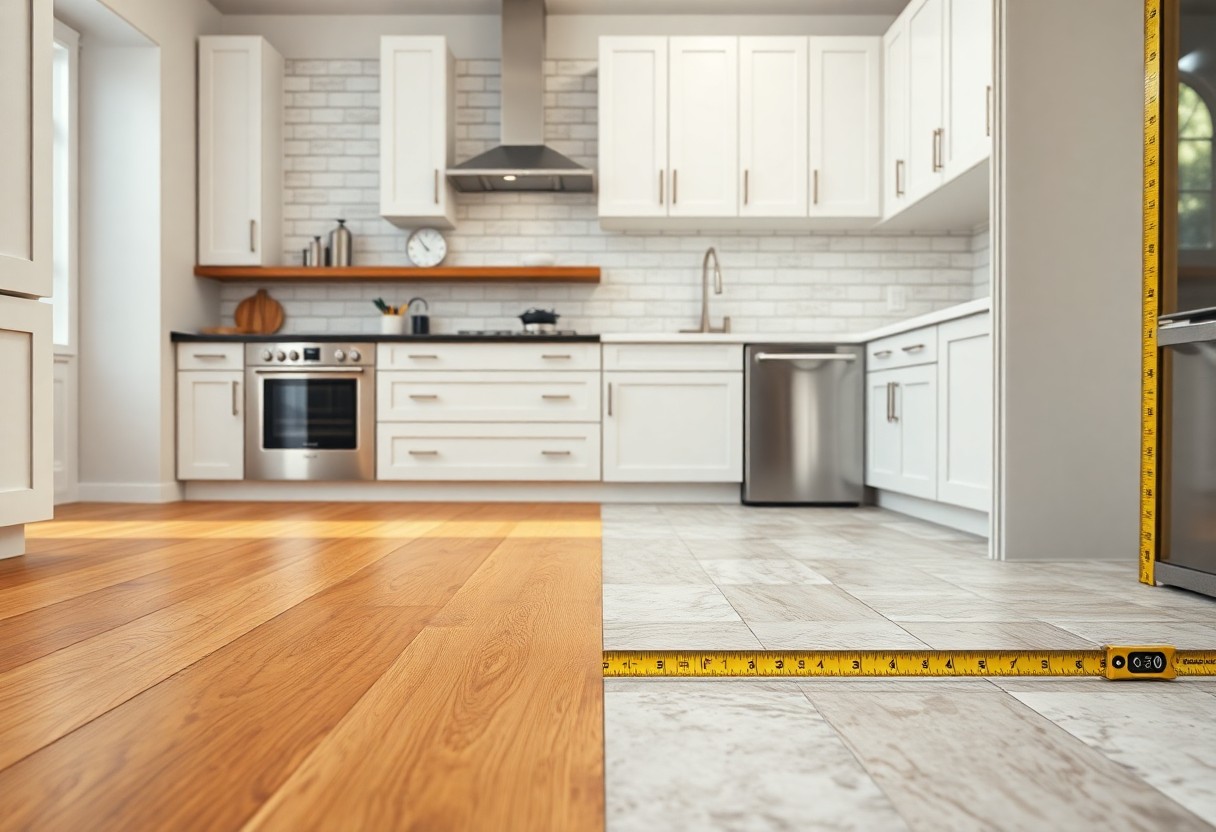
With Kitchener’s seasonal moisture and busy kitchens, you should weigh laminate and SPC vinyl for durability, water resistance, maintenance, and cost to choose flooring that suits your home.
Understanding the Materials: Laminate vs. SPC Vinyl
You should weigh visual realism, moisture resistance, and budget when comparing laminate to SPC; each material’s structure dictates durability, installation needs, and maintenance for Kitchener homes.
The Multi-Layered Composition of Modern Laminate
Laminate layers include a melamine wear layer, high-resolution design film, and an HDF core, giving you attractive visuals and scratch resistance but limited waterproofing compared with SPC.
The Engineering Behind Stone Plastic Composite (SPC)
SPC uses a stone-plastic composite core topped with a durable wear layer so you get waterproof performance, superior dimensional stability, and a denser feel than laminate.
Its limestone-rich core blends calcium carbonate and PVC to deliver compression resistance and thermal stability, so you can install SPC over imperfect subfloors with minimal acclimation; choose thicker wear layers and acoustic underlay for higher traffic, quieter rooms, and longer lifespan.
Performance in the Kitchener-Waterloo Climate
Kitchener-Waterloo winters test your flooring with temperature swings and meltwater; summers add humidity. You should weigh how each option handles freeze-thaw cycles, thermal contraction and expansion, and routine wetting from boots and pet traffic.
Managing Humidity Fluctuations and Seasonal Expansion
You should acclimate laminate before installation and leave expansion gaps, while SPC tolerates humidity swings with minimal expansion; also monitor basement moisture and use dehumidifiers during damp months to reduce cupping or gaps.
Water Resistance: Surface Protection vs. 100% Waterproofing
SPC offers 100% waterproof cores that let you install in kitchens and basements without worry, whereas laminate relies on surface coatings that protect against spills but can fail if water seeps into seams; you must dry spills quickly.
Laminate’s wear layer sheds daily spills and cleaners, but its HDF core absorbs moisture through seams or damaged edges, so you should use chair pads, seal edges, and avoid standing water; SPC’s stone-plastic composite core blocks moisture entirely, though poorly sealed joints or damaged planks can still permit leaks-follow installation guidelines and warranty terms for wet areas.
Durability and Wear Resistance for Local Lifestyles
You will find SPC holds up to moisture, stains and frequent kitchen traffic better than laminate, while laminate may show edge swelling and surface wear-choose based on your cleaning habits and household activity.
AC Ratings and Scratch Resistance in High-Traffic Areas
AC-rated wear layers tell you how well planks withstand foot traffic; choose AC3 or higher for busy Kitchener kitchens, and prefer thicker wear layers on laminate to minimize visible scratches.
Impact Resistance and Dent Protection for Active Households
Impact resistance affects denting from dropped cookware and pet claws; SPC’s rigid core resists dents better, but you can protect laminate with thicker AC-rated boards and felt pads under legs.
When you assess dent protection, check core composition, wear-layer thickness and warranty details: thicker SPC cores and higher-density wear layers disperse point loads, while laminate can compress more under heavy impacts; you should add quality underlay, use felt glides on furniture, and place rugs in play and dining zones to reduce dents and extend lifespan.
Aesthetic Versatility and Texture Realism
You’ll find laminate offers many pattern choices while SPC delivers deeper texture realism and grain definition, letting you match style and tactile feel to your kitchen’s use and budget.
Aesthetic: Laminate vs SPC
| Laminate | SPC |
|---|---|
| Wide pattern selection | Lifelike wood-grain prints |
| Embossed or smooth finishes | Deep embossing mimics real wood |
| Lower average cost | Higher initial cost, longer wear |
High-Definition Imaging and Embossed-in-Register Finishes
Imaging and embossed-in-register textures let you see and feel knots, grain, and growth rings, so you can pick SPC when you want sharper realism or laminate when cost-conscious realism suffices.
Comparing Visual Depth and Edge Beveling Options
Beveled edges and plank depth change how you and guests perceive scale; you’ll notice SPC often uses subtler bevels while laminate can use wider grooves to highlight individual planks.
Visual Depth & Edge Beveling: SPC vs Laminate
| SPC | Laminate |
|---|---|
| Subtle micro-bevels for continuous look | Pronounced V-grooves for distinct planks |
| Strong print-to-texture alignment | Good visual depth at lower cost |
| Edges resist chipping well | Edge durability varies by quality |
Consider bevel depth for cleaning and visual flow; you’ll prefer shallow bevels in busy kitchens and deeper grooves for rustic styling, keeping in mind SPC edges typically withstand wear better.
Bevel Impact on Use and Maintenance
| Shallow Bevels | Deep Bevels |
|---|---|
| Easier to wipe, sleek look | Traps crumbs, pronounced plank effect |
| Better for high-traffic kitchens | Better for design emphasis |
Installation Requirements and Subfloor Preparation
Subfloor flatness and moisture control determine success; you must ensure a clean, level surface, repair dips over 3/16″ per 10′, and perform moisture testing on slabs or basements in Kitchener before installing laminate or SPC.
Click-Lock Systems and DIY Feasibility for Ontario Homeowners
Click-lock systems make installation accessible; you can DIY in Ontario if you check subfloor flatness, leave recommended expansion gaps, use proper underlayment, and handle transitions, while complex removals or severely uneven concrete may warrant professional help.
The Importance of Underlayment and Acclimatization
Proper underlayment and acclimatization protect warranty and performance: you should use manufacturer-recommended padding for laminate or a thin pad for SPC, and acclimate planks 48-72 hours to local temperature and humidity before laying.
Acclimatize the flooring in the installation room for 48-72 hours with cartons flat and sealed so you can avoid cupping, warping, or gapping after installation. For laminate, install a foam underlayment with a vapour barrier on concrete and follow expansion-gap guidance (typically 1/4″-3/8″); for SPC, use a thin acoustic pad or the manufacturer’s integrated underlay. You should perform concrete moisture testing, level any high or low spots, and use a vapour barrier in below-grade areas to preserve warranty and long-term performance.
Cost Analysis and Long-Term ROI
Cost comparisons focus on material, installation and maintenance; you should expect SPC vinyl to carry higher upfront costs but lower long-term upkeep than laminate, shifting ROI in favour of whichever matches your home’s traffic and moisture profile.
Upfront Material and Labor Expenses in the Local Market
Locally, you will find SPC panels priced higher per square foot than laminate, and skilled installation for SPC often adds labor costs, while laminate offers cheaper materials and faster fitting in Kitchener’s market.
Impact on Property Resale Value and Lifespan Expectations
Resale value can rise if you choose SPC in moisture-prone areas, as buyers appreciate durability; you should weigh expected lifespan-SPC lasts longer than laminate-against buyer preferences in Kitchener neighborhoods.
Consider how warranty, water resistance and wear-layer thickness influence the usable life you can advertise to buyers; you will recoup more of SPC’s premium in kitchens and rental units where longevity matters, while attractive, well-maintained laminate can still boost appeal and deliver acceptable lifespan for budget-focused buyers.