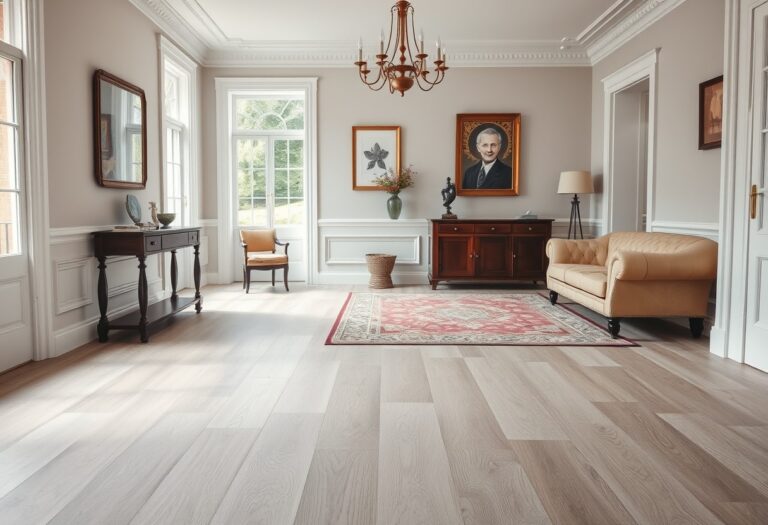

Flooring shapes how a room feels, sounds, and stands up to daily use. Your choice affects cleaning routines, comfort underfoot, and how well a surface handles moisture, pets, or heavy traffic. A busy kitchen, for instance, puts different demands on tile or vinyl than a quiet bedroom does on carpet or hardwood.
Explore Flooring Types
Flooring materials differ in how they look, feel underfoot, and perform in everyday rooms. You’ll find options suited to quiet bedrooms, busy kitchens, damp bathrooms, and high-traffic entryways, with distinct surfaces and installation formats across each category. Some materials are made from natural wood or stone, while others reproduce those finishes using layered or manufactured components. The descriptions below show where each type commonly appears, from solid planks in living rooms to porcelain tile in shower surrounds.
Hardwood, laminate, vinyl, and tile
Hardwood brings natural grain and warmth to living rooms and bedrooms, while laminate uses a printed surface over a fiberboard core to mimic wood in family spaces. Vinyl comes in planks, tiles, and sheets, with water-resistant options often used in kitchens, laundry rooms, and bathrooms. Ceramic and porcelain tile suit wet areas and entryways; porcelain’s dense body is common in shower floors, while ceramic tile is widely used for kitchen backsplashes and bathroom walls.
| Material | Common form | Typical use |
|---|---|---|
| Hardwood | Solid or engineered planks | Living rooms and bedrooms |
| Laminate | Click-lock boards | Family rooms and hallways |
| Vinyl | Planks, tiles, or sheets | Kitchens and laundry rooms |
| Tile | Ceramic or porcelain units | Bathrooms and entryways |
Carpet, stone, and eco-friendly options
Carpet adds a soft, quiet surface to bedrooms, stairs, and living areas, with loop and cut-pile constructions offering different textures. Natural stone, including slate, limestone, and travertine, appears in entryways, kitchens, and bathrooms; each piece has distinct veining or mineral variation. Cork and bamboo provide alternatives made from renewable plant materials, while reclaimed wood reuses existing boards with visible signs of age, such as old nail holes and worn grain.
Identify the Factors That Matter
Choosing a floor starts with the demands of the space and the limits of your project. Room use, household routines, comfort, durability, and total cost each affect how well a floor serves you over time. Give priority to the factors that shape everyday use, such as frequent spills in a kitchen or quiet underfoot comfort in a bedroom. A clear set of priorities keeps practical needs, rather than appearance alone, at the center of your decision.
Room conditions and household needs
Match your priorities to how each room is used. In an entryway, grit from shoes and wet coats put heavy demands on the surface; a home office, by contrast, benefits from a floor that stays comfortable during long periods at a desk. Account for children, pets, mobility needs, and the amount of foot traffic in your household. Sun exposure, dampness, and temperature changes also affect how a floor performs in a specific room.
Installation, maintenance, and long-term costs
Look beyond the purchase price to the work and upkeep a floor requires. Installation costs depend on the condition of the subfloor, the room’s layout, and whether old flooring must be removed. Ask whether you can use the space during installation and what preparation is needed, such as moving appliances. For ongoing costs, account for routine cleaning supplies, periodic refinishing or repairs, and replacement of worn sections over the floor’s service life.
- Check whether door clearances allow for added floor height.
- Confirm that the subfloor is level and dry before installation.
- Ask how transitions will meet adjoining rooms.
- Find out whether furniture needs protective pads.
Compare Flooring Pros and Cons
Each flooring material performs differently under foot traffic, spills, sunlight, and routine cleaning. Hardwood offers a natural grain that can be refinished, while laminate imitates wood with a wear layer that cannot be sanded. Tile resists moisture but feels hard underfoot, and carpet softens rooms while holding dust and stains. These differences become clearer when you compare how a floor looks after daily use, what upkeep it requires, and how its service life relates to its full cost.
Performance, appearance, and upkeep
Hardwood develops a patina and tolerates refinishing, but standing water can damage its boards. Porcelain tile handles wet areas and resists scratches, though grout needs periodic cleaning. Luxury vinyl offers water resistance and a softer feel than ceramic, while its printed surface cannot be refinished. Carpet reduces noise and adds warmth, but fibers trap dirt and require vacuuming plus occasional deep cleaning. The finish, grout lines, and pile each shape the maintenance routine you take on.
Cost, lifespan, and environmental impact
Purchase price tells only part of a floor’s cost: installation, repairs, cleaning products, and replacement all matter. Solid hardwood often has a long service life because you can sand and refinish it, while carpet typically needs replacement sooner as fibers wear or stain. Tile can last for decades, although damaged pieces may be difficult to match. Material sourcing also differs: reclaimed wood reuses existing boards, while vinyl relies on manufactured polymers and can be harder to recycle.
| Material | Strength | Limitation |
|---|---|---|
| Hardwood | Can be refinished | Sensitive to standing water |
| Porcelain tile | Moisture and scratch resistance | Hard underfoot; grout needs care |
| Luxury vinyl | Water resistance and softer feel | Surface cannot be refinished |
| Carpet | Warmth and sound absorption | Traps dirt and stains |
Tips for Choosing the Right Floor
Use the way each space functions to narrow your choices before focusing on color or pattern. Traffic, spills, sunlight, and cleaning routines affect how flooring performs day to day, while transitions between rooms influence how materials look together. Keep a short list of suitable products for each area, noting practical details such as surface texture, plank width, and installation method. A clear shortlist makes showroom visits more focused.
Match flooring to each room
Choose materials according to the demands of each room. In an entryway or kitchen, porcelain tile handles tracked-in grit and frequent spills; in a bedroom, carpet offers a softer surface underfoot. For a bathroom, confirm that the product is rated for wet areas and that the subfloor is suitable. Rooms with strong direct sunlight need flooring with appropriate color stability, while open-plan spaces benefit from coordinated tones and consistent transitions.
Check samples, warranties, and installer credentials
Bring flooring samples home and view them beside cabinets, wall paint, and furnishings in morning and evening light. Ask the retailer for the product’s written warranty, including exclusions for moisture, pets, and commercial use, and confirm whether it covers materials, labor, or both. Before hiring an installer, verify licensing where required, insurance, relevant product experience, and references. Request a written quote that specifies subfloor preparation, trim, disposal, and installation dates.
- Measure each room, including alcoves and closets.
- Check door clearance against the finished floor height.
- Ask how long materials need to acclimate indoors.
- Confirm whether matching stair nosings are available.
Choose Flooring Step by Step
Use a clear sequence to turn your measurements, budget, and material shortlist into a purchase decision. Start with the room’s dimensions and practical demands, then compare installed costs and product details rather than relying on appearance alone. Before ordering, verify that the selected flooring suits the subfloor and that the quoted price covers the materials and installation work you need. A written specification gives you a concrete basis for confirming the final choice.
Assess the space and set a budget
Measure each room’s length and width, and note alcoves, doorways, and fixed cabinets so the supplier can estimate the required quantity. Identify the subfloor type and any uneven areas, since preparation can add to the project cost. Set a spending limit that includes flooring, underlay or adhesive, removal of the existing surface, installation, and transition strips. For a kitchen with several doorways, include the extra cuts and edging in the estimate.
Compare options and confirm your decision
Request itemized quotes for your shortlisted products, using the same room measurements and installation assumptions for each. Compare the flooring’s thickness, wear layer where applicable, warranty terms, and compatibility with your subfloor; confirm the product name and finish on the written quote. Check that transitions and stair nosings are included if your project needs them. Once the details match your requirements and budget, approve the specification before placing the order.
| Decision step | What to verify | Project detail |
|---|---|---|
| Measure the room | Floor area and layout features | Alcoves, doorways, fixed cabinets |
| Set the budget | Full installed cost | Preparation, materials, labor, edging |
| Review quotes | Matching assumptions and product details | Subfloor fit, finish, transitions |
Summing up
Choose flooring by matching each room’s demands to a material’s performance, maintenance needs, and appearance. Porcelain tile suits wet areas, while engineered wood offers a wood surface with greater dimensional stability than solid planks. Before buying, measure the room, inspect samples in its natural light, and confirm that the subfloor is suitable for installation. A clear plan for transitions, cleaning, and expected wear gives you a floor that fits your home and daily routines.