

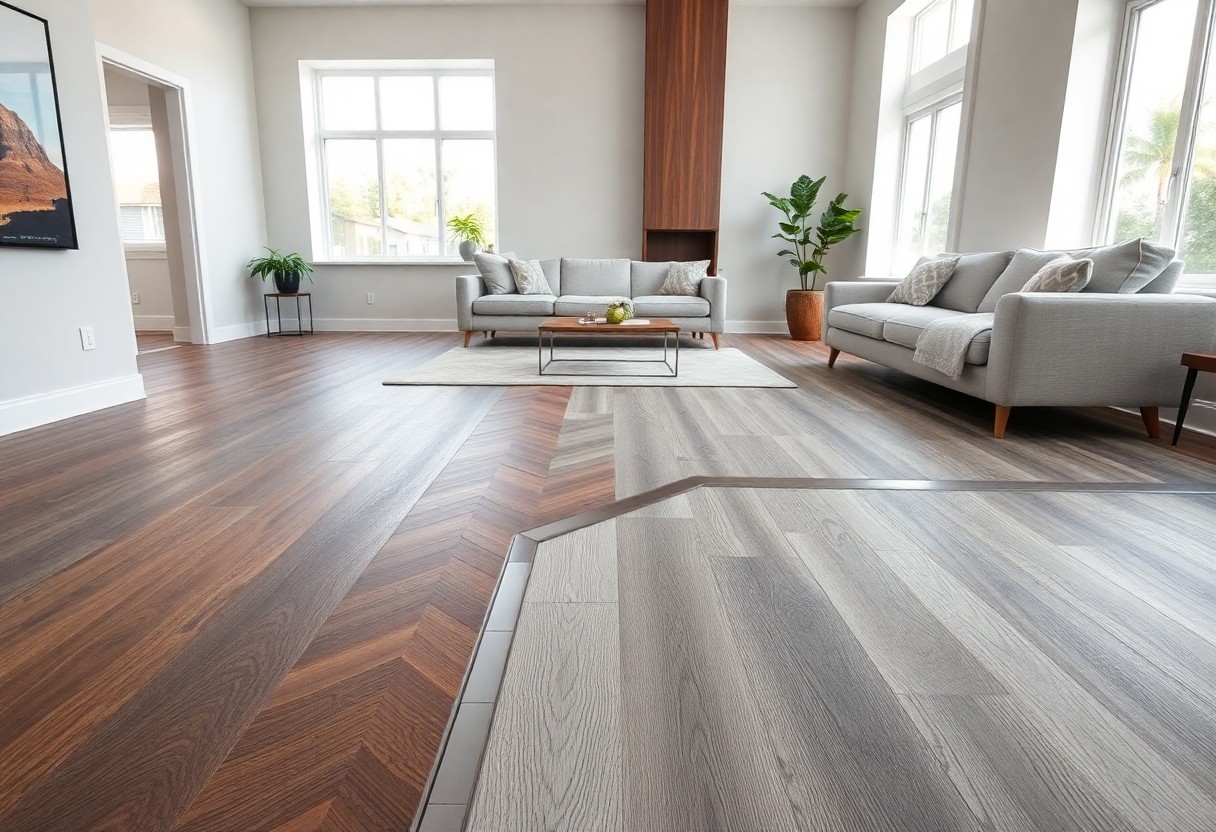
With the right combination of laminate and custom hardwood, you can shape the character of your space through color, grain, and arrangement. You have more control over your home’s aesthetic than ever, whether you’re drawn to the warmth of real wood or the resilience of modern laminate. Each material brings distinct advantages, and together, they offer layered design possibilities that respond to light, furniture, and foot traffic in unique ways.
The Solid Wood
Choosing solid wood sets a lasting foundation for your home’s aesthetic and structural integrity. Each plank carries natural variations that develop character over time, offering a depth no synthetic material can fully replicate. You’re investing in a floor that can be sanded and refinished multiple times, adapting to future design shifts without replacement.
Picking the Tree
Species selection directly influences both tone and durability. Oak brings timeless grain patterns suitable for traditional or modern settings, while walnut offers rich, dark hues with a smooth finish. Your choice affects how light interacts with the room and how well the floor withstands daily wear in high-traffic areas.
The Custom Stain
A custom stain tailors the wood’s natural color to your exact preference, bridging the gap between standard finishes and your vision. Whether you want a warm honey glow or a cool, ashy tone, the stain enhances the grain while aligning with your room’s palette.
Working with a finisher, you can test stain samples on scrap boards to observe how they react to your lighting conditions. Natural sunlight often reveals undertones that artificial light masks, so evaluating samples at different times of day ensures accuracy. A mid-sized SaaS firm’s office renovation recently used this method to match their walnut floors with built-in oak shelving, creating a cohesive yet layered effect. The process involves sanding the wood to an even grit, applying the stain in thin, consistent coats, and sealing it with a protective topcoat suited to your household’s activity level. Water-based polyurethane dries faster and yellows less over time, while oil-based options offer a deeper sheen and longer cure period. Your final choice impacts not only appearance but long-term maintenance and resistance to scratches or spills.
The New Laminate
Laminate flooring has evolved far beyond its basic origins, now offering durability and visual depth that rival natural wood. You benefit from advanced printing technology and wear layers that withstand heavy foot traffic while mimicking the grain and knots of real timber. This modern iteration suits both high-movement areas and design-focused spaces.
Strength of the Layer
A dense core board made from compressed wood fibers gives today’s laminate exceptional resistance to dents and moisture. You’ll find many options rated for use in kitchens and basements, where spills and humidity were once major concerns. The top wear layer, often aluminum oxide, protects against scratches without sacrificing visual clarity.
Visual of the Forest
High-definition imaging captures the subtle color variations and textures of real hardwood, from weathered oak to rich walnut. You see authentic grain patterns and even embossed surface details that align with the printed image. This precision creates a convincing illusion of solid wood at a fraction of the cost.
Photographic layers are now paired with synchronized embossing, meaning the texture underfoot matches the visual grain exactly. You can run your hand across a plank and feel the raised lines of a split log or the smooth curve of a sawn edge, reinforcing the realism. A mid-sized SaaS firm retrofitting its office space chose a matte-finish laminate with a wire-brushed oak look, achieving a warm, professional aesthetic without the maintenance demands of real wood.
The Color of the Room
Color shapes how space feels, and your flooring sets the base tone. You can make a room feel larger, cozier, or more modern just by choosing the right wood hue, whether rich espresso or soft birch. The walls, furniture, and natural light all interact with the floor’s undertones, creating a unified atmosphere.
Depth of the Dark
Dark hardwood or laminate adds sophistication and anchors a room visually. You’ll find that deep browns or charcoal tones work well in formal living areas or studies, offering a sense of warmth without overwhelming if balanced with lighter furnishings and ample lighting.
Clarity of the Light
Light-toned floors reflect more natural light, making small or dim rooms appear more open. You might choose whitewashed oak or pale gray laminate to enhance brightness, especially in north-facing spaces where sunlight is limited throughout the day.
A pale floor can subtly shift in appearance depending on the time of day and type of artificial lighting used. You may notice beige undertones emerge under warm bulbs, while cooler LEDs highlight the gray or ash notes in the planks, allowing the same floor to feel dynamic across different settings.
The Texture of the Surface
Texture influences both the look and feel of your flooring, shaping how light reflects and how your feet respond with each step. You can choose surfaces that mimic the natural wear of aged timber or opt for a factory-smooth finish that resists everyday scuffs. Your selection affects not only aesthetics but also slip resistance and sound absorption in high-traffic areas.
Grit of the Brush
Brushed laminate carries fine grooves that follow the grain pattern, enhancing the wood-like character while hiding minor scratches. You’ll notice this texture works especially well in homes with pets or children, where surface resilience matters. The slight roughness adds depth, making lighter tones appear warmer and more dimensional.
Smoothness of the Mill
Milled hardwood arrives with a refined, even surface that highlights the wood’s natural luster. You’ll feel the difference under bare feet-cool, consistent, and free of pronounced grain ridges. This finish suits modern interiors where clean lines and minimal tactile variation are preferred.
Factory-milled smoothness often results from precision planing and light sanding, preserving the board’s integrity without removing excess material. You can achieve a glass-like effect with certain finishes, particularly on maple or birch, where tight grain responds well to high-sheen sealants. A mid-sized SaaS firm’s office renovation used this finish to create a seamless transition between workstations and lounge areas.
The Layout of the Boards
How you arrange your flooring planks affects both the perceived size of a room and the flow of light across its surface. Your choice of pattern influences the architectural rhythm, guiding the eye in deliberate directions that complement the space’s function and design.
The Straight Path
You lay boards parallel to the longest wall, creating a clean, streamlined effect that enhances continuity in narrow rooms. This classic arrangement minimizes cuts and installation time, making it a practical choice for open-plan areas.
The Angle of the Bone
You install planks at a 45-degree angle from the corner, forming a herringbone-like zigzag that adds dynamic movement to formal living rooms or entryways. The pattern demands precise cutting but delivers a tailored, high-end finish.
Angled layouts draw attention to craftsmanship, with each joint forming a sharp V-shape that echoes traditional European ateliers. A mid-sized SaaS firm’s executive lounge, for example, used this layout in smoked oak to anchor a minimalist interior with warmth and precision. The alignment works best in square rooms where symmetry can be maintained without excessive waste.
The Care of the Floor
Maintaining your laminate or custom hardwood flooring preserves both appearance and longevity, with daily upkeep playing a key role. Simple habits like removing shoes at the door and using doormats reduce grit and prevent micro-scratches over time. Each material responds differently to moisture and cleaning agents, so understanding their specific needs ensures lasting beauty.
The Sweep of the Broom
Dust and debris accumulate quickly on large floor surfaces, making dry sweeping a necessary habit. A soft-bristle broom used every few days removes particles before they embed into the finish or laminate texture. Focus on corners and beneath furniture where dust tends to gather unnoticed.
The Touch of the Cloth
Damp mopping with a nearly dry microfiber cloth removes smudges and residue without risking water damage. Excess moisture can swell laminate edges or warp hardwood over time, especially at seams and end joints. Wring the cloth thoroughly and move in the direction of the grain for best results.
A well-wrung cloth, lightly misted with a pH-neutral cleaner, lifts fingerprints and spills without leaving streaks. Avoid vinegar-based solutions on hardwood as repeated use may dull the finish. For laminate, steer clear of steam mops entirely since trapped vapor can compromise the core layer. A mid-sized SaaS firm’s office retrofit showed fewer maintenance issues after switching to weekly microfiber routines.
To wrap up
You balance aesthetics and practicality when choosing between laminate and custom hardwood, each offering distinct advantages in color, texture, and layout. A light herringbone pattern in engineered wood can transform a narrow hallway, while a matte-finish laminate in warm gray grounds a sunlit living area. Your space reflects your priorities, whether it’s the authenticity of grain or the resilience of a scratch-resistant surface.