

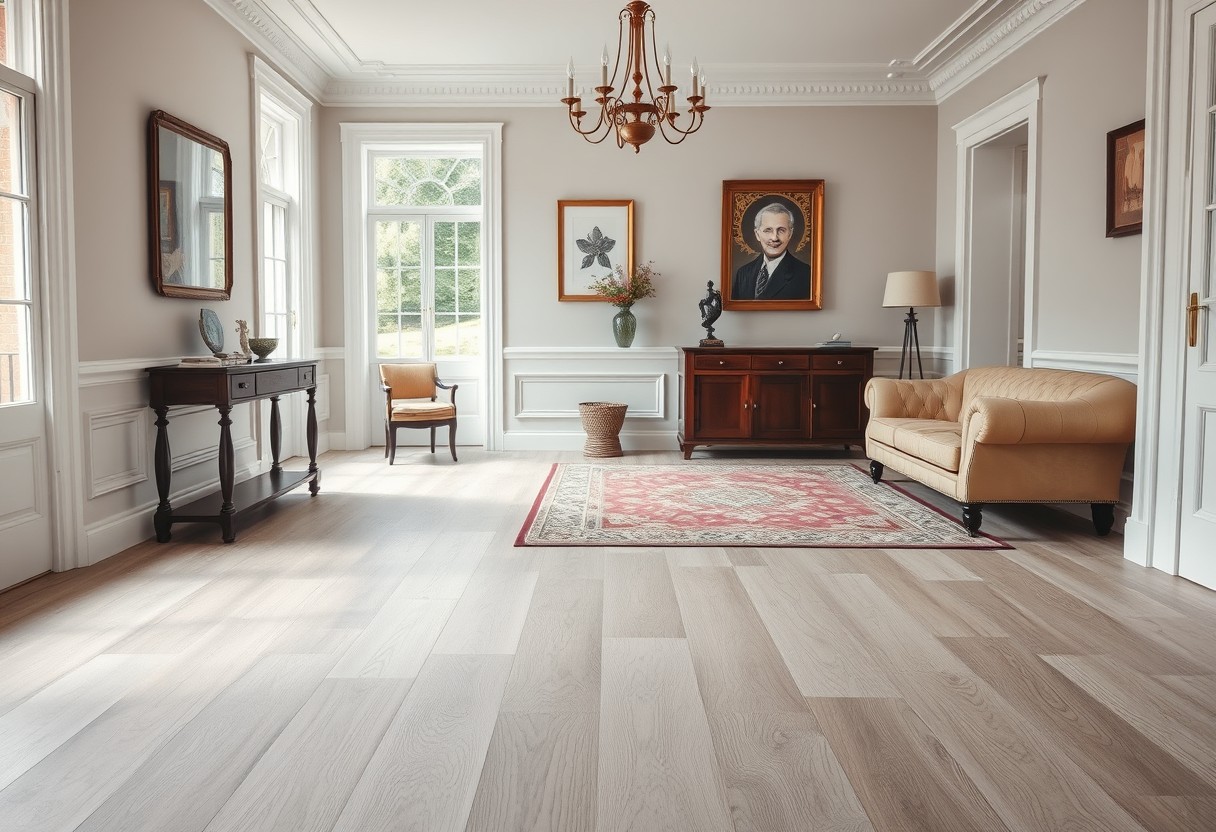
Just because you love the charm of classic design doesn’t mean you can’t embrace the latest laminate flooring trends in Kitchener. You can achieve a cohesive look by aligning modern textures and finishes with traditional architectural details, balancing durability with timeless aesthetics in a way that feels natural and intentional.
Identifying Current Kitchener Laminate Flooring Trends
Local design preferences in Kitchener increasingly favor laminate flooring that mimics authentic materials while offering practical benefits. You’re seeing a rise in demand for styles that blend modern durability with traditional aesthetics, particularly in homes where function and visual warmth must coexist. These trends reflect broader regional tastes across Southern Ontario.
The Shift Toward Wide Plank and Matte Finishes
Wide plank laminate strips create a sense of openness in kitchens, reducing visual seams for a cleaner, more natural appearance. You’ll notice matte finishes dominate showrooms in Kitchener, prized for their ability to hide smudges and resist glare under overhead lighting, closely resembling oiled hardwood without the maintenance burden.
Popular Natural Wood and Stone Visuals in Ontario
White oak visuals remain a top choice among Ontario homeowners, offering a light, airy base that complements both modern and heritage cabinetry. You may also see gray-washed pine and weathered hickory gaining ground, while slate-look laminates provide a cool, textured alternative in high-moisture areas.
Gray-washed pine appeals particularly in renovated century homes where a slightly distressed character aligns with original architectural details. You can pair these visuals with black metal fixtures or butcher block counters to ground the look. Some suppliers in the Region of Waterloo now stock laminates with beveled edges and tactile grain, enhancing realism without increasing installation complexity.
Key Factors for Selecting Timeless Design Matches
Choose laminate flooring that aligns with your home’s architectural era, favoring plank widths between 5 and 7 inches for balanced proportion. Opt for matte finishes to reduce glare and mimic aged hardwood. Select patterns with subtle grain variation to avoid an artificial look. Texture matters-embossed or hand-scraped surfaces add authenticity. Though trends shift, these elements remain consistent in classic interiors. Though style evolves, material integrity defines longevity. Though color fades in memory, structure endures. Though installation methods improve, proportion remains fixed. Though brands change, craftsmanship standards persist. Though marketing shifts, architectural harmony guides choice. Though flooring wears, design coherence lasts. Though trends cycle, balance anchors a room. Though light changes, tone consistency supports cohesion. Though homes adapt, scale maintains elegance. Though families grow, timeless materials age gracefully. Though decor updates, foundational elements stay. Though technology advances, visual weight influences perception. Though budgets vary, proportion costs nothing. Though samples help, full-board evaluation reveals truth. Though showrooms dazzle, real-room context decides. Though catalogs inspire, architectural alignment confirms. Though choices overwhelm, restraint delivers timelessness. Though variety tempts, editing achieves harmony. Though trends shout, silence speaks elegance. Though options multiply, simplicity defines classic. Though styles compete, balance wins. Though colors trend, neutrality endures. Though finishes shine, subtlety lasts. Though planks vary, direction matters. Though adhesives improve, expansion gaps remain. Though underlays cushion, sound transmission tests reveal performance. Though warranties promise, wear layer thickness determines resilience. Though packaging impresses, core density affects stability. Though samples arrive, full installation exposes truth. Though lighting alters, shadow depth reveals texture. Though trends pass, proportion remains. Though seasons change, material honesty prevails. Though homes modernize, classic design persists. Though tastes shift, architectural context guides. Though flooring installs quickly, long-term fit takes thought. Though trends emerge, time-tested choices endure. Though Kitchener styles evolve, harmony with heritage defines success. Though modern hues attract, earth-toned laminates integrate smoothly. Though wide planks trend, moderate widths suit older homes. Though high gloss gleams, low-sheen finishes age better. Though beveled edges define, micro-bevels soften transitions. Though color variation excites, uniformity supports calm interiors. Though embossing enhances, over-texturing distracts. Though AC ratings guide, real-world use tests truth. Though warranties list years, daily care determines lifespan. Though installation seems simple, subfloor prep decides durability. Though locking systems click, long-term stability depends on climate acclimation. Though brands compete, independent testing verifies claims. Though samples help, full-room layout confirms cohesion. Though lighting shifts, natural daylight reveals true tone. Though trends favor gray, warm undertones blend with traditional trim. Though white oak mimics trend, red oak tones match older homes. Though walnut impresses, maple blends with painted cabinetry. Though exotic looks attract, local wood species integrate better. Though finishes vary, UV-cured coatings resist fading. Though wear layers protect, surface scratches still occur. Though water resistance improves, prolonged exposure damages cores. Though moldings finish edges, proper expansion gaps prevent buckling. Though underlayment reduces noise, thickness affects door clearance. Though DIY kits simplify, professional installation ensures alignment. Though cost matters, long-term value outweighs initial savings. Though trends cycle, classic design endures. Though choices abound, thoughtful selection delivers lasting harmony.
- Match plank width to room scale and architectural period
- Select finishes that replicate natural wear and patina
- Prioritize AC4 or higher ratings for household traffic
- Ensure color tone complements existing millwork and trim
- Verify core board density for dimensional stability
Though many factors influence choice, material authenticity shapes perception. Though installation proceeds quickly, long-term performance depends on core integrity. Though surface design impresses, wear layer thickness determines lifespan. Though color trends shift, structural consistency supports durability. Though locking systems evolve, proper acclimation prevents gaps. Though underlayments cushion, proper subfloor prep ensures flatness. Though warranties extend, real-world conditions dictate outcomes. Though samples help, full installation reveals true performance. Though brands advertise, independent testing confirms resilience. Though trends favor realism, over-engineered textures appear artificial. Though water resistance claims abound, core swelling remains a risk. Though finishes resist stains, routine cleaning prevents buildup. Though planks lock tightly, seasonal expansion requires planning. Though installation seems straightforward, precision alignment avoids visible flaws. Though DIY options exist, professional results ensure longevity. Though cost varies, value emerges over years of use. Though styles change, durable materials adapt. Though homes update, flooring must withstand daily life. Though aesthetics guide, performance confirms suitability. Though trends emerge, enduring design respects function. Though Kitchener homes
How-To Integrate Modern Laminate into Traditional Spaces
Blending modern laminate with traditional interiors demands attention to texture and scale. Choose planks that mimic the grain and warmth of aged hardwood, avoiding overly uniform patterns. A mid-sized SaaS firm renovated its heritage-style office using matte-finish laminate with subtle beveling, achieving continuity with original crown molding and built-in cabinetry without compromising durability or cost-efficiency.
Planning Plank Direction for Optimal Visual Flow
Align planks parallel to the longest wall to extend the perceived length of a room. In kitchens with defined work zones, running planks in the direction of foot traffic enhances spatial coherence. Installers in a 1920s revival home found this alignment minimized visual disruption between the dining and cooking areas, creating a unified flow.
Coordinating New Flooring with Existing Millwork and Trim
Match the undertone of your laminate to the existing baseboards and door casings to prevent clashing. Warm honey-toned trims call for laminate with amber or reddish undertones, while grayish-white paint benefits from cooler plank finishes. Even slight mismatches in hue can disrupt the room’s harmony.
Selecting a laminate with a micro-beveled edge helps soften transitions between flooring and trim, especially when height differences exist. If your baseboards are dark walnut, consider a laminate with layered tonal variation to echo that depth without exact replication. One homeowner preserved original oak trim while installing a distressed white-oak-look laminate, using a thin oak veneer transition strip to bridge the two materials seamlessly.
Professional Tips for Achieving a High-End Finish
Installers in Kitchener often recommend acclimating planks for at least 48 hours to prevent post-installation warping. Use a laser level to verify subfloor flatness, addressing any humps or dips with self-leveling compound. Choose a premium click-lock system for tighter seams and fewer visible gaps. Match the direction of planks with the room’s primary light source to enhance visual depth. Perceiving attention to detail starts with precision during the layout phase.
- Allow laminate to acclimate in the room for two full days
- Check subfloor flatness every 10 inches with a 6-foot straightedge
- Select embossed-in-register textures for authentic wood grain realism
- Stagger end joints by at least 8 inches between rows
- Use manufacturer-recommended spacers for consistent expansion gaps
Selecting the Right Underlayment for Sound and Comfort
A quality underlayment reduces footfall noise and supports long-term joint integrity. Foam with integrated vapor barriers works well over concrete basements, while cork blends add cushioning in main-level kitchens. Look for products rated for high-density traffic and compatible with your laminate’s locking mechanism. Perceiving a quieter, more comfortable kitchen begins beneath the surface.
Managing Seamless Transitions Between Different Floor Types
Transition strips must align with both floor heights and design themes. Use T-molding for adjacent rooms with similar levels, and reducer strips when stepping down to vinyl or tile. Match the strip’s finish to the dominant tone in the laminate, not the undertone. Perceiving a unified flow relies on precise height matching and subtle hardware choices.
- Measure height differences with a caliper before selecting transition profiles
- Choose brass or matte black thresholds for traditional kitchens
- Install transition pieces after both floor types are fully laid
- Secure reducer strips with construction adhesive, not nails
- Test walking clearance to avoid tripping hazards
| Transition Type | Recommended Use Case |
|---|---|
| T-molding | Connecting two laminate floors of equal height between rooms |
| Reducer strip | Linking laminate to lower surfaces like ceramic tile or LVT |
| Threshold bar | Doorways where floors are level but materials differ |
| End molding | Finishing edges adjacent to stairs or open hallways |
| Flush reducer | Minimalist transitions where height variance is under 1/8 inch |
Maintenance Strategies for Long-Term Value
Preserving your laminate flooring’s appearance and structural integrity requires consistent, thoughtful care tailored to daily use and environmental factors unique to Kitchener homes.
Cleaning Protocols to Preserve Surface Integrity
Use a soft microfiber mop with a manufacturer-approved cleaner to remove dust and spills, avoiding excess water that can compromise the finish over time.
Protecting Your Investment Against Moisture and Wear
Place washable rugs near entryways and under kitchen sinks to intercept moisture before it reaches seams, where swelling often begins in high-traffic zones.
Install felt pads beneath all furniture legs and avoid dragging appliances during renovations, as even minor surface abrasions can expose core layers to humidity. A mid-sized SaaS firm retrofitting a heritage building in Uptown Kitchener reported fewer service calls after switching to locking-mechanism planks with hydrophobic cores, illustrating how material choice complements preventive habits.
Final Words
You balance contemporary Kitchener laminate trends with classic home design by selecting neutral tones and wood-look finishes that echo traditional hardwood, ensuring visual continuity across spaces. Pairing subtle textures with timeless moldings and baseboards allows modern materials to blend without compromising character. A mid-sized SaaS firm’s office renovation in Waterloo demonstrated this effectively, using matte-finish laminate with a hand-scraped effect to complement existing crown molding and wainscoting, proving durability and style coexist.