
Over time your white oak flooring shows wear; you protect it by sweeping daily, using a barely damp mop, wiping spills promptly, controlling humidity, placing felt pads under furniture, using runners in high-traffic areas, and refinishing every seven to ten years to restore finish and prevent deep damage.
Understanding White Oak Durability Factors
White oak combines tight grain and natural hardness; you should assess key factors before maintaining floors.
- Grain density
- Finish type
- Moisture control
Recognizing how these factors interact helps you prioritize care.
Grain Density and Janka Hardness Ratings
Grain density and the Janka rating show how well the wood resists dents; you can use these measures to choose and protect high-traffic boards.
How Environmental Humidity Affects Wood Stability
Humidity swings force oak to expand and contract, causing gaps or cupping; you should keep indoor relative humidity steady to minimize movement.
Seasonal humidity shifts can warp planks over months; you should control both baseline humidity and rapid swings with humidifiers or dehumidifiers, monitor levels with a hygrometer, and allow proper acclimation before installation to reduce joint gaps and cupping.
Essential Daily Maintenance Tips
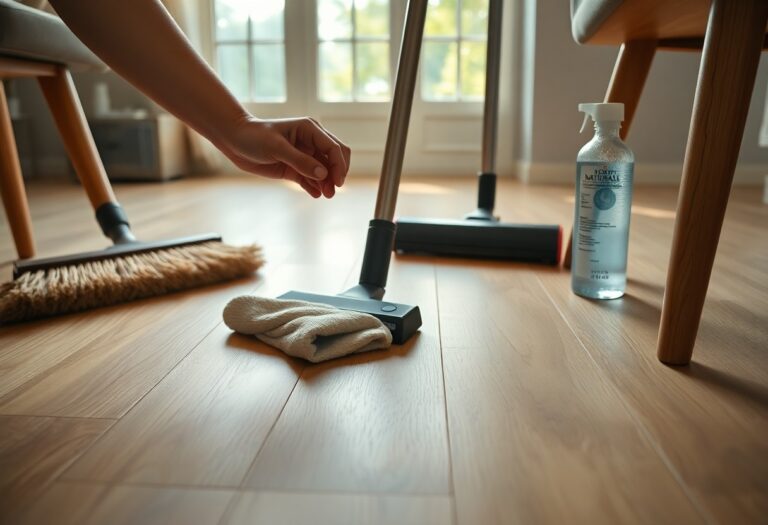
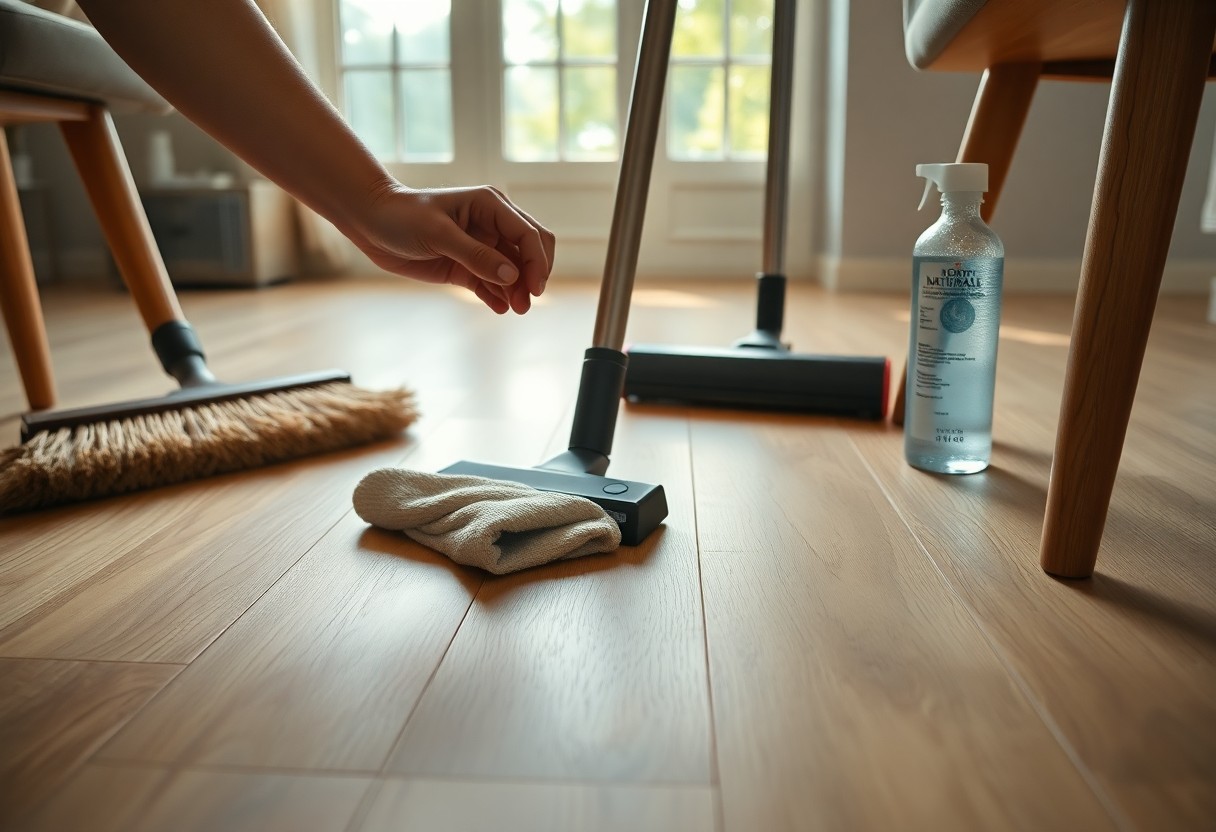
Daily wipe-ups and spot cleaning prevent grit buildup; use a microfiber mop and soft broom so you keep surfaces clear. You should place mats at entrances and trim pet nails to reduce damage. The simple routine preserves the finish and cuts long-term wear.
- Use microfiber mops for daily dusting
- Choose soft-bristle brushes for corners
- Vacuum with a floor-brush attachment regularly
Selecting the Correct Soft-Bristle Tools
Choose soft-bristle brushes and microfiber mops to sweep without abrading the wood; test on an inconspicuous area and use gentle pressure so you don’t wear the finish.
Effective Debris Removal to Prevent Scratches
Sweep high-traffic zones daily and vacuum with a floor-brush attachment to remove grit before it scratches planks; check corners and under furniture frequently so you avoid abrasive buildup.
Inspect and remove abrasive particles by vacuuming with a soft-brush or floor-specific attachment at least twice weekly in busy areas and sweep daily where traffic is high; use a dust mop for wider coverage, lift furniture when cleaning underneath, and apply felt pads to legs to prevent grit grinding into planks when pieces move. Wipe spills immediately and shake mats outside so you keep grit from migrating indoors.
How to Deep Clean Without Damaging the Finish
Use a soft-bristled vacuum or microfiber broom to remove grit, then tackle sticky spots with a barely damp cloth and a pH-neutral cleaner to protect the finish.
Choosing pH-Neutral Cleaning Solutions
Select cleaners labeled pH-neutral and dilute them as directed so you won’t harm the finish; avoid ammonia, vinegar, and oil soaps that strip protective coatings.
Proper Damp-Mopping Techniques for Hardwood
Wring your mop until barely damp, work with the grain in short passes, and dry areas immediately to prevent water damage and finish dulling.
Microfiber flat mops pick up grit without excess water; when you mix warm water with a pH-neutral cleaner, rinse the pad frequently and finish with a dry microfiber to remove residual moisture.
Protective Measures to Prevent Surface Wear
Protective measures like entrance mats, a no-shoes policy, and felt pads under chairs help you prevent surface abrasion and grit damage while reducing the need for frequent refinishing.
Utilizing High-Quality Furniture Pads and Rugs
Using premium felt or rubber furniture pads and non-slip rug grippers prevents scratches, distributes weight evenly, and lets you move pieces without gouging the finish.
Managing Sunlight Exposure and UV Discoloration
Limit direct sunlight on oak floors by closing blinds, rotating rugs, and shifting furniture so you avoid uneven fading and long-term discoloration.
Install UV-filtering window film and heavy-duty shades to cut UV transmission, choose area rugs with underlays to block light, and rotate furnishings seasonally; you should also apply a UV-resistant topcoat during refinishing to preserve color uniformity and slow photodegradation.
How to Address Spills and Stains Promptly
Act fast when spills happen: blot liquids with a soft cloth, lift solids gently, and use a mild, floor-safe cleaner for lingering stains so you protect the finish and prevent deep damage.
Safe Blotting Methods for Liquid Spills
Gently press an absorbent cloth to the spill, dab from the outer edge toward the center, and replace soaked layers so you avoid spreading the liquid and reduce the risk of staining.
Removing Scuffs and Minor Surface Marks
Lightly buff scuffs with a soft cloth or non-abrasive pad using circular motions, and apply a small amount of manufacturer-approved cleaner or polish to blend the mark so you preserve the finish.
If scuffs persist, test any product in an inconspicuous spot first, use a white vinyl eraser for light marks, try a 0000 steel wool pad with oil for stubborn surface scuffs, or use a color-matched touch-up marker; consult a professional when damage penetrates the finish so you avoid overworking the floor.
Long-Term Refinishing and Recoating Factors
Maintenance choices like finish type, foot traffic, and humidity affect how often you sand or recoat. Recognizing cumulative wear patterns and finish thinning helps you plan intervals and extend flooring life.
- Finish type and sheen level
- Traffic patterns and pets
- Environmental humidity and sunlight exposure
- Cleaning methods and routine care
Identifying When to Apply a Maintenance Coat
Inspect high-traffic areas for dulling, scuffing, or loss of water beading; you can apply a maintenance coat when protection wanes to prevent finish failure and avoid deeper repairs.
Deciding the Best Time for Professional Refinishing
Evaluate widespread scratches, visible bare wood, persistent staining, and gaps; you should call a pro when surface repair no longer restores appearance or protection.
Consider factors like finish depth, visible wood exposure, widespread scratches, and cupping when choosing professional refinishing; you should weigh cost versus expected lifespan gains, seasonal humidity for proper curing, and whether board replacement or stain matching is needed. You can request sanding-depth estimates, a written scope, and schedule work during dry months to ensure a durable result.
Summing up
Now you can keep white oak floors lasting decades by sweeping and vacuuming with a soft brush, mopping with a damp cloth and pH-neutral cleaner, wiping spills immediately, using entry rugs and felt pads under furniture, controlling humidity, trimming pet nails, and refinishing when wear appears.