

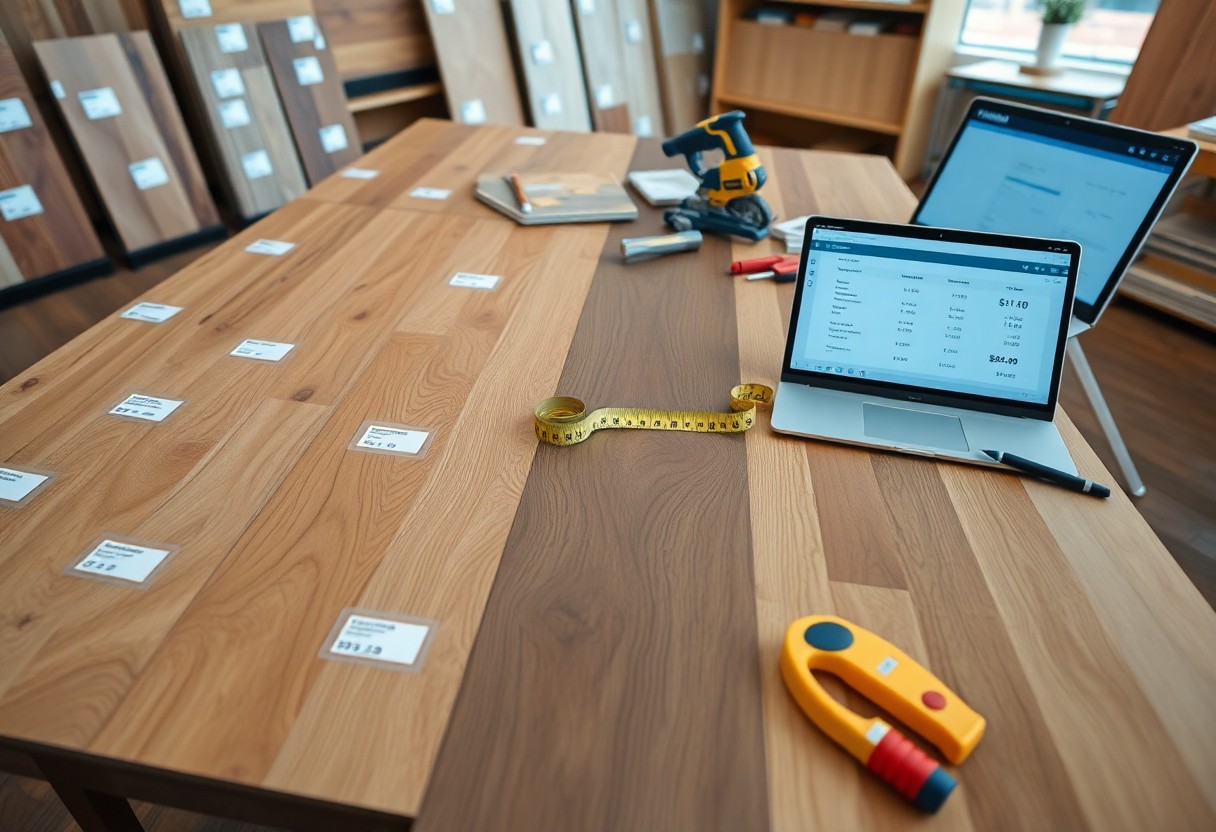
It’s your home, and every step across the floor should reflect your taste and intention. Custom hardwood flooring offers precise control over material, pattern, and finish, transforming a fundamental element of your space into a tailored feature. You choose the wood, the layout, the sheen, and the feel, with long-term value shaped by informed decisions made now.
The Selection of the Timber
Choosing the right wood sets the foundation for both the visual character and long-term resilience of your floor. You weigh factors like grain pattern, hardness, and how the timber responds to light, knowing each species carries its own rhythm. Your lifestyle and home environment guide whether you prioritize scratch resistance, warmth underfoot, or tonal variation over time.
Hardwoods of the North
Domestic species like white oak, maple, and hickory offer durability and a familiar aesthetic rooted in regional forests. You might select rift-sawn white oak for its linear grain in a modern loft, or hand-scraped hickory for a rustic farmhouse kitchen where resilience matters.
Woods from Far Places
Exotic timbers such as Brazilian cherry, wenge, or teak bring bold color and density uncommon in local woods. You consider their deep reddish tones or dramatic contrast, aware these species often require special handling due to their oil content and environmental sourcing concerns.
Tropical hardwoods grow slowly in dense forests, contributing to their exceptional hardness and distinctive figure. You may find teak develops a silvery patina over decades, while Brazilian walnut maintains its rich chocolate hue with proper maintenance. Import regulations and sustainability certifications like FSC become important considerations when specifying these materials, especially for a mid-sized SaaS firm’s headquarters aiming for responsible design.
The Pattern of the Planks
How you arrange the planks defines the room’s rhythm and perceived size. Laying them in straight runs offers simplicity and makes narrow spaces feel longer. Angled or geometric configurations draw the eye and add architectural interest, especially in open layouts where flooring helps define zones without walls.
The Strength of Herringbone
Herringbone brings sharp visual energy through its V-shaped alignment, typically cut from shorter plank segments. You’ll find this pattern in historic estates and modern lofts alike, where its precision demands skilled installation but rewards with timeless structure and movement under light.
The Border of the Room
A border frames the floor like a picture, often using contrasting wood or a secondary pattern along the perimeter. You can keep it simple with a single row of darker walnut or build a multi-strip inset that echoes traditional parquetry, anchoring the design near walls and transitions.
Complex borders may incorporate inlaid strips of maple or cherry to form geometric liners or medallion accents at entry points. A mid-sized SaaS firm retrofitting a heritage office, for example, chose a three-piece oak-and-walnut border to subtly signal shifts between meeting and collaboration zones without physical dividers.
The Texture of the Grain
Wood grain reveals the story of the tree’s growth, with variations in density and pattern shaped by climate, soil, and age. Your choice of finish will either emphasize or mute these natural ridges and swirls, affecting both appearance and feel underfoot. Quarter-sawn oak offers tight, linear grain, while wide-plank pine shows more pronounced, rustic movement.
The Work of the Hand
Hand-scraped finishes add character through subtle indentations and soft edges, each board shaped by the craftsman’s tool. This technique disguises everyday wear and brings a lived-in elegance to high-traffic areas. You’ll find this texture pairs well with farmhouse or industrial interiors.
The Protection of the Oil
Oiled finishes penetrate the wood, enhancing its natural color and grain while providing a tactile surface that ages gracefully. You’ll need to reapply oil periodically, especially in entryways or kitchens where moisture and foot traffic are higher. Unlike polyurethane, oil doesn’t form a thick film, reducing the risk of peeling.
An oiled floor responds dynamically to light, deepening in hue after application and developing a soft sheen over time. You can choose matte or satin oils depending on your desired level of reflection. Maintenance involves using pH-neutral cleaners and avoiding steam mops, which can degrade the oil layer. A mid-sized SaaS firm’s office in Portland opted for hardwax oil to balance durability with a natural aesthetic, requiring only biannual touch-ups in common areas.
The Cost of the Work
Understanding the full expense of custom hardwood flooring means accounting for both materials and skilled labor. Your final investment reflects the wood species chosen, the complexity of the design, and the precision required during installation. A mid-sized SaaS firm relocating its office space might prioritize durability and aesthetics, directly influencing budget allocation.
The Price of the Wood
Exotic species like Brazilian cherry or tigerwood command higher prices due to scarcity and import logistics. Domestic options such as white oak or maple offer more predictable pricing, though grain grade and board width still affect cost. You’ll pay more for wider planks and premium cuts with minimal knots or color variation.
The Wage of the Craftsman
Skilled installers charge based on experience, regional rates, and project complexity. Intricate patterns like herringbone or parquet require advanced technique, increasing labor hours. You’re not just paying for time, but for the precision that ensures a seamless, long-lasting finish.
Master floor layers often apprentice for years before handling custom installations independently. Their ability to acclimate wood properly, cut with exactness, and align patterns flawlessly reduces waste and callbacks. You benefit from fewer gaps, quieter floors, and a result that aligns exactly with the design plan.
The Waiting and the Labor
Custom hardwood flooring demands patience, often requiring several weeks from installation start to final finish. You coordinate around your household’s routine, as the process involves multiple on-site stages and drying periods between coats. Skilled labor is crucial, with experienced floor installers ensuring precision in alignment, expansion gaps, and finish application.
The Air in the House
Humidity levels in your home directly affect how the wood behaves during and after installation. You maintain a stable indoor climate, ideally between 35% and 55%, to prevent warping or gapping as the planks acclimate and settle into place.
The Sanding and the Dust
Sanding transforms rough, installed planks into a smooth, unified surface, but it generates fine dust that settles throughout nearby rooms. You prepare by sealing doorways and removing or covering furniture, electronics, and valuables before the work begins.
A professional sanding crew uses industrial drum and edge sanders, progressing through multiple grits to remove imperfections and blend board heights. Even with HEPA-filter vacuums and containment measures, microscopic particles infiltrate vents and baseboards, requiring thorough post-job cleaning. A mid-sized SaaS firm’s office renovation once delayed its return to operations by two extra days due to lingering dust in server areas, illustrating how pervasive the residue can be.
The Life of the Wood
Wood responds to your home’s climate, expanding slightly in humidity and contracting when dry, which is normal and expected over time. Gaps between planks may appear in winter and close in summer, especially with wider boards. Engineered hardwood handles moisture better in basements or humid regions, while solid wood suits above-grade rooms. Proper acclimation before installation minimizes movement.
The Simple Cleaning
Regular maintenance involves sweeping or dry mopping daily to remove dust and grit that can scratch the surface. Use a manufacturer-approved cleaner and a damp (not wet) microfiber mop for spills or sticky spots. Avoid vinegar, steam mops, or soap-based cleaners, as they can dull or damage the finish over time.
The Future Sanding
Sanding restores worn floors by removing the top layer and refinishing the surface. Solid hardwood can typically be sanded three to five times depending on thickness, while engineered options may allow one or two light sandings if the wear layer is sufficient. Each refinishing extends the floor’s life by decades.
Plan for sanding every 10 to 15 years under normal household traffic, more often in high-use areas like entryways or kitchens. A mid-sized SaaS firm’s office with open-plan layout and hardwood floors underwent refinishing after 12 years, restoring its original luster with minimal disruption. The process removes scratches, discoloration, and minor dents, adapting the floor to evolving aesthetics or wear patterns.
Conclusion
Custom hardwood flooring reflects your home’s character through material, pattern, and finish choices, with species like white oak or walnut setting distinct tones. You see variation in cost based on plank width, installation complexity, and site conditions, often ranging significantly between regions and contractors. Your expectations should account for weeks of lead time, dust during installation, and the need for acclimation. A mid-sized SaaS firm’s office renovation, for example, delayed occupancy by 10 days due to flooring curing. The wood ages with use, developing a lived-in patina that machine-finished planks rarely replicate. You receive not just a floor but a long-term surface shaped by time, foot traffic, and seasonal shifts in humidity.