

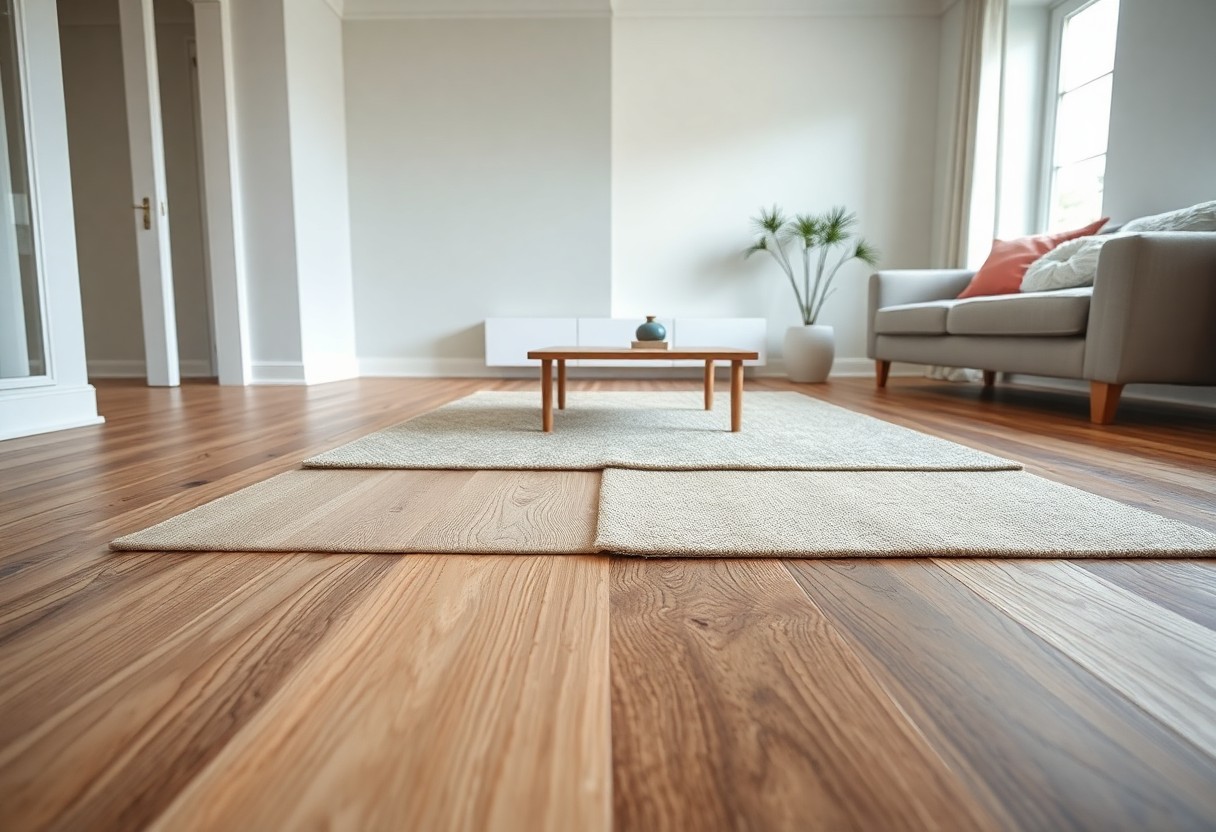
Just stepping into a room can tell you something about its floor-whether it’s the warm grain underfoot or the crisp click of a synthetic surface, your choice shapes the home’s character. You’re deciding between lasting natural beauty and practical resilience, two paths with distinct trade-offs in cost, upkeep, and appearance. This decision hinges on your lifestyle, budget, and how long you plan to stay put.
The Honest Grain of Hardwood
Hardwood flooring carries a natural character that synthetic materials can’t replicate, with each plank shaped by years of growth and environmental influence. You see subtle variations in color, grain patterns, and texture that evolve over time, gaining depth and warmth. This authenticity becomes more pronounced with light exposure and daily use, giving your space a living, organic feel that remains distinct room by room.
Solid Oak and Maple
Red oak and hard maple stand as two of the most common species in solid hardwood installations, each offering different visual and structural qualities. You’ll find red oak slightly more porous and warm-toned, while hard maple delivers a denser, lighter surface with a finer grain, often preferred in modern or high-traffic environments.
The Price of the Forest
Choosing solid hardwood means paying not just for material but for decades of growth, skilled milling, and artisan installation. You’re investing in a floor that can last generations, though the initial cost reflects premium sourcing and labor, often running significantly higher than factory-produced alternatives.
That upfront expense includes more than the planks themselves. You’re covering specialized underlayment, precise subfloor preparation, and the time-intensive process of sanding and finishing on-site. A mid-sized SaaS firm might lease office space with luxury vinyl, but a historic brownstone renovation will likely specify white oak, recognizing that some value can’t be faked or fast-tracked.
The Synthetic Alternative
Laminate flooring offers a practical solution when natural wood isn’t feasible. Engineered from composite materials, it mimics the appearance of real wood while prioritizing durability and cost efficiency. You’ll find it installed in high-traffic apartments, rental units, and modern suburban homes where budget and resilience matter most.
Pressed Dust and Glue
A core layer of high-density fiberboard forms the foundation, made by compressing wood byproducts with resins. This material resists warping better than solid wood in fluctuating humidity, though prolonged water exposure still compromises its integrity. You’re necessaryly walking on a refined version of sawmill leftovers, stabilized for performance.
The Picture of Wood
A high-resolution photographic layer captures the grain, knots, and color variations of real timber. This image is sealed beneath a clear, wear-resistant top coat that repels scratches and fading. You see oak or walnut, but under your feet is a carefully constructed illusion built for consistency.
Modern laminate uses digital printing to replicate specific wood species with startling accuracy, including beveled edges that mimic planks. A mid-sized SaaS firm renovating its office space chose a walnut-look laminate to maintain a professional aesthetic without the cost or maintenance of hardwood. The print layer ensures every plank appears unique, even though the pattern repeats every few boards.
The Battle with Water
Water poses a serious challenge to flooring, and your choice affects how well your home withstands it. Hardwood brings natural beauty but suffers when exposed to moisture, often swelling or warping within hours of a spill. Laminate, while not fully waterproof, typically resists surface moisture better due to its composite structure. You’ll find modern versions include water-resistant coatings that buy time during accidents.
Spills on the Grain
Hardwood absorbs liquids quickly, especially if the finish is worn. A spilled glass of water left unattended can lead to permanent staining or cupping between boards. You must wipe spills immediately to avoid damage, making it less forgiving in busy households or kitchens.
Resistance to Damp
Laminate flooring handles ambient moisture better than solid wood, making it a practical option for basements or humid climates. Its core layer resists dampness longer, though prolonged exposure can still cause swelling at the seams.
Engineered laminate products now incorporate hydrophobic cores made from high-density fiberboard treated to repel moisture. In a mid-sized SaaS firm’s office renovation, this type of flooring survived a minor HVAC leak with no edge damage after 12 hours. While not suitable for flooding, it offers meaningful protection against damp conditions where hardwood would fail quickly.
The Work of the Hands
Installation complexity shapes your timeline and budget, whether you’re refinishing a kitchen or renovating a rental unit. Hardwood demands precision, while laminate offers speed, each aligning with different skill levels and project scopes.
Professionals and Nails
Hardwood flooring typically requires a professional installer who uses nails or staples to secure each plank to the subfloor. Your schedule may need to accommodate multiple days of work, including sanding and finishing on-site.
The Simple Click
Laminate planks connect through a click-and-lock system that lets you assemble them like puzzle pieces over a foam underlayment. You can complete an entire room in a single weekend without special tools or trade experience.
A mid-sized SaaS firm converted its office basement into a training space using laminate, relying on the click system to install over uneven concrete in two days. The planks locked tightly, minimizing gaps, and the floating floor handled minor subfloor imperfections without adhesive or nails.
The Test of Time
Hardwood flooring often outlasts its owners, with many homes from the early 1900s still standing on their original floors. You can refinish solid hardwood multiple times, extending its life far beyond initial expectations. This resilience makes it a long-term investment rather than a temporary finish.
Sanding the Surface
Sanding restores hardwood’s appearance by removing scratches and wear. You can typically refinish a solid hardwood floor five to eight times, depending on plank thickness. Each refinishing resets the surface, preserving the wood’s integrity and keeping it looking new for decades.
The Disposable Plank
Laminate cannot be sanded and must be replaced once surface damage becomes visible. You’re limited by the photographic layer on top, which wears thin over time. Once compromised, the board is no longer repairable and requires full replacement.
A mid-sized SaaS firm renovated its office using laminate for cost efficiency, only to replace it after six years due to fading and chipping at high-traffic entries. Unlike hardwood, individual laminate planks may be swapped out, but matching patterns fade over time, making repairs noticeable. This limits long-term usability in spaces where appearance matters.
The Weight of the Wallet
Choosing between laminate and hardwood often comes down to budget constraints and long-term expectations. Hardwood carries a higher initial price, both in materials and installation, but offers longevity and refinishing potential. Laminate presents a cost-effective alternative that mimics wood at a fraction of the expense, ideal for renters or those remodeling on a tighter budget.
The Value of the House
Hardwood flooring can increase a home’s resale value, often appealing to traditional buyers seeking timeless appeal. Laminate, while practical, does not carry the same cachet and may not influence appraisal figures in the same way, especially in higher-end markets.
Saving the Coins
Laminate costs significantly less per square foot, making it accessible for large areas or whole-home installations. You avoid the added labor charges tied to sanding and finishing, and replacement planks are inexpensive and easy to store for future repairs.
A mid-sized SaaS firm relocating its office space opted for laminate to cover 1,800 square feet across open work areas and meeting rooms, prioritizing durability and cost efficiency. The installation completed in two days with minimal disruption, using floating floor technology that required no adhesives or subfloor modifications, further reducing labor expenses.
Conclusion
Choosing between laminate and hardwood flooring depends on your lifestyle, budget, and long-term plans for your home. If you value authenticity and are prepared for regular upkeep, hardwood offers enduring appeal that can last generations. For a cost-effective, durable surface that mimics wood without the maintenance, laminate serves well in high-traffic or moisture-prone areas. A family with pets and children might prefer laminate’s resilience, while a homeowner planning to sell could benefit from hardwood’s proven market appeal. Your decision shapes not just the look of your floors, but how they feel underfoot and age over time.