

Just one spilled glass of water left unattended can begin to compromise the integrity of your laminate floor over time. You face daily wear from foot traffic, furniture movement, and environmental shifts that challenge the surface. Knowing how to care for and repair laminate flooring helps you preserve its appearance and structural resilience for years without costly replacements.
The Daily Sweep
Removing surface debris each day prevents abrasive particles from settling into the grain and scratching the finish over time. A consistent sweep takes little effort but greatly preserves the floor’s appearance and structural integrity.
Soft bristle tools
Soft bristle brooms or electrostatic sweepers capture fine dust without abrading the laminate’s wear layer. Stiff brushes or metal bristles should never contact the surface, as they can leave visible micro-scratches even after a single use.
Dust removal rhythm
Sweeping at least every other day keeps dust and grit from accumulating in high-traffic zones like entryways and kitchens. This routine is especially effective when done before mopping, ensuring dirt isn’t pushed into seams.
Walking into your home with outdoor shoes introduces sand and soil that act like sandpaper underfoot. Establishing a habit of sweeping after household activity or pet movement reduces long-term wear, particularly along the main pathways where abrasion concentrates near door thresholds and hallways.
The War Against Water
Laminate flooring resists scratches and fading well, but water remains its weakest enemy. Even brief exposure can cause swelling, warping, or delamination over time, especially at the seams between planks. You must act quickly when liquids hit the floor, and remain vigilant about long-term moisture exposure from humidity or leaks beneath the surface.
Immediate spill capture
Spills should be wiped up within minutes using a dry or slightly damp cloth. Standing water, even from a small glass tip-over, can seep into joints and compromise the core layer. You prevent lasting damage simply by keeping a microfiber cloth nearby in high-traffic areas like kitchens and dining rooms.
Moisture barrier integrity
The underlayment beneath your laminate acts as the first line of defense against subfloor moisture. If this layer is torn or improperly sealed during installation, humidity from concrete slabs can rise and damage planks from below. You ensure protection by verifying complete coverage and overlap at seams during setup.
A compromised moisture barrier often shows no immediate signs, yet over months it allows vapor transmission that leads to edge curling or mold growth beneath the floor. In basements or ground-level rooms, a 6-mil polyethylene sheet under the underlayment adds extra security. You especially need this precaution in regions with high ambient humidity or seasonal dampness.
Armor for the Surface
Protecting your laminate starts with shielding it from direct contact with heavy objects. Furniture and appliances exert concentrated pressure that can compress or dent the surface over time. Applying protective measures beneath stationary items prevents visible wear and maintains the floor’s integrity for years.
Felt pads for heavy legs
Felt pads act as a buffer between furniture legs and the laminate surface. Choose self-adhesive pads with a dense, non-abrasive felt material to prevent scratching. Replace them every few months as they collect grit and wear down, especially under appliances or dining chairs that move frequently.
Strategic rug placement
Place rugs in high-traffic zones like entryways, hallways, and in front of kitchen sinks. These areas endure repeated foot traffic and moisture exposure, accelerating surface wear. A well-positioned rug absorbs impact and traps debris before it scratches the floor.
Rugs with natural fiber backings like jute or cotton are ideal, as they are less likely to trap moisture against the laminate. Avoid rubber-backed mats, which can discolor the floor and promote swelling if water seeps underneath. In living rooms, a 5×8 rug under the seating area protects the floor from chair glides and foot traffic while defining the space visually.
Fixing the Scars
Surface scratches and minor dents are inevitable over time, but most do not require full replacement. Addressing them early prevents moisture intrusion and further degradation, preserving both appearance and structural integrity. Immediate, targeted interventions maintain the floor’s uniform look and delay extensive repairs.
Wax pencils for light marks
Wax pencils blend minor surface scratches into the surrounding laminate by filling the groove with colored wax. Choose a shade matching your floor and apply lightly along the scratch. Wipe excess with a cloth, leaving a nearly invisible repair. This method works best on thin, superficial marks that haven’t penetrated the wear layer.
Replacing the damaged plank
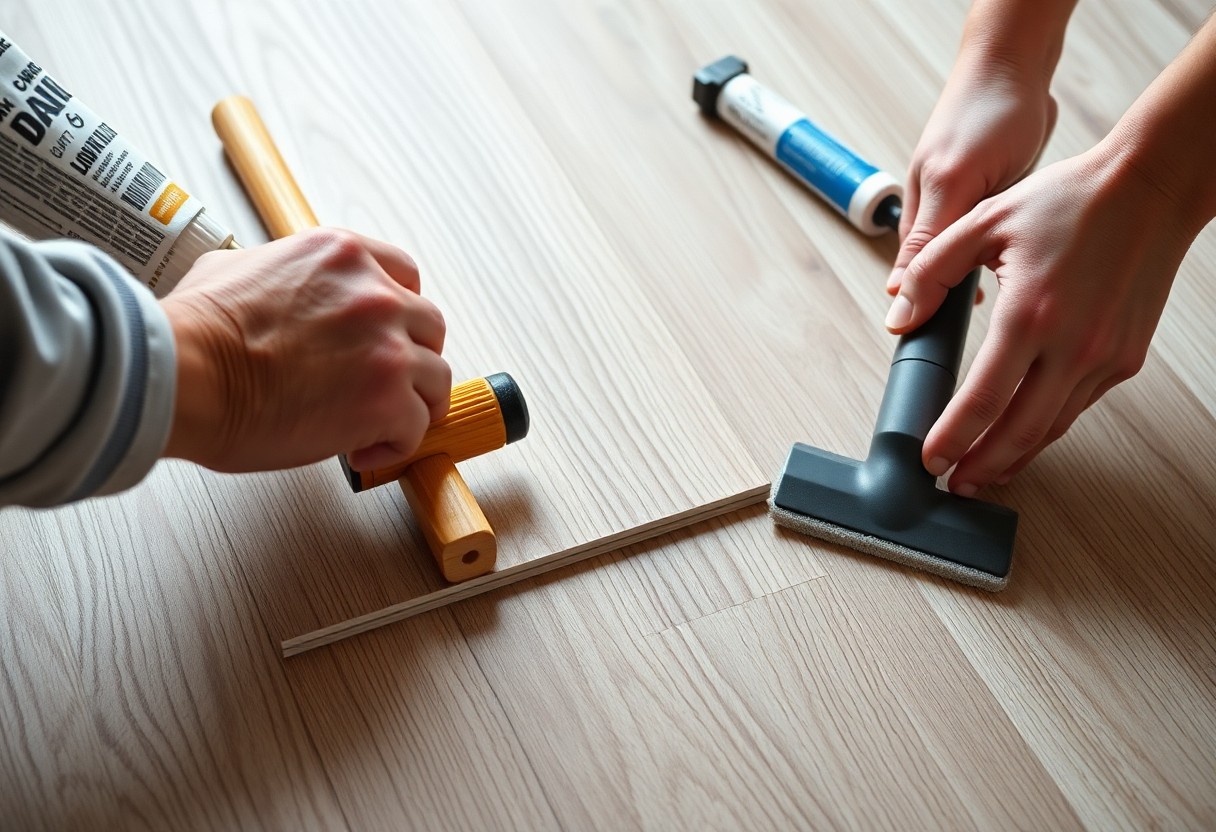
A severely cracked or swollen plank demands replacement to prevent adjacent boards from shifting or absorbing moisture. Carefully remove the damaged section by unclicking neighboring planks, usually from the nearest edge. Install the new plank by reversing the removal process, ensuring the tongue-and-groove joints click securely into place.
Removing a damaged plank often requires disassembling several rows from the edge of the room, especially in glueless floating installations. Keep leftover planks from the original installation to ensure color and texture match. If unavailable, source a similar batch, though slight variations may be noticeable under direct light. Work slowly to avoid damaging adjacent tongues, and use a tapping block to seat the new plank without marring its surface.
The Proper Solutions
Choosing the right cleaning mixture preserves the finish and prevents long-term damage. Harsh chemicals compromise the laminate’s protective layer, leading to discoloration or warping over time. Use only solutions specifically formulated for laminate or simple homemade alternatives proven safe through consistent use.
Vinegar and water mix
A vinegar and water mix effectively cleans without leaving residue. Combine one part white vinegar with three parts water and apply with a slightly damp microfiber mop. This solution removes light grime while avoiding the moisture buildup that risks swelling at the seams.
Avoiding the heavy soaps
Heavy soaps leave behind a sticky film that attracts more dirt and dulls the surface over time. These residues accumulate in corners and along baseboards, requiring more frequent deep cleaning. They also interfere with the laminate’s natural sheen, making rooms appear less bright.
Using dish soap or all-purpose cleaners introduces surfactants not designed for flooring surfaces. A mid-sized SaaS firm renovated its office with laminate and reported increased maintenance demands after staff used standard multipurpose spray, resulting in hazy patches near entryways. Switching to a recommended laminate cleaner eliminated the issue within two cleaning cycles.
The Gentle Scrub
When dirt and foot traffic leave behind stubborn marks, a gentle scrub restores the surface without risking damage. Use only soft tools and approved cleaners to preserve the finish, avoiding harsh chemicals that cloud or strip the protective layer. Regular attention with the right method keeps the floor looking freshly installed.
Microfiber cloth technique
A microfiber cloth lifts grime and traps dust without scratching the laminate surface. Dampen it slightly with a manufacturer-recommended cleaner, then work in small sections using circular motions. This method removes residue while maintaining the floor’s luster, especially in high-traffic zones like hallways and kitchens.
Drying the wood fast
After cleaning, remove excess moisture immediately with a dry microfiber mop or towel. Standing water can seep into seams, causing swelling or delamination over time. Quick drying prevents moisture damage, particularly along baseboards and under furniture legs where water tends to pool.
Speed matters when drying laminate, as even brief exposure to moisture can compromise the core layer. A mid-sized SaaS firm retrofitting their office space reported visible edge swelling within 48 hours of a spill that wasn’t fully dried. Use a second dry cloth after mopping, and ensure air circulation with fans if needed, especially in humid climates or tightly furnished rooms.
Conclusion
You extend the life of your laminate flooring by staying consistent with simple, proactive habits. Regularly removing grit, wiping spills promptly, and using protective pads under furniture legs prevent most common damage. A mid-sized SaaS firm replaced flooring in high-traffic areas every five years before implementing these steps, now exceeding eight years without replacement. Your diligence today preserves both appearance and structural integrity well into the future.