
You step into a modern home and the floor beneath your feet might not be what it appears. Today’s most popular flooring options combine innovation with practicality, offering real wood looks, water resistance, and durability far beyond traditional materials. SPC vinyl, waterproof laminate, and pre-engineered hardwood dominate remodels and new builds, each suited to different needs, spaces, and budgets. Understanding their differences helps you choose with confidence.
Stone and Plastic
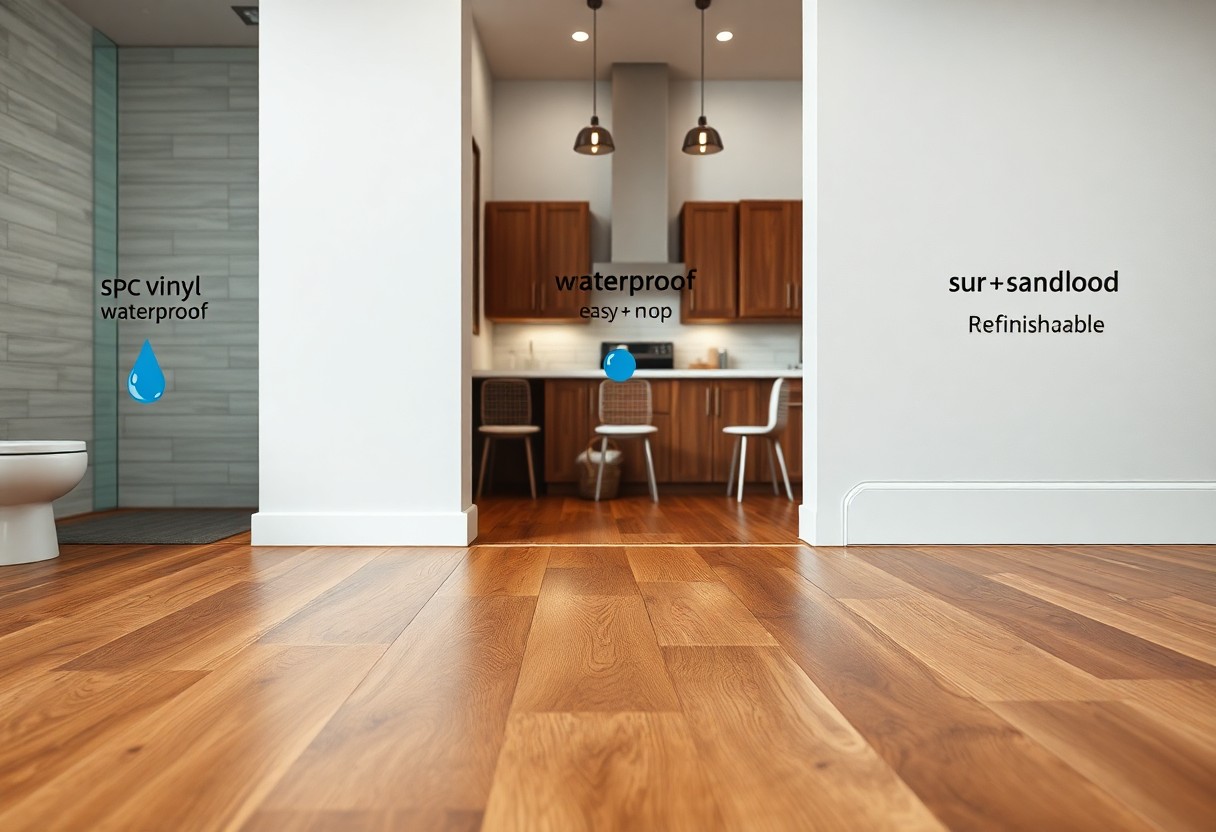
You get exceptional waterproof performance with SPC vinyl flooring, thanks to its core made from limestone powder and plasticizers. This composition creates a rigid, dense plank that won’t swell or warp when exposed to moisture, making it ideal for bathrooms, basements, and kitchens. Unlike some alternatives, SPC remains dimensionally stable under temperature shifts, ensuring tight seams over time. A mid-sized SaaS firm retrofitting its ground-floor offices chose SPC specifically for its resistance to humidity fluctuations near exterior entrances.
Real Wood on a Base
You install pre-engineered hardwood knowing it brings real wood to areas where solid planks would warp. Multiple thin layers form each plank, with a genuine hardwood veneer on top bonded to a stable core. This construction resists moisture better than solid wood, making it suitable for basements or over concrete slabs. A mid-sized SaaS firm renovating its downtown office chose this flooring for its conference rooms, valuing both authenticity and dimensional stability. The surface accepts refinishing once or twice, depending on veneer thickness, extending its service life in high-traffic zones.
The Hardness of Things
You assess durability by understanding how each floor resists dents and scratches under daily use. SPC vinyl stands out with its rigid core, handling heavy furniture and pet claws without visible wear. Waterproof laminate performs well in moderate traffic but may show edge swelling if repeatedly exposed to moisture. Pre-engineered hardwood, while beautiful, requires felt pads under chairs and prompt spill cleanup to avoid permanent marks, especially in lighter wood species.
The Work of Laying Planks
Installing SPC vinyl flooring requires a stable, level subfloor and benefits from an underlayment that reduces sound; planks click together tightly, making it a common choice for DIYers with moderate skills. Waterproof laminate follows a similar process but is less forgiving of subfloor imperfections, often revealing gaps over time if not properly prepared. Pre-engineered hardwood typically demands professional installation, especially when nailed or glued down, though floating versions simplify the job. You may finish a small room with SPC vinyl over a weekend, while a whole-house pre-engineered hardwood layout could take several days with specialized tools. Each material has distinct handling characteristics-SPC feels rigid and dense, laminate can chip on the edges during cutting, and pre-engineered hardwood requires acclimation to avoid post-installation movement.
The Keeping of the Floor
You maintain SPC vinyl with routine sweeping and occasional damp mopping using a manufacturer-approved cleaner, avoiding harsh chemicals that can dull the wear layer over time. Waterproof laminate withstands spills well but shows scratches more readily, requiring felt pads under furniture to preserve its appearance. Pre-engineered hardwood demands the most attention, needing periodic buffing and recoating to protect against wear, especially in high-traffic areas of a home or retail space.
Conclusion
You weigh durability against authenticity when choosing between SPC vinyl, waterproof laminate, and pre-engineered hardwood. SPC stands up to floods and heavy traffic, making it ideal for kitchens and basements. Waterproof laminate offers a convincing wood look at a lower price, suitable for living areas in moderate climates. Pre-engineered hardwood delivers the genuine texture and resale value sought in main living spaces, provided humidity is controlled. A mid-sized SaaS firm renovating its Austin office, for example, selected pre-engineered oak in common areas but used SPC vinyl in restrooms and near entryways. Your final choice hinges on balancing moisture exposure, foot traffic patterns, and long-term aesthetic goals, not on chasing the most advertised product.