

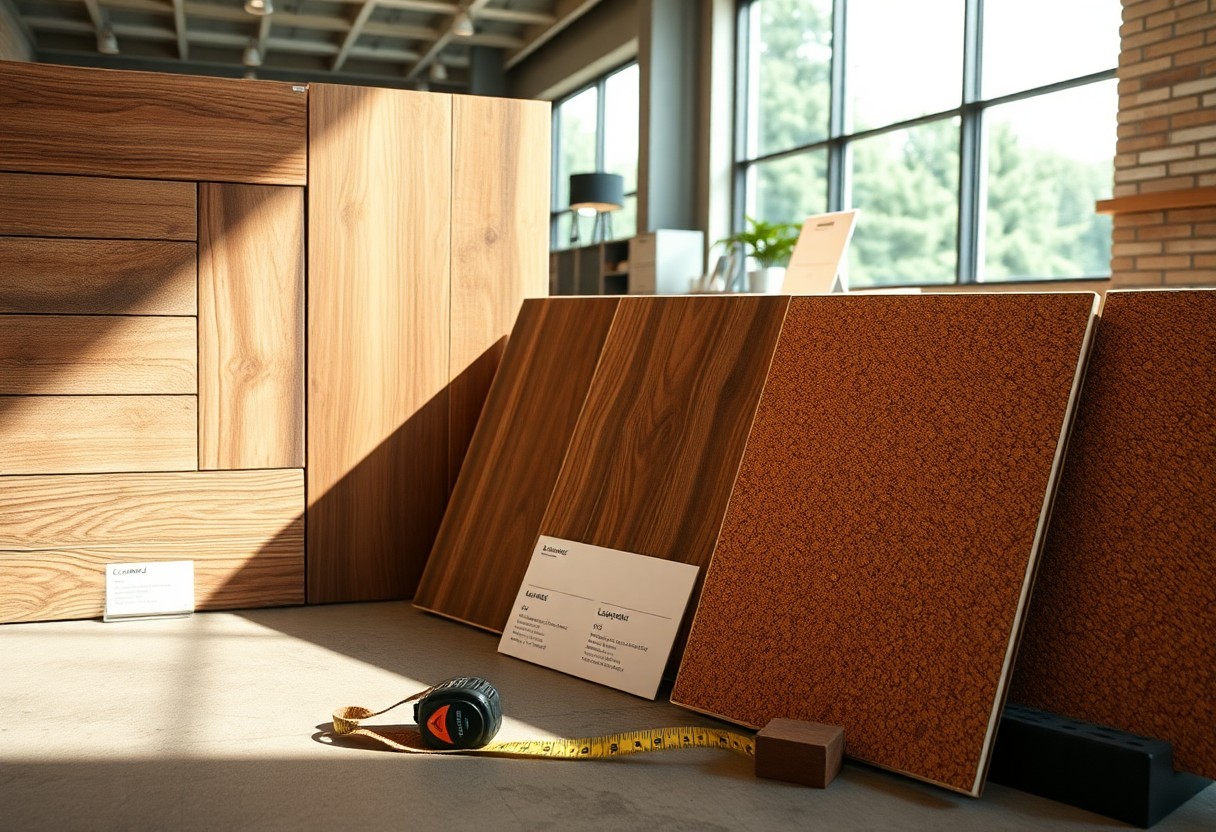
Many homeowners overlook flooring as a sustainability opportunity, yet your choice directly influences long-term environmental impact. You can now select from responsibly harvested woods, reclaimed materials, and advanced vinyl options designed with recyclability in mind. A mid-sized SaaS firm retrofitting its office space recently reduced embodied carbon by specifying FSC-certified oak over conventional alternatives. Your floor doesn’t have to cost the earth-literally.
The Living Timber: Reclaimed and Managed Woods
Reclaimed wood flooring repurposes beams and planks from old barns, factories, and warehouses, giving structural history new life beneath your feet. You support sustainable forestry when selecting FSC-certified managed wood, where harvests follow strict ecological guidelines. A mid-sized SaaS firm retrofitting its office space chose white oak salvaged from a 19th-century distillery, blending character with responsibility. Each board carries faint saw marks and weathering that new timber cannot replicate, making your floor uniquely textured and ethically grounded.
The Resilient Mimic: Modern Vinyl Evolutions
You now find vinyl transformed, no longer the basic sheet of decades past but a sophisticated product engineered for both longevity and visual fidelity. Advanced printing techniques capture the grain of oak, the texture of slate, even the imperfections that signal authenticity, all within a resilient core. Today’s luxury vinyl planks and tiles resist scratches, moisture, and indentation, making them suitable for basements, kitchens, and high-traffic areas where natural wood might falter. Some formulations incorporate recycled content and are fully recyclable at end-of-life, reducing reliance on virgin petroleum. A mid-sized SaaS firm renovating its Portland office chose a vinyl product mimicking weathered barn wood, achieving the aesthetic of reclaimed timber without the maintenance, cost, or environmental toll of harvesting rare old-growth. Manufacturers now offer tight-loop recycling programs, allowing used planks to be returned and reprocessed into new flooring, closing the material loop in ways traditional vinyl never could.
The Economy of Nature: Durability and Life Cycles
Your flooring’s lifespan directly influences its environmental footprint. Reclaimed wood floors in a century-old warehouse renovation often exceed 100 years with refinishing, reducing replacement cycles. Modern luxury vinyl, while petroleum-based, can last 20 to 30 years in high-traffic areas, outperforming some solid woods in moisture-prone spaces like basements. A mid-sized SaaS firm installing bamboo in its office saw replacement needs drop by half compared to previous carpet tiles. Longevity isn’t just about wear resistance-it reflects how frequently raw materials are extracted and waste is generated over decades.
Earthly Harvests: Cork and Bamboo Alternatives
Cork grows back after harvesting, making it a renewable resource that supports sustainable forestry practices. You benefit from natural insulation and sound absorption, with each plank offering unique texture and warmth underfoot. Bamboo, though technically a grass, delivers comparable hardness to oak and matures in just five years. A mid-sized SaaS firm retrofitting its office space chose bamboo for high-traffic areas, citing low maintenance and rapid regrowth as deciding factors.
The Indoor Atmosphere: Avoiding Synthetic Taints
You prioritize air quality when selecting flooring, knowing some vinyl products emit volatile organic compounds over time. Opt for brands that disclose complete ingredient lists and comply with stringent indoor emissions standards. Reputable manufacturers now produce phthalate-free, low-VOC vinyl, minimizing respiratory irritants. Solid wood finished with natural oils also avoids synthetic sealers, reducing chemical off-gassing in your living space.
Final Words
Choosing sustainable flooring means aligning your space with long-term ecological responsibility. Reclaimed wood reduces demand for virgin timber while modern vinyl options now incorporate recycled materials and lower off-gassing profiles. Cork and bamboo offer rapidly renewable alternatives, each with distinct performance traits suited to different environments. You prioritize indoor air quality by selecting products certified for low emissions, avoiding phthalates and formaldehyde. A mid-sized SaaS firm retrofitting its office space saw reduced maintenance costs and improved acoustics after installing WPC vinyl planks. Your decisions shape market demand, and durable, responsibly sourced materials are increasingly accessible without sacrificing design integrity.