

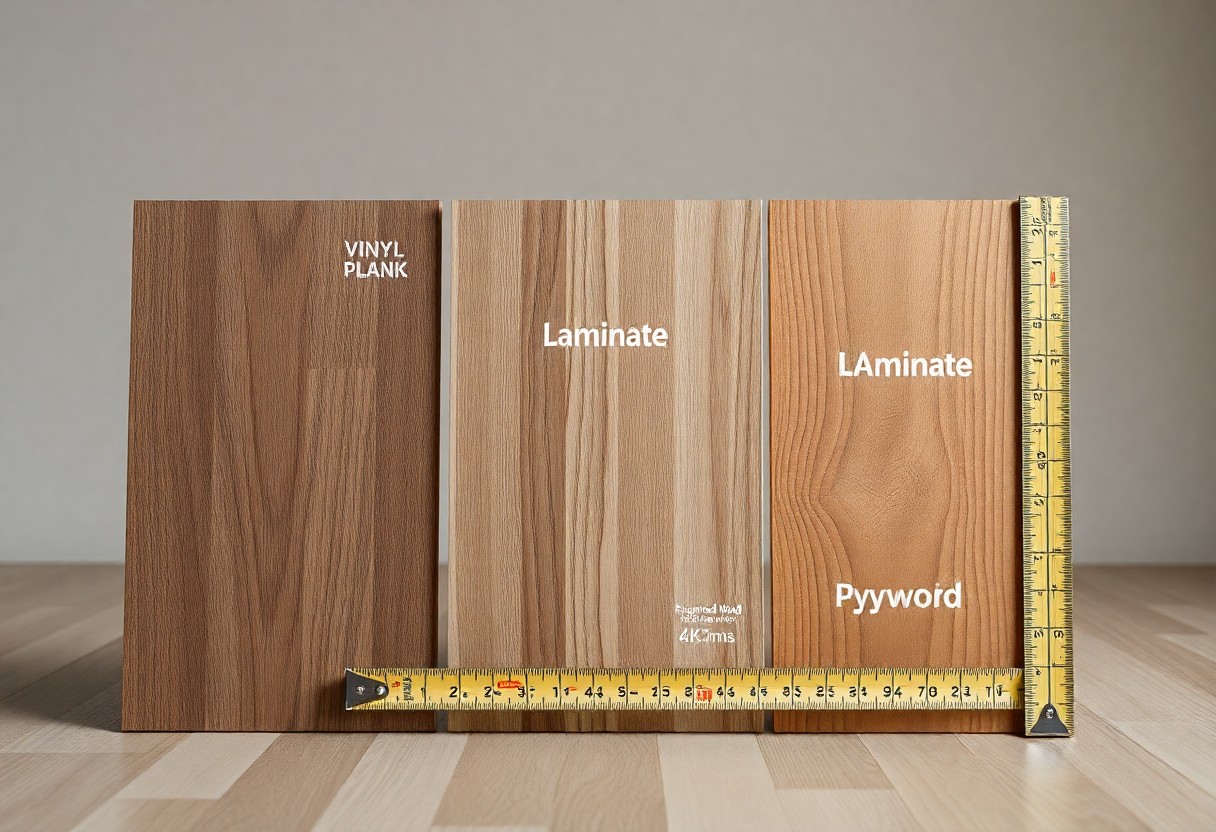
Selection of the right flooring comes down to your space, lifestyle, and budget. You need a surface that handles foot traffic, resists moisture, and matches your aesthetic. Each option-vinyl, laminate, and engineered wood-offers distinct benefits and trade-offs in durability, installation, and cost.
Identifying Key Selection Factors for Your Home
- Foot traffic levels
- Moisture exposure
- Lifestyle compatibility
- Style preferences
- Budget constraints
Knowing these factors helps you match flooring to your home’s real-world demands.
Assessing foot traffic and lifestyle needs
High-traffic homes with kids or pets benefit from durable, scratch-resistant surfaces. Laminate handles heavy use well, while luxury vinyl stands up to moisture and spills. Engineered wood offers elegance but may show wear faster in busy areas. Your daily routine shapes what will last.
Evaluating aesthetic goals and material realism
Appearance matters when matching your interior vision. Modern laminates and vinyls mimic real wood grain closely, but engineered wood delivers authentic texture and depth. Finish, color variation, and plank width influence the final look.
Engineered wood provides the most natural visual, aging gracefully over time with a genuine timber feel underfoot. While high-end vinyl and laminate have improved in realism, they may lack the subtle imperfections that give real wood character. Your preference for warmth, grain detail, and finish sheen will determine which material feels truly “at home.”
How to Determine the Best Fit for High-Moisture Areas
Choosing the right flooring for damp spaces means understanding how each material handles water. Your lifestyle and room usage play a big role in deciding which option offers lasting performance without warping or swelling over time.
Analyzing the waterproof capabilities of luxury vinyl
You’ll find luxury vinyl excels in wet areas because its core is fully waterproof. Spills, humidity, and even flooding won’t compromise its structure, making it a reliable choice for bathrooms, basements, and laundry rooms.
Understanding moisture limitations of laminate and engineered wood
Laminate swells when wet, and engineered wood, though more stable than solid hardwood, still risks warping in damp conditions. You must avoid installing either in areas prone to standing water or high humidity without proper precautions.
Engineered wood uses a real wood veneer over layered plywood, which helps resist moisture better than solid wood-but only to a point. Prolonged exposure breaks down the adhesive between layers, leading to delamination. Laminate, made from compressed fibers, absorbs water quickly once the protective layer is breached. For you, this means careful sealing, prompt cleanup, and moisture barriers are imperative if choosing either for basements or near plumbing fixtures.
Comparing Durability and Structural Integrity
| Feature | Flooring Type Comparison |
|---|---|
| Scratch Resistance | Laminate > Vinyl > Engineered Wood |
| Dent Resistance | Vinyl > Laminate > Engineered Wood |
| Moisture Tolerance | Vinyl > Engineered > Laminate |
| Subfloor Flexibility | Engineered > Vinyl > Laminate |
Scratch and dent resistance ratings
You’ll find laminate tops the scale for scratch resistance thanks to its hard wear layer, making it ideal for high-traffic areas with pets or kids. Vinyl stands strong against dents, especially luxury varieties with rigid cores, while engineered wood, though beautiful, shows wear more easily and requires refinishing over time.
Core material differences and dimensional stability
Each floor’s core affects how it holds up over time. Vinyl uses PVC, which resists swelling in moisture. Laminate relies on fiberboard that can warp if wet. Engineered flooring has a plywood or HDF core with real wood veneer, balancing stability and authenticity across changing humidity levels.
Engineered flooring’s layered construction-typically a real hardwood top over cross-layered plywood or HDF-gives it superior resistance to warping compared to solid wood. This design allows it to expand and contract evenly with humidity shifts, making it suitable for basements or above-grade installations. Unlike laminate, which can delaminate when exposed to moisture, or vinyl, which may indent under heavy furniture, engineered wood offers a balanced mix of resilience and natural aesthetics when acclimated and installed correctly.
Installation Tips for Different Skill Levels
- Beginners should opt for click-lock vinyl or laminate, which require no glue or nails.
- Intermediate DIYers can handle engineered wood with floating or glue-down methods.
- Professionals often choose nailed-down engineered flooring for lasting results.
Knowing your comfort level with tools and precision cuts helps determine the best fit for your project.
Navigating click-lock and floating floor systems
Click-lock planks lock together at the edges, creating a stable surface without adhesives. These systems float above the subfloor, allowing for slight movement and easier installation. You simply align and press planks into place, making them ideal for DIYers. Mistakes are easy to correct by disengaging sections.
Essential tools and subfloor preparation requirements
A flat, clean subfloor ensures a smooth finish and prevents future damage. You’ll need a tape measure, pull bar, tapping block, and utility knife for most jobs. Underlayment may be required depending on the product. Moisture barriers are vital over concrete. Knowing what lies beneath your new floor makes all the difference.
Proper subfloor prep starts with checking for levelness and moisture. Use a laser level or long straightedge to spot dips or bumps, and sand or patch as needed. For concrete, conduct a moisture test to avoid mold or warping. Plywood subfloors should have no squeaks or loose boards. Roll out underlayment according to manufacturer specs, and tape seams to block vapor. This groundwork supports durability and sound quality long after installation.
Calculating Long-Term Value and Budget
Choosing the right flooring means balancing what you pay now with what you gain over time. Vinyl, laminate, and engineered wood vary not only in price but in how well they hold up and how they affect your home’s worth. Your decision should reflect both immediate constraints and future plans.
Upfront material costs versus professional labor
You’ll find vinyl usually costs the least per square foot, but installation can add up-especially if subfloor prep is needed. Laminate often allows DIY savings, while engineered wood typically requires professional fitting, increasing labor expenses. Always compare total project estimates, not just material tags.
Expected lifespan and home resale value impact
Engineered flooring often boosts resale value more than vinyl or laminate due to its real wood surface and durability. While vinyl may last 10-20 years, and laminate 15-25, engineered options can exceed 30 with refinishing. This longevity and aesthetic appeal can justify a higher initial investment.
When buyers walk through a home, the flooring makes an immediate impression. Engineered wood, with its authentic grain and ability to be sanded and refinished, mimics solid hardwood at a fraction of the cost. Homes with quality engineered floors often sell faster and at higher price points, especially in competitive markets. Vinyl and laminate serve well in rental properties or temporary spaces, but for long-term ownership, engineered flooring delivers stronger returns both in wear and market appeal.
Maintenance Strategies for Every Flooring Type
Each flooring material demands specific care to preserve its appearance and durability over time. Your choice affects how often and how thoroughly you’ll clean, protect, and restore the surface. Understanding these needs ensures long-term satisfaction and performance from your floors.
Daily cleaning protocols and protective measures
You should sweep or dry mop vinyl, laminate, and engineered wood daily to prevent grit buildup. Use a damp cloth or microfiber mop with a manufacturer-approved cleaner when needed. Place mats at entrances and felt pads under furniture to minimize scratches and moisture exposure.
Repairability and refinishing options for longevity
Surface scratches on laminate are often permanent, while vinyl planks can sometimes be spot-replaced. Engineered wood stands out-its real wood top layer allows sanding and refinishing, typically two to three times, extending its life far beyond the others.
Engineered flooring gives you the rare advantage of restoration through light sanding, especially if it has a thicker wear layer. Minor dents and wear can be buffed out, and a fresh finish reapplied to revive its look. This ability to refresh the surface makes it a smart long-term investment when maintained properly.
Conclusion
Upon reflecting on your space’s moisture levels, foot traffic, and desired aesthetic, you can confidently choose between vinyl, laminate, and engineered flooring. Each option offers distinct advantages: vinyl resists water, laminate suits dry areas on a budget, and engineered wood delivers authenticity with stability. Your lifestyle and room conditions determine the best fit.