

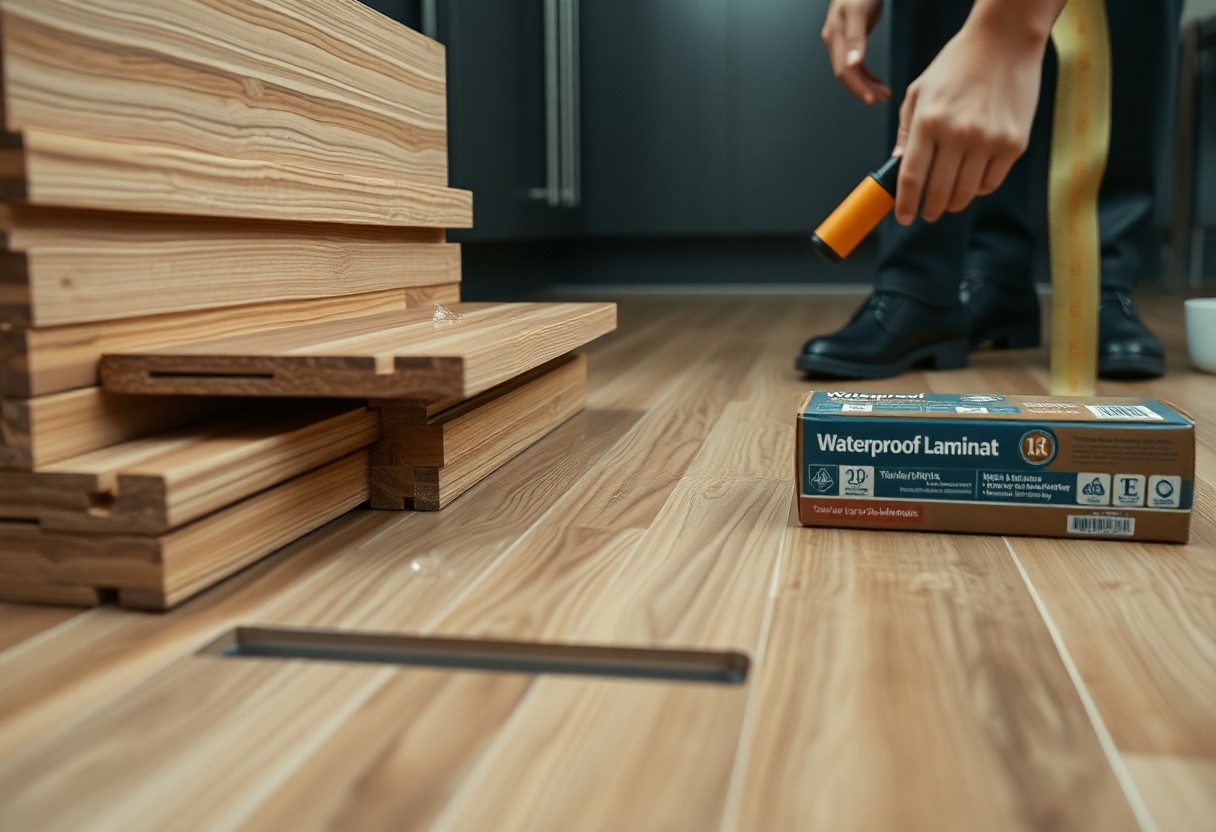
Waterproof laminate flooring gives you the look of hardwood with the durability to handle spills, humidity, and heavy foot traffic. You’ll want to consider core material, AC rating, thickness, and locking system when choosing the right option. This guide walks you through what matters most so you make a smart, long-lasting choice.
Differentiating Waterproof and Water-Resistant Laminate
You’ve likely seen both terms used interchangeably, but they mean very different things. Water-resistant laminate can handle light spills and moisture for a short time, but prolonged exposure leads to swelling or warping. True waterproof laminate is built to withstand extended water contact, making it ideal for kitchens, bathrooms, and basements.
Core Material Engineering
Waterproof laminate relies on a core made from rigid polymer or stone-based composite instead of traditional fiberboard. This material won’t absorb moisture, even when submerged. You benefit from long-term structural integrity in damp environments, a key upgrade over older laminate designs.
Surface Sealant Technologies
A tightly bonded aluminum oxide or urethane top layer seals the surface against moisture intrusion. This protective coating resists scratches and stains while forming a barrier at the seams. You get reliable defense where water is most likely to enter-along edges and grooves.
Surface sealant technologies go beyond a simple topcoat. Many premium options use nano-ceramic or UV-cured finishes that chemically bond to the wear layer, creating a non-porous shield. These advanced treatments prevent water from seeping into micro-gaps, especially at click-lock joints, giving you peace of mind during spills or high-humidity conditions.
Exploring the Primary Types of Waterproof Laminate
- Wood-Plastic Composite (WPC)
- Stone-Plastic Composite (SPC)
- Hybrid polymer cores
- Advanced cork-backed laminates
- Textured surface finishes
After choosing the right wear layer and AC rating, understanding core composition helps match performance to your space.
| Type | Key Feature |
| WPC | Soft, foam-like core with moisture resistance |
| SPC | Rigid, stone-based core ideal for high-traffic areas |
| Hybrid Polymer | Combines flexibility with dimensional stability |
| Cork-Backed | Integrated underlayment for sound absorption |
Wood-Plastic Composite (WPC) Options
You’ll find WPC flooring offers a cushioned feel underfoot thanks to its foamed polymer core. It resists swelling in damp environments and works well in basements or over concrete. After installation, it delivers quiet performance and slight flexibility over minor subfloor imperfections.
Stone-Plastic Composite (SPC) Variations
SPC flooring uses a dense, limestone-based core that stands up to heavy loads and temperature shifts. It remains stable in areas with fluctuating humidity and fits well in kitchens or commercial spaces. After locking into place, it provides a rock-solid surface with minimal deflection.
Stone-Plastic Composite (SPC) flooring excels where stability matters most. Its rigid core resists indentation from furniture legs and rolling casters, making it ideal for living rooms with entertainment centers or home offices. Unlike softer composites, SPC won’t warp when exposed to short-term moisture spills, and its flat profile ensures tight seams across large rooms. You can install it with confidence in ground-level spaces prone to minor dampness.
Essential Factors to Evaluate Before Purchase
- Water resistance level needed for your space
- AC durability rating based on room traffic
- Floor thickness and underlayment compatibility
- Installation method: glue-down, click-lock, or loose lay
- Texture and finish that matches your style
Perceiving these elements clearly ensures your flooring stands up to daily demands while enhancing your home’s comfort and value.
Understanding AC Durability Ratings
You’ll see AC ratings from 1 to 5, with higher numbers indicating better wear resistance. AC1 suits low-traffic areas like bedrooms, while AC3 or higher is ideal for living rooms or hallways. Choose based on how much foot traffic the space gets.
Thickness and Underlayment Requirements
Thicker planks generally feel more stable underfoot and reduce noise. Most waterproof laminate ranges from 4mm to 8mm. Underlayment is usually required unless your planks have it pre-attached. It provides moisture protection, sound absorption, and minor subfloor imperfection coverage.
Weighing the Pros and Cons of Waterproof Systems
Choosing the right flooring means understanding what you gain-and what you might sacrifice-with waterproof laminate. The following breakdown helps you see the full picture at a glance.
| Pros | Cons |
|---|---|
| Resists water damage in spills and leaks | Higher upfront cost than standard laminate |
| Safe for use in kitchens and bathrooms | Limited style options compared to hardwood |
| Easy to clean and maintain | May feel less authentic underfoot |
| Longer lifespan in damp environments | Not all brands are equally durable |
| Reduces risk of mold and warping | Installation may require specific underlayment |
Advantages of Moisture-Proof Flooring
You benefit from long-term protection when moisture strikes. Spills won’t seep between planks, and humidity fluctuations won’t compromise the core. This resilience makes it ideal for homes with kids, pets, or high-traffic areas where accidents happen.
Potential Limitations and Cost Considerations
You may face a steeper price tag with waterproof options. While they outperform standard laminate in wet areas, not every budget allows for the upgrade. Some models also limit your design choices, so aesthetics may require compromise.
Higher-quality waterproof systems often require professional installation or specific accessories, adding to the total expense. While the investment pays off in durability, especially in basements or laundry rooms, cheaper alternatives may skimp on wear layers or locking mechanisms, reducing longevity. You’ll want to balance performance with practicality based on where and how the floor will be used.
Step-by-Step Guide to the Buying Process
Follow this clear process to ensure you select and install waterproof laminate flooring that fits your space and style. The table below outlines each phase, helping you stay organized and confident in your choices.
| Step | Action |
| 1 | Measure your room accurately |
| 2 | Choose your preferred texture and finish |
| 3 | Compare core board types and warranties |
| 4 | Purchase extra planks for cuts and waste |
| 5 | Prepare subfloor before installation |
Accurately Measuring Your Space
You need precise dimensions to avoid shortages or excess waste. Measure the length and width of each room, multiply them to get the square footage, and add 10% extra for cuts and errors during installation.
Selecting Textures and Visual Finishes
Your floor’s look and feel depend on the texture and finish you pick. Options like hand-scraped, wire-brushed, or smooth surfaces change how realistic the wood appears and how well it hides scuffs.
Think about how light interacts with the surface when choosing a finish. A matte finish reduces glare and hides footprints, while a glossy sheen enhances brightness but shows more smudges. Textured planks mimic real wood grain and are better at masking daily wear, making them ideal for busy homes. Choose based on both aesthetics and practicality.
Professional Tips for Installation and Longevity
Proper installation ensures your waterproof laminate lasts for years.
- Always acclimate planks for 48 hours in the room where they’ll be installed
- Use a moisture barrier if installing over concrete
- Leave a 1/4-inch expansion gap around all edges
- Click planks together at a 20-degree angle to avoid damage
Knowing how to handle each step protects your investment and prevents costly repairs.
Subfloor Preparation Requirements
Smooth, clean, and level subfloors prevent installation issues. Remove debris, repair uneven areas, and confirm moisture levels are within acceptable ranges. A poorly prepared base leads to gaps, noise, and warping over time.
Recommended Cleaning and Maintenance Protocols
Use a damp microfiber mop and manufacturer-approved cleaner for routine care. Avoid soaking the floor or using steam mops. Wipe spills promptly and place mats in high-moisture zones. Knowing the right habits keeps your floor looking new.
Regular maintenance doesn’t require special products-simple, consistent care works best. Sweep daily to prevent grit buildup, and use felt pads under furniture to avoid scratches. For spills, blot immediately with a dry cloth before damp cleaning. Manufacturer warranties often depend on proper upkeep, so follow care guidelines to preserve both appearance and coverage.
Summing up
To wrap up, you now have the knowledge to choose waterproof laminate flooring that fits your space, lifestyle, and budget. You understand what to look for in core composition, AC ratings, thickness, and locking systems. With this guide, you can confidently compare products and make a smart, lasting investment for your home.