
There’s a clear way for you to compare white oak, laminate, and SPC vinyl so you can choose flooring based on durability, maintenance, cost, and style; this guide gives practical pros, cons, and installation insights to help you decide confidently.
Exploring the Primary Flooring Types
You can weigh durability, cost, installation, and maintenance for each option. Assume that moisture exposure and room traffic will steer your choice.
- White Oak
- Laminate
- SPC Vinyl
| White Oak | Refinishable hardwood, classic grain |
| Laminate | Affordable, scratch-resistant decorative planks |
| SPC Vinyl | Waterproof, stone-reinforced rigid core |
| Engineered Hardwood | Stable wood veneer over plywood base |
| Luxury Vinyl Plank | Flexible, water-tolerant vinyl layers |
White Oak: The Premium Hardwood Standard
Consider white oak when you want timeless grain, long lifespan, and multiple refinish cycles; prepare for higher upfront cost and humidity control to prevent gaps or cupping.
Laminate: High-Performance Multi-Layered Planks
Choose laminate if you need budget-friendly, scratch-resistant planks that convincingly mimic wood while offering quick floating installation and low upkeep.
When you assess laminate, focus on the HDF core, photographic surface, and protective wear layer-this construction gives strong dent and scratch resistance, fast DIY installs, and wide style choices, but limits sanding and tolerates only short-term moisture exposure.
SPC Vinyl: The Evolution of Stone Plastic Composite
SPC vinyl gives you a rigid, mineral-reinforced core with excellent waterproofing, superior dimensional stability, and strong indentation resistance for high-traffic rooms.
Expect SPC to combine a limestone-filled core with a PVC wear layer and protective coating, delivering exceptional indentation resistance and flatness; you should verify wear-layer thickness, underlayment needs, installation type, and radiant-heat compatibility to match performance with your room’s demands.
Weighing the Pros and Cons
Compare how white oak, laminate, and SPC vinyl trade off appearance, cost, installation, and maintenance so you can pick flooring that fits your lifestyle and budget.
| Pros | Cons |
|---|---|
| Oak: authentic grain and depth; Laminate: affordable wide visuals; SPC: vast design variety. | Laminate/SPC can feel less authentic; oak appearance varies by grade. |
| Laminate/SPC: lower upfront cost; oak adds premium curb appeal. | Oak has higher material and installation expenses. |
| Laminate/SPC: click-install options for DIY; engineered oak installs faster than solid. | Oak often needs professional finishing and heavier handling. |
| Laminate/SPC: simple cleaning routines; oak can be refreshed by refinishing. | Laminate cannot be refinished; oak requires periodic maintenance. |
| Oak: long lifespan with refinishing; SPC resists wear and stains. | Laminate surface wear and delamination possible over time. |
| SPC: highly water resistant; engineered oak tolerates humidity better than solid. | Solid oak and many laminates can warp or swell with prolonged moisture. |
| Oak: multiple refinishes extend service life. | Laminate/SPC usually require full plank replacement for damage. |
| Oak: warmer, quieter underfoot; underlayment improves laminate/SPC comfort. | SPC and laminate can feel harder and louder without proper underlayment. |
| Oak: strong resale appeal and perceived quality. | Laminate/SPC may add less long-term home value compared with real wood. |
Durability, Longevity, and Structural Integrity
Oak delivers decades of service and multiple refinish cycles, so you get long-term value, while engineered constructions increase stability for you on fluctuating subfloors and in variable climates.
Visual Aesthetics and Texture Realism
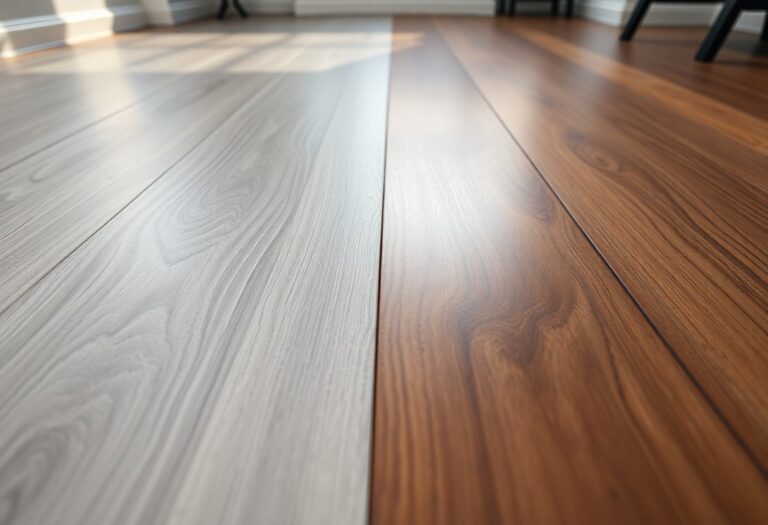
Laminate reproduces wood visuals affordably, but you may prefer oak for authentic texture and grain depth; SPC gives consistent patterns if you want uniformity.
Textures in white oak provide real grain, depth, and patina that you can feel and refinish, whereas high-end laminate uses embossed-in-register techniques to mimic that tactile quality but still lacks true wood fibers; SPC focuses on pattern fidelity and color stability, giving you predictable visuals in high-traffic or moisture-prone spaces.
Resistance to Moisture, Scratches, and Dents
SPC excels at water resistance so you can install it in basements and bathrooms, while you must protect solid oak and many laminates from standing water and heavy-impact scratches.
While SPC’s mineral core resists water and most household dents, you should still use pads and proper underlayment to limit point damage; engineered oak tolerates moisture swings better than solid, yet dents and pet scratches will be more visible on real wood, and laminate scratch resistance varies by wear-layer thickness, so you can prioritize according to room use and traffic.
Critical Factors for Material Selection
Factors such as durability, water resistance, cost, and maintenance will guide your choice between white oak, laminate, and SPC vinyl. Assume that traffic patterns and moisture risk should steer material selection toward more durable options.
- You should weigh durability and scratch resistance for active households.
- You should evaluate moisture tolerance for kitchens, bathrooms, and basements.
- You should compare upfront cost and ongoing maintenance to match your budget.
Analyzing Lifestyle Needs and Foot Traffic
Evaluate how your daily routines, pets, and guests increase wear and which materials will hold up without excessive upkeep.
Assessing Subfloor Conditions and Room Environment
Inspect subfloor flatness, moisture levels, and existing materials so you can select compatible installation methods and underlayment.
Pay attention to moisture testing, leveling, and insulation needs; you may require a moisture barrier, self-leveling compound, or structural repairs before installing white oak or floating floors to ensure longevity.
Evaluating Long-Term Property Value and ROI
Consider how each material affects resale appeal, maintenance costs, and buyer expectations in your neighborhood when forecasting return on investment.
Compare lifespan, maintenance, and aesthetic trends: you should weigh white oak’s higher appraisal potential against laminate and SPC’s lower cost and quicker payback, and check local sales to estimate true ROI.
Step-by-Step Installation Methodology
| Site Preparation and Material Acclimation |
Prepare the subfloor by removing debris, leveling high spots, and confirming dryness; you should acclimate flooring in the installation space for 48-72 hours to equalize moisture and temperature before laying planks. |
| Layout Planning and Underlayment Requirements |
Plan plank orientation, stagger end joints, and select underlayment per product specs; you must allow expansion gaps, use vapor barriers for SPC, and choose sound-dampening underlayments for laminate where needed. |
| Precision Cutting and Board Interlocking Techniques |
Cut boards accurately with proper blades, test-fit pieces, and follow the manufacturer’s locking technique to ensure tight seams and reliable interlocks across each row you install. |
Site Preparation and Material Acclimation
Clear existing coverings, repair uneven areas, and resolve moisture issues; you should vacuum and keep boxes closed while planks acclimate in the room for at least 48 hours so moisture content stabilizes.
Layout Planning and Underlayment Requirements
Arrange sample rows to confirm pattern and plank direction; you should pick underlayment thickness and vapor barriers based on subfloor type and manufacturer guidance to control moisture and sound transmission.
Measure the room precisely, calculate stagger distances to avoid aligning end joints, and dry-lay perimeter rows to verify cuts; you should match underlayment type to each flooring-foam for laminate, specific pads for white oak, and vapour-rated underlayments or adhesives for SPC-and maintain consistent expansion gaps per product instructions.
Precision Cutting and Board Interlocking Techniques
Trim planks with a fine-tooth blade and support pieces during cuts; you should label end pieces and test-lock a few joints to confirm fit before installing full rows to avoid rework.
Use templates for complex notches and a stop block for repeatable cuts, mark lines on the visible face, and support planks while sawing; you should angle cuts where required by the locking system, deburr edges, and inspect each joint as you interlock boards to prevent gaps or damaged profiles.
Professional Maintenance and Longevity Tips
Investing in professional maintenance extends flooring life: schedule inspections, follow manufacturer care, and control indoor humidity to limit movement. Perceiving subtle wear early lets you act quickly and avoid costly repairs.
- Annual pro inspection for white oak; biennial for laminate/SPC.
- Maintain stable humidity and temperature ranges.
- Use entry mats and furniture pads to reduce traffic wear.
- Address spills and scratches within 24 hours.
Specialized Cleaning Protocols for Each Surface
For white oak, use a pH-neutral wood cleaner and microfibre mop; for laminate, employ minimal water and quick drying; for SPC vinyl, apply manufacturer-approved cleaners and avoid abrasive pads, testing products on a hidden spot first.
Preventive Measures Against Environmental Damage
Control indoor humidity between recommended ranges, use UV-protective window treatments, place entry mats, and trim pet nails to reduce scratches; keep heaters and vents from blasting floors directly.
Protecting white oak requires maintaining relative humidity near 30-50% year-round; laminate and SPC tolerate wider ranges but still benefit from stable conditions. You should use humidifiers in winter and dehumidifiers in summer, apply UV film or blinds to limit sun fade, and rotate rugs to prevent uneven discoloration.
Refinishing and Repairing Surface Wear
Schedule inspections to gauge wear: you can sand and refinish white oak, but you must replace damaged laminate planks and patch or swap SPC vinyl pieces; consult a pro for color matching and warranty concerns.
When wear reaches the veneer or finish fails, you should evaluate depth before acting: full sanding and recoat suits solid white oak, while engineered planks with thin veneer may only tolerate light buffing. For laminate and SPC, targeted replacement of affected sections preserves integrity and prevents moisture intrusion; hire a technician to match stain and sheen precisely.
Budgeting and Cost Comparison Factors
Budgeting helps you compare upfront and lifetime costs for white oak, laminate, and SPC vinyl, clarifying trade-offs in material, installation, and upkeep so you can make cost-effective choices for your home.
- Material prices: grade and species drive white oak costs, while laminate and SPC vinyl offer lower per‑sqft options.
- Installation complexity: subfloor prep, underlayment, and removal affect labor time and rates.
- Knowing warranty terms, expected lifespan, and routine maintenance needs lets you project total ownership cost.
Cost Comparison
| Factor | What to watch for |
|---|---|
| Material | Per‑sqft price, grade, finish options |
| Installation | Labor rates, prep work, removal fees |
| Maintenance | Refinishing, cleaning supplies, spot repairs |
| Lifespan & Warranty | Expected years, warranty coverage, transferability |
Initial Material and Professional Labor Costs
Material and labor choices shape your initial outlay: white oak raises purchase and skilled-installation costs, while laminate and SPC vinyl lower material expense and often reduce installer hours, so you should compare quotes per square foot and per room.
Long-Term Maintenance and Replacement Expenses
Maintenance affects lifetime value: you pay for refinishing and potential sanding with white oak, may replace worn laminate boards, and generally face minimal routine costs with SPC vinyl, so factor recurring expenses into your choice.
Expect white oak to need refinishing every 7-20 years depending on traffic, which can cost you several hundred dollars per room; laminate may require full replacement after 10-25 years, while SPC vinyl often lasts 20-30 years with simple cleaning, though you may still replace damaged planks or boards.
Identifying Hidden Costs in Flooring Projects
Inspect quotes for subfloor repair, moisture mitigation, trim, transitions, waste disposal, and furniture moving, because these extras can push your final invoice well above initial estimates.
Factor in moisture testing, leveling, upgraded underlayment or adhesives, stair nosing and baseboard refits, permit or condo approval fees, and potential schedule delays; you should also budget for accessibility charges and variable labor rates by room complexity.
To wrap up
On the whole you should weigh durability, maintenance, and cost when choosing between white oak, laminate, and SPC vinyl; white oak offers timeless warmth and refinishing potential, laminate gives budget-friendly appearance with moderate lifespan, and SPC vinyl provides water resistance and low upkeep-choose the option that matches your lifestyle and long-term plans.