
Flooring choices shape flow and function when you combine white oak, laminate, and vinyl; plan transitions, match tones, and prioritize durability so you create cohesive zones that respect budget and style.
The Aesthetic Foundation: Why White Oak Sets the Standard
White oak’s warm grain and balanced tones create a neutral anchor that allows you to combine laminate and vinyl without visual friction, offering a cohesive backdrop that supports varied textures and finishes throughout the space.
Understanding the Undertones of Natural White Oak
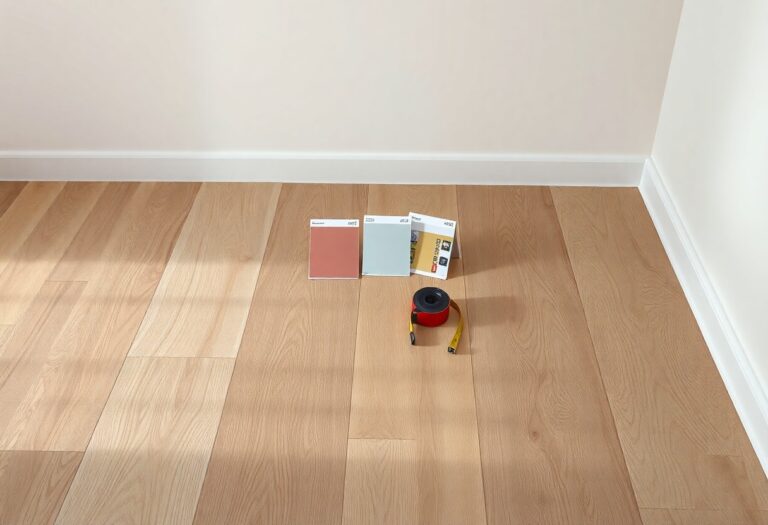
You will notice subtle honey, amber, and gray undertones in white oak; matching those hues to laminate and vinyl samples helps you ensure the combined palette reads intentional and consistent under different lighting.
Establishing a Timeless Design Language for the Home
Designing around white oak helps you choose enduring colors, consistent trim details, and repeating materials so the mix of laminate and vinyl reads as a deliberate, long-lasting scheme rather than a collection of mismatched pieces.
Consider how you layer area rugs, furniture finishes, and trim to reinforce oak’s character; pair warm wood tones with cool gray vinyl or muted laminate to add depth, and select transition profiles that match plank widths to minimize visual breaks while keeping sheen and edge details consistent so flooring changes feel intentional.
Design Inspiration – Blending White Oak, Laminate, And Vinyl Flooring In One Space
Strategic use of Luxury Vinyl Plank helps you define functional zones, match white oak transitions, and tie laminate areas together while offering durability, easy installation, and consistent color across high-traffic paths.
Waterproof Properties in High-Moisture Zones
You can install LVP in kitchens and baths without worry, since its waterproof core prevents swelling and keeps seams stable under humidity, letting you maintain wood accents without sacrificing continuity.
Advanced Printing Technologies for Authentic Wood Replication
High-definition printing gives you photorealistic grain, knots, and color variation so LVP mirrors white oak closely, helping you maintain visual unity while placing more water-tolerant planks where needed.
- Color depth for true grain
- Embossed textures match hand-scraped surfaces
- High-resolution registration aligns grain with embossing
Printing Techniques vs Benefits
| Technique | Benefit |
| Multi-pass printing | Improved color fidelity |
| Embossed-in-register | Realistic texture alignment |
| Micro-variation algorithms | Avoid repetitive patterns |
Modern production combines multi-pass color printing and embossed-in-register textures so you can match plank scale, bevel profile, and sheen to adjacent white oak and laminate for convincing continuity.
- Specify wear-layer thickness
- Match plank dimensions to oak runs
- Choose finish sheen for cohesion
Specification Guide
| Spec | Recommendation |
| Wear layer | 20 mil+ for heavy traffic |
| Plank width | Match oak width where possible |
| Finish | Matte or satin to mimic wood |
Optimizing High-Traffic Areas with Performance Laminate
Laminate with a commercial-grade wear layer gives you heavy-traffic resilience, water resistance, and low maintenance, making it ideal for entryways, kitchens, and corridors where constant use tests flooring performance.
Superior Scratch and Impact Resistance for Active Households
Homes full of kids, pets, and regular foot traffic perform better when you install performance laminate; its protective surface resists scratches, dents, and scuffs while keeping cleanup quick and protecting your investment.
Achieving a High-End Look on a Versatile Budget
Design-forward laminate mimics white oak grain and finishes so you can get a premium aesthetic without the cost or upkeep, allowing you to coordinate with vinyl accents and hardwood touches throughout your home.
You can mix plank widths, edge profiles, and matte or hand-scraped textures to mimic bespoke white oak installations; pairing tone-matched laminate in high-use zones with engineered wood or vinyl in focal areas creates visual continuity while controlling cost and simplifying maintenance.
Mastering Visual Continuity Across Different Materials
Balance sightlines and focal points so you maintain visual continuity when mixing white oak, laminate, and vinyl, using consistent transition details and area rugs to guide the eye across materials.
Harmonizing Color Temperatures and Grain Patterns
Match warm and cool undertones so you pair white oak with laminate or vinyl that share complementary hues, and balance grain density to keep transitions read as intentional rather than jarring.
Material Pairing Tips
| Aspect | Practical Tip |
|---|---|
| Color temperature | Match undertones (warm or cool) rather than exact shade |
| Grain pattern | Pair bold grains with subtler textures to avoid visual clash |
| Transitions | Choose trim or reducers that echo material color and height |
| Plank width | Standardize widths or align seams at doorways for continuity |
Selecting Consistent Plank Widths to Unify the Space
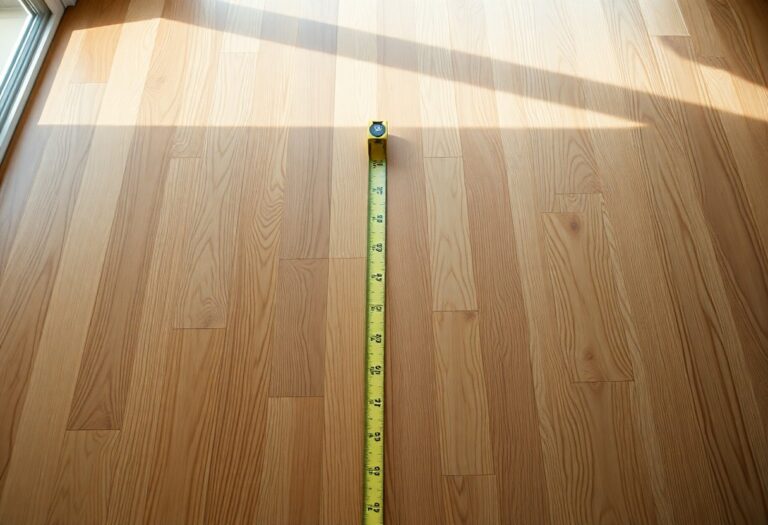
Choose a consistent plank width across materials to help you read the floor as one surface, minimizing visual breaks at thresholds and reinforcing a cohesive scale throughout adjoining rooms.
Using consistent plank widths helps you maintain scale and rhythm across adjoining rooms; when exact matches aren’t possible, align rows at doorways or run planks perpendicular to emphasize change. You can choose narrower planks for a traditional feel or wider boards for modern simplicity, and you should detail transition strips that match height and color to keep the eye focused on pattern rather than seam.
Transition Techniques for a Smooth Flow
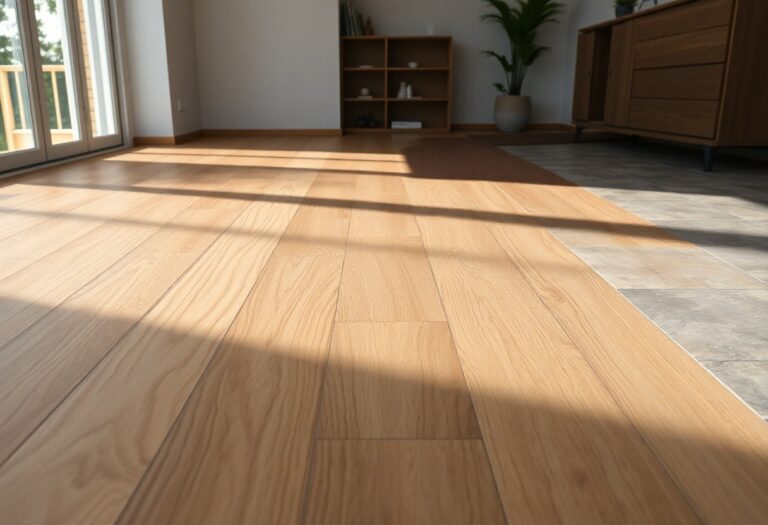
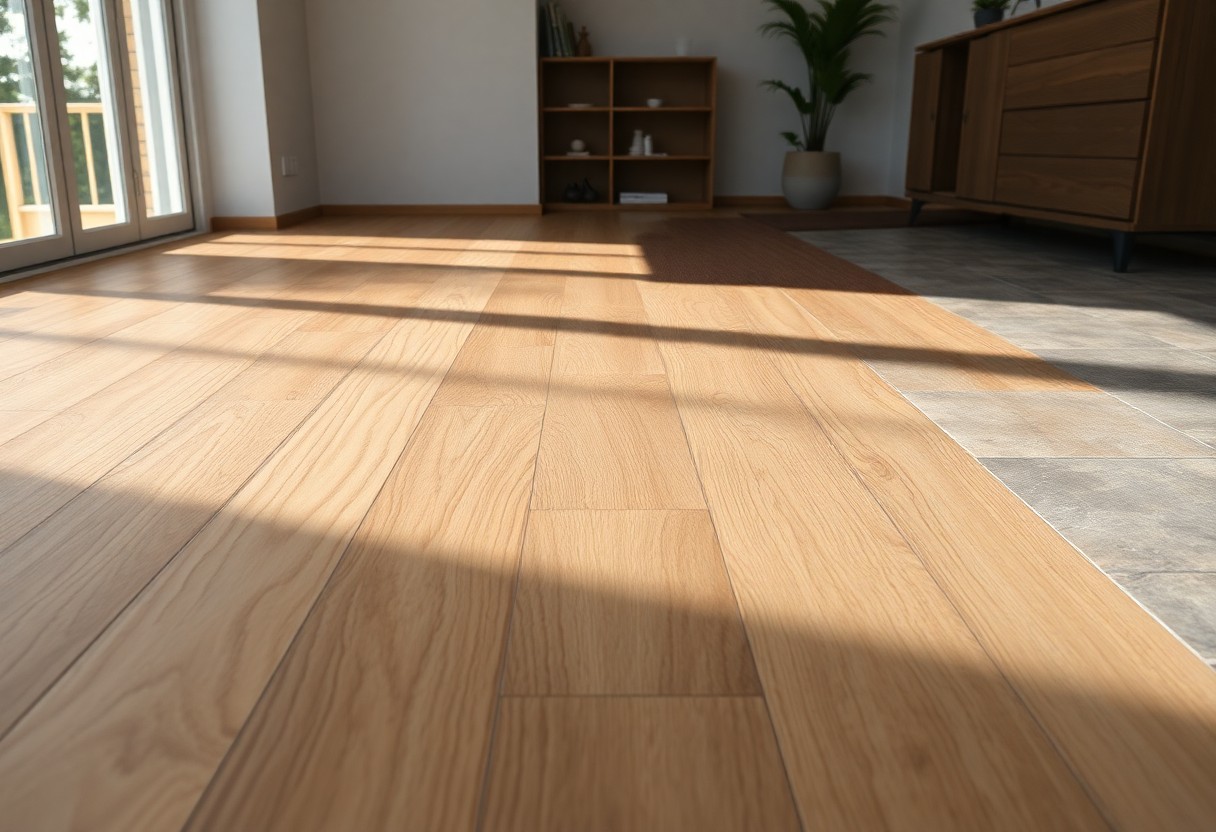
Choose transition techniques that align grain and color to guide your eye between white oak, laminate, and vinyl, balancing scale and rhythm so rooms feel connected.
Utilizing Flush Thresholds and Custom T-Molding
Use flush thresholds and custom T-molding to create low-profile joins that reduce tripping hazards and help you visually tie differing heights and finishes for coherent movement.
Creative Layout Patterns to Mask Material Shifts
Arrange planks in herringbone, chevron, or staggered runs so pattern lines help you disguise material changes and draw attention to design rather than junctions.
Consider running pattern lines across transitions, matching plank widths or adding a deliberate border strip to make the junction feel intentional; you can also shift lay direction, employ diagonal thresholds, or place transitions under furniture and doorways so the layout reads as a unified design choice.
Functional Zoning in Open-Concept Layouts
Open-plan spaces benefit when you assign materials to signal purpose, using grain, sheen, and joint patterns to guide movement and sightlines without physical barriers.
Using Material Changes to Define Living and Dining Boundaries
You can mark living and dining by switching from white oak to laminate or vinyl, orienting planks and adding border strips to create visual separation while keeping uninterrupted flow.
Balancing Acoustic and Thermal Properties Between Surfaces
Acoustic and thermal differences matter when you mix surfaces; you should pick underlayments, cushion-backed vinyl, or cork layers so sound transmission drops and floor temperatures feel consistent across zones.
Consider underlayment selection carefully: cork or dense rubber reduces impact noise, while thicker foam and insulated pads improve thermal comfort underfoot. You should verify compatibility with your chosen adhesive or floating system and test samples with radiant heat to avoid cupping or gaps. You can reduce edge noise by installing transition strips, rugs, and acoustic pads, and stagger joints where materials meet to protect structural integrity.
To wrap up
With these considerations you can confidently blend white oak, laminate, and vinyl to create a cohesive, functional floor plan that respects transitions, traffic patterns, and moisture zones while using consistent color tones and trim details to maintain visual flow throughout your space.