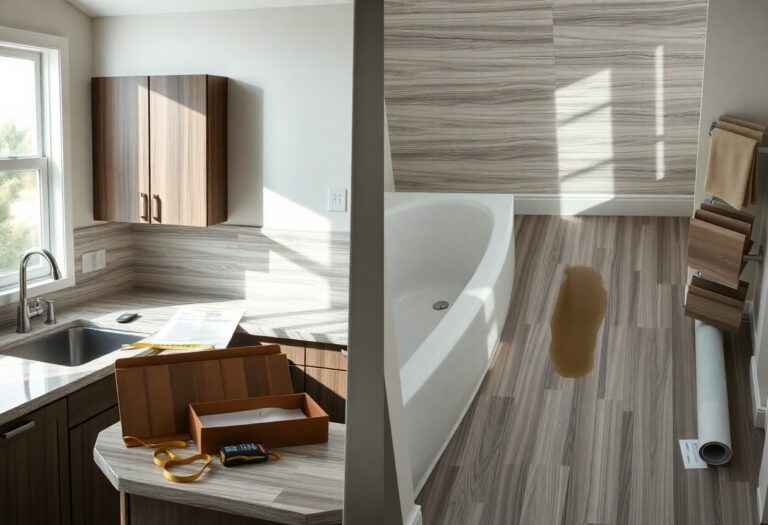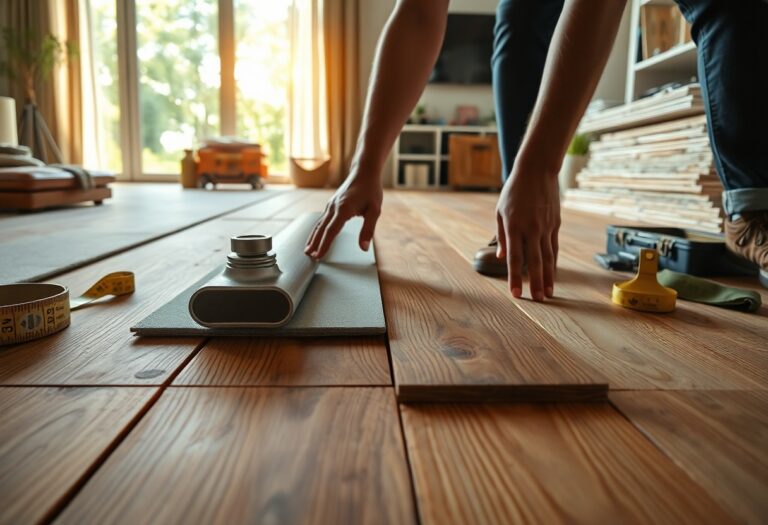

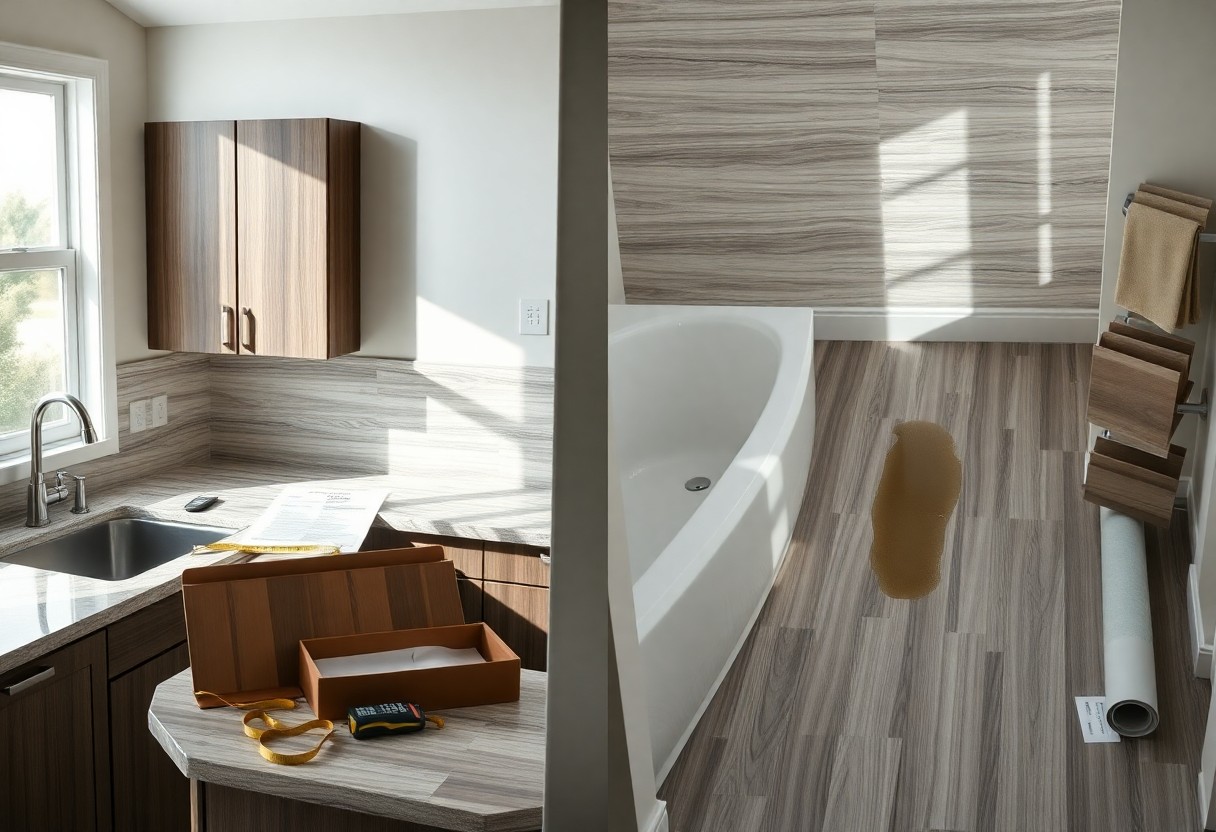

Waterproof laminate withstands spills and humidity, yet you should evaluate product ratings, underlayment, and proper sealing to prevent swelling, gaps, and mold when installing in your kitchen or bathroom.
Critical Installation Techniques for Maximum Protection
Installing waterproof laminate, you must prioritize tight joint sealing, correct underlayment placement, and accurate transition spacing to minimize water intrusion and long‑term wear.
Proper Application of Perimeter Silicone Sealant
Apply silicone in a continuous bead along the perimeter once the floor is fully set and dry, tooling it so you ensure adhesion and avoid gaps where water can pool.
Managing Expansion Gaps in Kitchens and Bathrooms
Maintain consistent expansion gaps per manufacturer specs so you avoid buckling or edge stress; cover gaps with appropriate trims while allowing free movement.
Measure gap widths according to the product guide-commonly around 3/16-1/4 inch for small rooms and larger for long runs-and increase clearance near fixed objects; undercut door jambs, leave space at cabinets and islands, and use transition strips or compressible spacers where floors meet wet fixtures so you permit thermal and moisture-driven movement without causing panels to lift.
Evaluating Durability and Performance Ratings
Evaluate manufacturers’ durability claims by checking wear-layer specifications, water-resistance certification, and warranty terms so you can match performance to your kitchen or bathroom’s daily demands.
Deciphering AC Ratings for High-Traffic Areas
Compare AC ratings to your room’s expected activity so you can choose appropriately: AC3 for light use, AC4 for busy households, and AC5 for very high-traffic or commercial situations to reduce premature wear.
Impact and Scratch Resistance in Daily Use
Check scratch and impact features by examining wear-layer thickness and surface treatments; you should favor aluminum-oxide or similar coatings and secure locking systems to limit dents and scuffs from daily wear.
Understand that abrasion ratings focus on surface wear while impact resistance depends on core density, wear-layer chemistry, and the locking profile; ask manufacturers for impact-test results, seek thicker melamine or aluminum-oxide finishes, and consider HDF or mineralized cores for better dent resistance, then protect high-use zones with mats and furniture pads to prolong appearance.
Maintenance Protocols to Ensure Longevity
You should wipe spills immediately, use entry mats, sweep grit from high-traffic areas, avoid abrasive tools, and inspect seams monthly to keep waterproof laminate performing and extend service life.
Approved Cleaning Agents and Tools
Choose pH-neutral cleaners, microfiber mops, and soft-bristle brushes; avoid waxes, oil soaps, and steam cleaners that can lift coatings or damage the core.
Managing Standing Water and Humidity Levels
Limit standing water by squeegeeing spills within minutes and using rugs near sinks; run exhaust fans and keep indoor humidity between 30-50% to protect joints and underlayment.
Monitor humidity with a hygrometer, set bathroom fans on timers, raise or seal thresholds near wet zones, fix leaks immediately, dry subfloor cavities during repairs, and consider a dehumidifier in damp climates to prevent swelling, mold, and seam separation.
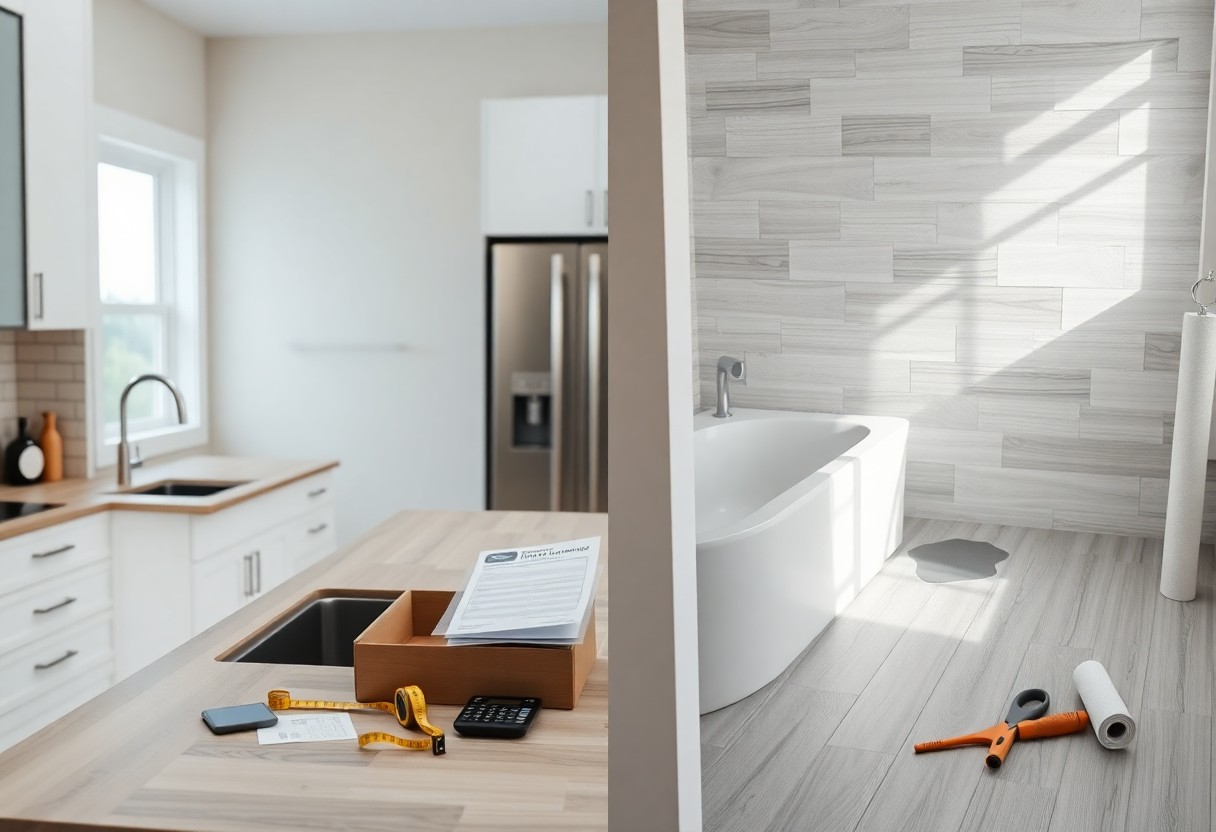
Everything You Should Know Before Installing Waterproof Laminate In Your Kitchen Or Bathroom
Balancing waterproof laminate against tile and vinyl, you should weigh upfront cost, expected lifespan, and maintenance; laminate often costs less initially and resists everyday spills, but may wear faster under heavy use or prolonged moisture exposure.
Material and Labor Investment Comparisons
Estimate material and labor separately: you pay lower material and faster installation with waterproof laminate, while tile demands skilled labor and higher time costs; factor subfloor prep and transitions when budgeting.
Cost vs Benefit
| Cost | Benefit |
|---|---|
| Lower material price | Water resistance for spills |
| Faster installation | Reduced labor hours |
| Subfloor prep or replacement | Improved performance and longevity |
| Replacement after heavy damage | Typically lower replacement cost than hardwood |
Resale Value and Aesthetic Versatility
Assess resale impact: you may not match solid hardwood value, yet high-quality waterproof laminate with consistent styling can still attract buyers and modernize wet rooms.
Consider grade, warranty, and installation quality when you evaluate resale upside; premium waterproof laminate with long warranties and professional installation eases buyer concerns about moisture, complements popular decors, and often delivers better cost-to-value than low-end products, particularly in condos or rentals where durability and easy upkeep appeal to buyers.
Conclusion
Conclusively, you should assess moisture exposure, select certified waterproof laminate, install proper underlayment and tight seals, consider professional installation, and maintain ventilation to prevent mold and edge swelling.