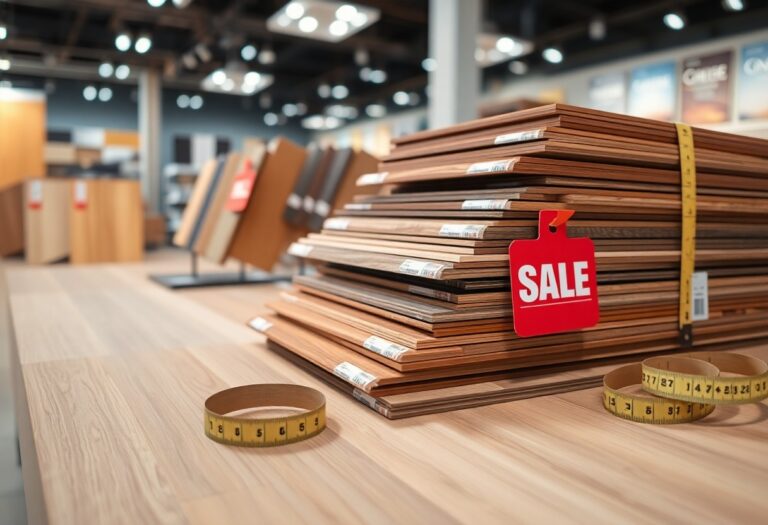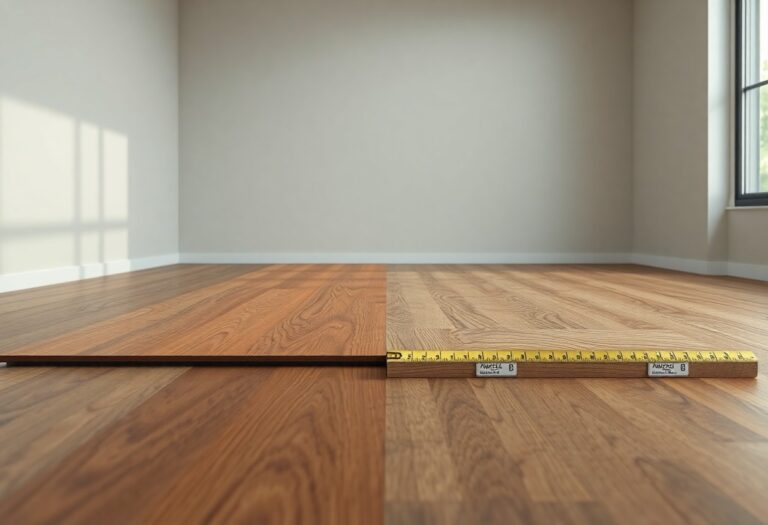

This guide helps you spot high-quality laminate floors, compare materials and warranties, and time purchases to score top deals. You’ll learn inspection tips, price benchmarks, and negotiation tactics to buy durable flooring without overspending.
Key Quality Factors to Evaluate
Check these elements when comparing laminate:
- AC rating
- Core density
- Plank thickness
- Wear layer
Perceiving how each factor affects lifespan and price helps you prioritize features and avoid buyer’s remorse.
Understanding AC Ratings and Surface Durability
Examine AC ratings to match traffic: AC3 suits most homes, AC4 fits active families and open plans, AC5 works for commercial areas; higher ratings mean tougher surface protection, so you reduce replacement costs.
Assessing Core Material Density and Plank Thickness
Compare core density and thickness because denser cores resist dents and thicker planks feel firmer; these attributes influence stability, underfoot comfort, and how the locking system performs for you.
Inspect core composition differences-HDF offers greater density and moisture resistance than MDF-and how plank thickness (8mm-12mm+) affects stiffness and sound transmission; you should choose HDF for humid rooms, thicker planks for heavy traffic, and combine with appropriate underlayment to improve durability and reduce subfloor imperfections.
How to Identify a Genuine Bargain
Savings that seem large can still hide poor quality; you should check plank thickness, AC rating, core type, and return policy to confirm real value.
Differentiating Between Clearance and Low-Quality Stock
Check manufacturer codes, visible defects, and ask why items are on clearance so you can tell discounted overruns from flawed batches.
Comparing Manufacturer Warranties and Wear Layer Specs
Compare warranty terms, transferability, and the wear layer thickness so you can match durability claims to your household traffic.
Examine exclusions, required maintenance, and claim procedures so you can assess real coverage versus marketing claims before buying.
Warranty vs Wear Layer – What to Check
| Warranty Element | What to Check |
|---|---|
| Duration | Years covered and conditions for residential/commercial use |
| Coverage | What is included: staining, wear-through, moisture damage |
| Transferability | Whether warranty transfers to a new homeowner |
| Claim Process | Required documentation and turnaround time |
| Wear Layer | Thickness in mils; 12-20+ for moderate to heavy traffic |
| AC Rating | AC3 for homes, AC4+ for high-traffic or commercial areas |
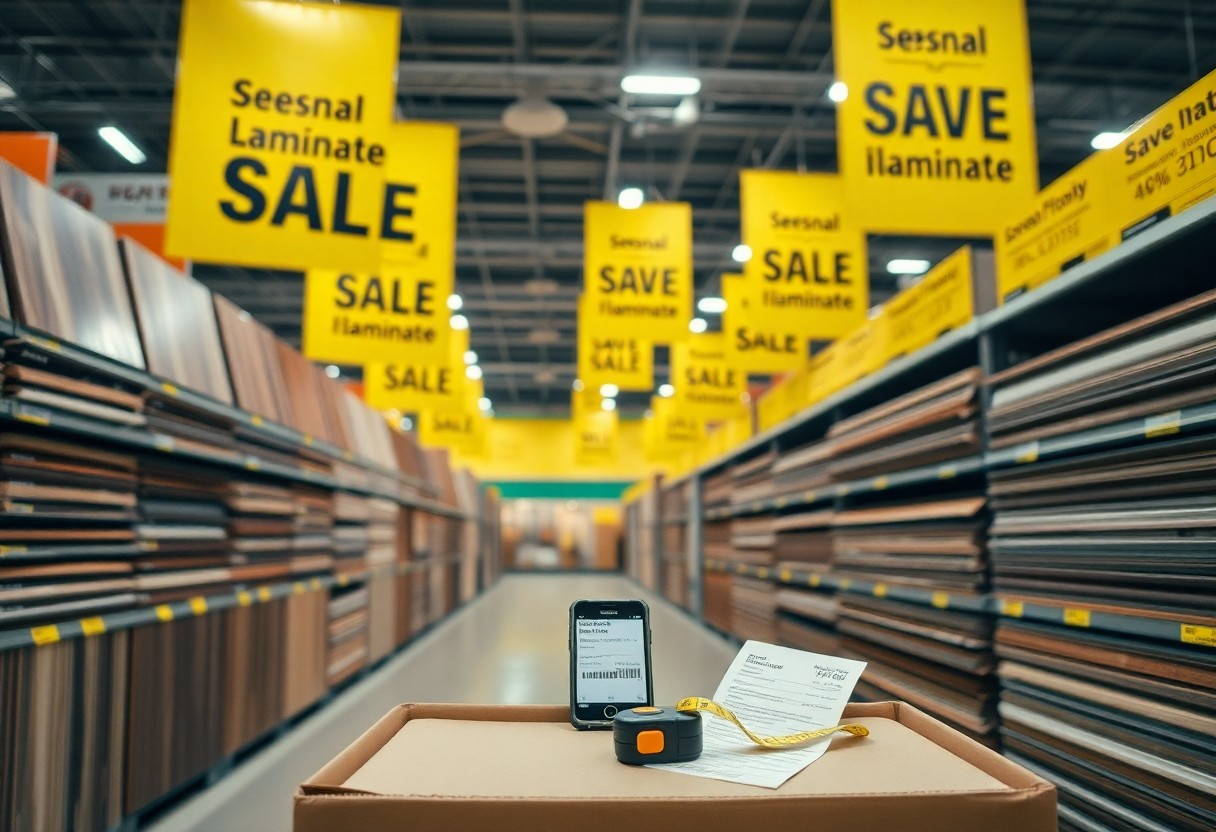
Essential Tips for Finding Seasonal Sales
Check seasonal promotions at local stores and online so you can time purchases for deep discounts. The quick bullets below point to what to watch for.
- Watch clearance racks and floor models
- Track holiday and end-of-season markdowns
- Sign up for retailer emails and loyalty alerts
Identifying Annual Flooring Discount Cycles
Track manufacturer promotions, clearance events and big-sale holidays so you can predict when discounts hit; you’ll find winter and late-summer clearances common.
Utilizing Price Matching and Bulk Purchase Incentives
Compare store price-match policies and ask about bulk discounts if you’re buying multiple rooms; often you can combine offers for better value.
When you request price matching, bring competitor ads or screenshots and confirm whether installation, delivery and taxes are included; ask for the match in writing. For bulk orders, negotiate per-square-foot pricing, request freebies like underlayment or delivery, and calculate total cost so you can see the real savings before you commit.

How to Budget for Hidden Project Costs
Hidden costs can push your laminate budget past estimates, so you should set aside 10-15% for surprises like subfloor repairs, delivery fees, and disposal.
Factoring in Underlayment and Transition Strip Requirements
Underlayment affects comfort, moisture protection, and total spend, so you should price foam, cork, or felt options plus transition strips before finalizing plank quantities.
Calculating Waste Percentages for Different Room Layouts
Waste percentages depend on layout and pattern; you should allow 5% for straightforward rooms, 10% for angled or narrow spaces, and 15% for intricate patterns.
Measure each room’s square footage, convert to plank counts, then add the chosen waste percentage; you should increase waste for multiple doorways, closets, or pattern repeats and buy from the same dye lot when possible.
Technical Factors Influencing Long-Term Performance
Assessing technical specs helps you predict laminate lifespan:
- AC/wear rating
- core density & thickness
- water resistance & locking integrity
- emissions & certifications
After comparing these metrics you choose the best quality-to-price option.
Evaluating Water Resistance and Locking System Integrity
Check how core material, edge seals and the locking profile handle moisture and movement so you avoid swelling, cupping and separation over time.
Analyzing Formaldehyde Emissions and Safety Certifications
Measure formaldehyde class (E0/E1), CARB/TSCA compliance and third-party labels so you confirm the product meets indoor air quality expectations before purchase.
Inspect manufacturer technical sheets and independent lab reports for specific HCHO values (ppm or mg/m³), verify CARB Phase 2/TSCA Title VI or EN 717 results, and look for GREENGUARD Gold or similar marks; ask about adhesives and test dates so you can judge real-world air quality impact over the floor’s lifetime.
Tips for Verifying Retailer Credibility
- Verify business registration and physical address
- Compare warranty terms and return policies
- Check verified reviews and direct contact options
Check supplier details, warranty clarity, and return terms before you commit. Any vague policies or missing contact information should be a deal breaker.
Analyzing Customer Feedback on Structural Integrity
Scan reviews for recurring reports of warping, delamination, or premature wear, and note whether you see installation-related complaints versus product failures.
Identifying Red Flags in Discount Online Listings
Watch listings with unusually low prices, missing brand names, or no clear warranty; you should verify SKU and seller details before buying.
Examine seller ratings, domain age, and product photos for inconsistencies; reverse-image-search pictures, compare SKUs to manufacturer sites, and check return windows and shipping terms. If you find mismatched specifications, ambiguous origin, or pressure to buy fast, you should walk away and report the listing to the marketplace.
Conclusion
Following this guide, you can compare wear ratings, plank construction, and warranties, scout seasonal discounts, and inspect samples to select high-quality laminate at the best price while avoiding common pitfalls and ensuring long-term value.