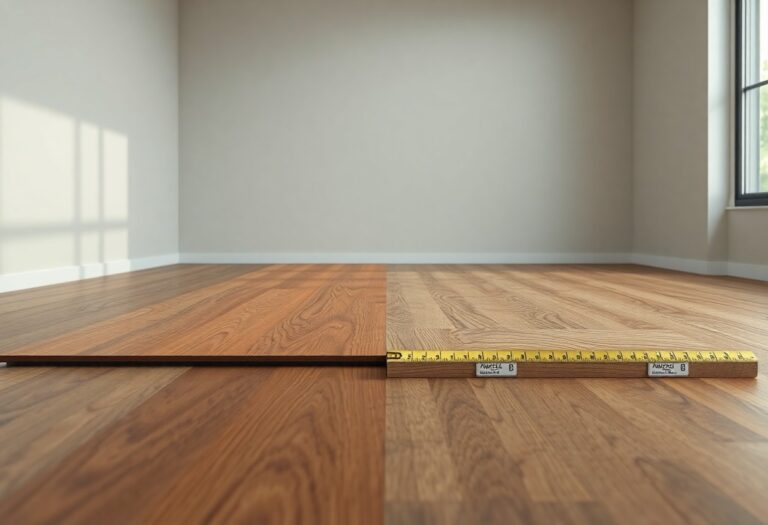

It’s wise to compare pre‑engineered flooring and laminate across durability, installation, cost, and maintenance so you can choose the best fit for your home and budget.
Structural Composition and Material Integrity
You can compare pre-engineered flooring’s real wood wear layer and plywood core with laminate’s HDF and synthetic wear layer; you should expect different repairability, moisture tolerance, and lifespan when choosing for high-traffic or moisture-prone areas.
The Multi-Layer Construction of Pre-Engineered Wood
Layered plies combine a hardwood top with cross-grained plywood beneath, giving you improved dimensional stability and a surface you can sand once or twice depending on wear-layer thickness, which helps limit cupping and seasonal movement.
High-Density Fiberboard and Synthetic Layers in Laminate
Laminate uses a high-density fiberboard core topped by a printed decor layer and a melamine wear surface, so you get strong scratch and stain resistance, consistent appearance, and limited options for refinishing when damage occurs.
Manufactured HDF cores compress wood fibers with resins to ensure uniform density, but you should expect reduced moisture tolerance compared with real wood; you may need to replace swollen planks after exposure, though water-resistant variants offer improved short-term protection.
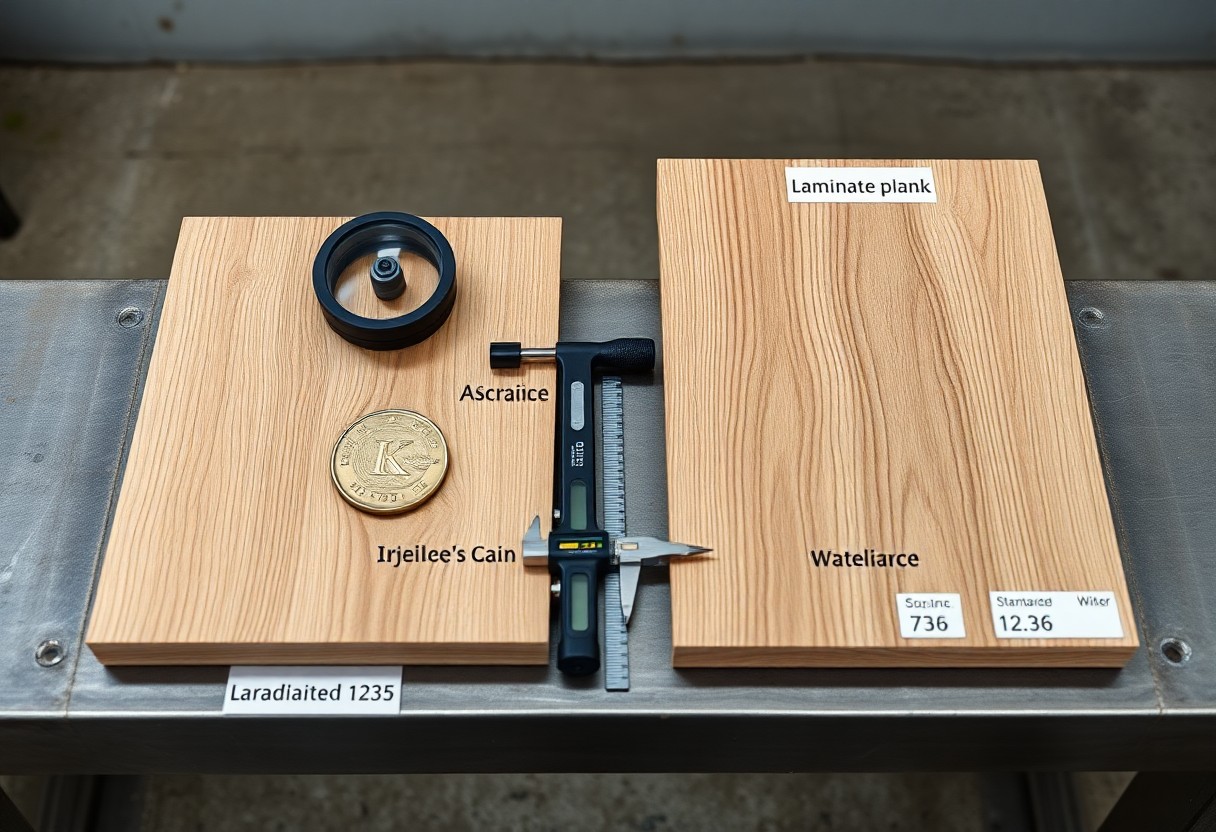
Comparative Durability and Wear Resistance
Consider how you evaluate wear: pre‑engineered flooring offers a thicker real‑wood wear layer that can be refinished, while laminate provides a durable, scratch‑resistant wear surface that resists daily abrasion but cannot be sanded and refinished.
Quick comparison
| Pre‑Engineered | Laminate |
|---|---|
| Real wood wear layer; refinishable | Printed decor layer with tough wear coat |
| Better long‑term dent recovery | High surface scratch resistance |
| Higher impact resilience with solid cores | Rigid HDF core resists compression but can chip |
| Moderate moisture tolerance with acclimation | Good spill resistance; vulnerable at seams |
| Repairable by sanding/refinishing | Typically replaced when worn or damaged |
Performance Against Scratches, Dents, and Impact
You should expect laminate to resist surface scratches better due to its protective top layer, while pre‑engineered gives better dent recovery and impact resilience thanks to real wood and engineered core construction.
Moisture Sensitivity and Humidity Tolerance
Compare how you manage moisture: pre‑engineered tolerates humidity shifts better due to real‑wood stability and engineered cores, while laminate resists spills but can swell at seams if water penetrates the surface.
If you install in basements or coastal climates, test subfloor moisture and follow manufacturer limits: pre‑engineered can be acclimated and often endures humidity swings with proper vapor barriers, whereas laminate requires tight seams, underlayment vapor control, and quick cleanup of spills; consider waterproof core options or fully waterproof products when you expect frequent exposure to moisture.
Visual Authenticity and Aesthetic Impact
Compare how pre-engineered flooring and laminate present grain, color depth and finish; you’ll notice veneer offers layered, natural irregularities while laminate relies on printed imagery, influencing how your space reads and photographs.
Real Wood Veneer vs. High-Definition Photographic Imagery
Choose real wood veneer when you want genuine grain, natural color shifts and aging potential; high-definition laminate delivers precise, repeatable visuals that keep your design consistent and predictable across large areas.
Texture Profiles and Plank Variation
Feel matters: wire-brushed or hand-scraped veneers provide tactile depth that aging reveals, while laminate textures mimic these effects but can feel flatter underfoot, affecting how you perceive warmth and quality.
Consider plank width, bevel depth, and repeat patterns when assessing variation: you’ll find wider planks and deeper bevels create a more authentic, hand-laid look in veneer, while laminate relies on controlled repeats and matching edges; test samples in your lighting to judge how texture, shadow and joint spacing change the room’s character.
Installation Methodologies and Complexity
Installation complexity varies: you can often click pre‑engineered planks into place for faster DIY work, while laminate may demand stricter subfloor prep or professional glue‑down to ensure long‑term stability.
Click-Lock Systems vs. Professional Adhesive Applications
Click-lock systems let you float panels over underlayment so you can install quickly, whereas adhesive applications typically require skilled installers, longer cure times, and careful surface preparation.
Subfloor Requirements and Underlayment Essentials
Subfloor flatness, moisture levels, and cleanliness determine whether you can float or must glue; you should plan for leveling, drying, or replacement before installation.
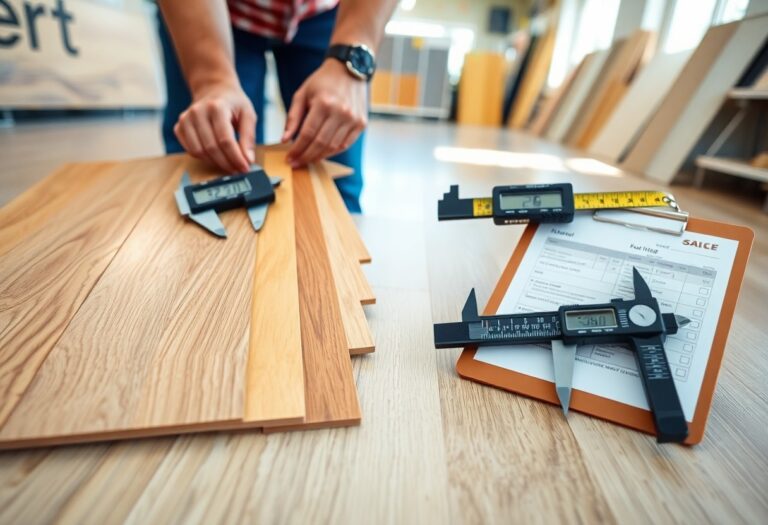
Moisture testing and flatness checks are steps you must perform: manufacturers commonly specify about 3/16″ tolerance over 6 feet and expect wood moisture within a few percentage points of the flooring. On concrete, lay an appropriate vapor retarder and underlayment; on plywood or OSB, use the recommended foam or cork underlay, and consider a plywood layer for engineered floors over uneven substrates.
Maintenance Requirements and Longevity
Maintenance of pre-engineered flooring tends to be more forgiving than laminate; you should control humidity, wipe spills quickly, and use mats to extend lifespan for either option.
Daily Cleaning Regimens and Protective Care
Daily sweeping and a damp mop prevent grit from scratching surfaces, and you should avoid harsh chemicals; place felt pads on furniture and rugs at entrances.
Lifespan Expectations and Refinishing Potential
Lifespan varies: you can expect laminate to last 10-25 years while pre-engineered floors often reach 25-50 years, and you can refinish engineered planks once or twice depending on veneer thickness.
Refinishing potential depends on veneer thickness: if you choose engineered flooring with a 3-6 mm hardwood layer, you can sand and refinish once or twice to remove wear and dents; thin veneers under 2 mm cannot be sanded and will need replacement when surface damage accumulates, so you should factor that into long-term cost and usage plans.
Financial Considerations and Property Value
Costs shape your decision between pre‑engineered and laminate flooring: pre‑engineered demands higher upfront investment but often increases property appeal, while laminate minimizes initial spending with mixed effects on long‑term value.
Upfront Material and Labor Costs
Materials and installation for pre‑engineered flooring usually cost more than laminate, so you should budget higher upfront while expecting better durability and a more refined finish that can justify the price.
Long-Term ROI and Impact on Resale Value
Resale prospects often favor pre‑engineered floors because buyers associate them with quality, so you can recoup a larger share of your investment compared with laminate, especially in higher‑tier markets.
Comparing lifetime costs clarifies ROI: you may pay more initially for pre‑engineered options, but their longer lifespan, superior wear performance, and stronger buyer perception reduce replacement and repair expenses. You should evaluate local buyer preferences, warranty terms, and maintenance needs to estimate how much resale value the upgrade will realistically return.
To wrap up
Presently you should choose pre‑engineered flooring for authentic wood look and longer lifespan if you value repairability and resale, or pick laminate for lower cost, easy upkeep, and DIY installation; assess moisture exposure, budget, and expected use to determine the better fit.