
With water-resistant flooring becoming a standard expectation in modern homes, you face a clear choice between traditional laminate and its newer, waterproof counterpart. You want durability without sacrificing style, especially in areas prone to spills or humidity. This decision isn’t just about appearance-it’s about how each floor handles real daily demands, from pet accidents to seasonal moisture shifts in your basement or kitchen.
The Hunger of the Old Wood
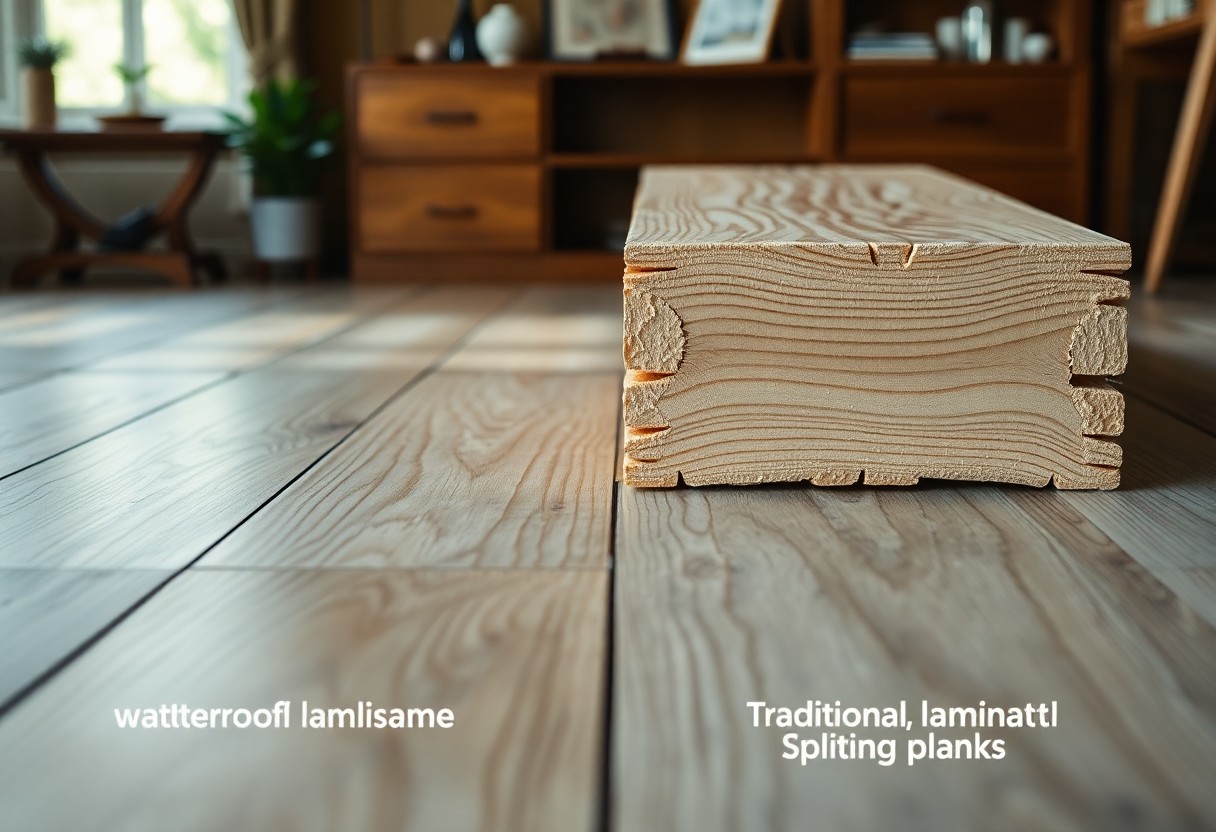
Your traditional laminate absorbs moisture over time, especially at cut edges and seams, because its core layer is made from wood-based fiberboard. A spill left unattended overnight can swell a plank by morning, particularly in high-humidity areas like kitchens or basements. Homes in coastal regions often report edge warping within two years of installation, even with routine cleaning. This vulnerability stems from the material’s inherent need to balance with ambient humidity, a trait inherited from its organic composition.
The Shield of the New Core
Your flooring faces daily threats from spills, pet accidents, and humidity shifts, but the new core in waterproof laminate stands guard. Unlike traditional laminate, which swells when water seeps into the fiberboard, this version uses a rigid core made from stone or limestone composite. A mid-sized SaaS firm retrofitting its office space found no warping after a coffee machine overflow, unlike its previous laminate. The core resists moisture at the molecular level, maintaining structural integrity even after prolonged exposure. You can mop without hesitation, and in homes with children or pets, that resilience translates to long-term peace of mind. This is not just a surface defense-it’s protection from within.
The Price of the Planks
Waterproof laminate typically costs more per square foot than traditional laminate, with prices sometimes running 20 to 30 percent higher depending on the brand and finish. You may pay extra for advanced core materials like stone polymer composite or enhanced moisture barriers built into the planks. A mid-sized SaaS firm might find the investment justifiable for high-traffic areas, but budget-conscious homeowners often weigh that premium against long-term durability. Some manufacturers now offer competitively priced waterproof options, narrowing the gap without sacrificing core performance.
The Labor of the Hands
Your hands shape the final outcome as much as the material beneath them. Installing traditional laminate demands precision, with each plank locked tightly to resist moisture at the seams. Waterproof laminate simplifies the process, forgiving minor alignment errors and resisting swelling during seasonal shifts. A mid-sized SaaS firm’s office renovation saw installers complete the same square footage in 30% less time using waterproof variants, thanks to easier handling and fewer adjustments. Your effort matters, but the material can either ease or amplify it.
The Beauty of the Grain
You see the grain not as decoration but as character, each line telling how the tree grew before it became your floor. Traditional laminate excels here, offering high-resolution prints from real hardwood species like white oak or hickory, complete with knots and natural variation. Waterproof versions now match that quality, using advanced imaging to replicate depth and texture without sacrificing realism.
The Life of the Surface
Your floor faces daily wear from foot traffic, furniture shifts, and accidental spills. Traditional laminate shows scratches and water damage over time, especially in kitchens or entryways. Waterproof laminate resists moisture and maintains integrity even after repeated exposure, making it a stronger choice for busy households or humid climates. A mid-sized SaaS firm’s office renovation revealed lasting surface performance after three years of heavy use. Scratches remain superficial, and the finish retains its original sheen without warping.
Summing up
You weigh durability against aesthetics, installation effort, and long-term upkeep when choosing between waterproof and traditional laminate. A basement prone to dampness benefits from the water-resistant core of modern planks, while a dry upper-level bedroom may suit traditional options just as well. Your lifestyle, environment, and budget guide the final decision, not marketing claims. A mid-sized SaaS firm’s office renovation, for instance, opted for waterproof laminate in high-traffic areas, reducing maintenance calls by half over two years.