

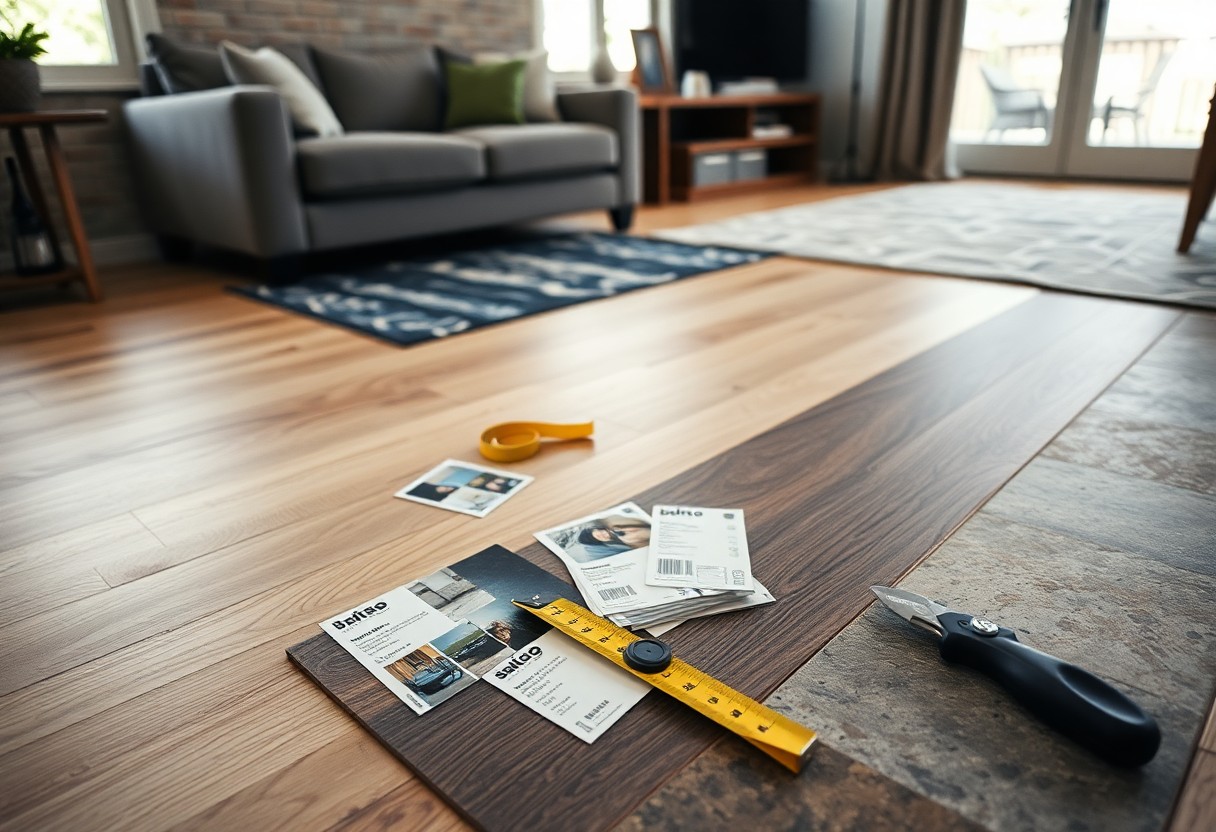
Guide your decision with confidence by understanding what sets high-quality vinyl flooring apart in today’s market. You face a range of materials, finishes, and performance features designed to meet real-world demands from kitchens to basements. A mid-sized SaaS firm retrofitting its office space chose vinyl not for trendiness but for durability under heavy foot traffic and easy long-term upkeep.
Understanding the Different Types of Vinyl Flooring
- Luxury Vinyl Plank (LVP)
- Luxury Vinyl Tile (LVT)
- Rigid Core Vinyl
- Traditional Sheet Vinyl
- Loose-Lay Vinyl
| Luxury Vinyl Plank (LVP) | Engineered to mimic real wood, with realistic grain and texture |
| Luxury Vinyl Tile (LVT) | Designed to resemble stone, ceramic, or concrete finishes |
| Rigid Core Vinyl | Features a stiff, waterproof core ideal for basements and bathrooms |
| Traditional Sheet Vinyl | Continuous roll format with minimal seams, often used in kitchens |
| Loose-Lay Vinyl | Installed without adhesive, relying on weight and friction to stay in place |
Recognizing the distinct construction and use case for each type ensures your selection aligns with both aesthetic goals and functional demands.
Luxury Vinyl Plank (LVP) and Tile (LVT)
You benefit from advanced printing technology that captures the natural variation of hardwood or stone surfaces. LVP and LVT differ primarily in format-plank versus tile-yet both offer superior scratch and moisture resistance. A mid-sized SaaS firm renovating its office space selected LVT for high-traffic common areas due to its realistic slate appearance and ease of maintenance.
Rigid Core and Traditional Sheet Vinyl
You encounter two fundamentally different structures when comparing rigid core and traditional sheet vinyl. Rigid core options sit above subfloors without underlayment, while sheet vinyl adheres directly and requires precise cutting.
Traditional sheet vinyl has been a staple in residential kitchens for decades due to its seamless surface and low cost. Rigid core variants, by contrast, utilize a composite layer that resists indentation from heavy furniture. You may notice rigid core planks often click together like laminate, allowing faster installation over imperfect subfloors. Sheet vinyl, when professionally installed, can last twenty years in low-moisture environments such as living rooms or hallways.
Weighing the Pros and Cons of Vinyl Solutions
Choosing vinyl flooring means balancing practical benefits with long-term considerations. The material’s performance in high-traffic or moisture-prone areas often makes it a preferred option for many homeowners. Below is a clear breakdown of what to expect from modern vinyl solutions.
| Durable surface resists scratches and dents | May show wear under heavy furniture over time |
| Water-resistant, ideal for kitchens and bathrooms | Not fully waterproof unless specifically rated |
| Low maintenance with easy cleaning routines | Can be damaged by prolonged exposure to direct sunlight |
| Available in wide range of styles and colors | Limited ability to refinish or repair deep damage |
| Softer underfoot than tile or stone | May emit volatile organic compounds (VOCs) during installation |
| Cost-effective compared to natural materials | Resale value impact may vary by market |
| Compatible with radiant heating systems | Adhesive used in some types can complicate removal |
| Sound-dampening properties reduce footfall noise | Not biodegradable; recycling options are limited |
| Long warranties available from reputable brands | May require professional installation for glued-down types |
| Resilient layer recovers well from indentation | Can be punctured by sharp objects if not protected |
Key Advantages of Durability and Water Resistance
You benefit from a floor that withstands daily wear while resisting spills and humidity. Vinyl’s layered construction protects against scuffs in hallways and moisture in basements. A mid-sized SaaS firm retrofitting its office kitchen chose vinyl for this reason, noting minimal upkeep after two years of use.
Potential Drawbacks and Environmental Considerations
You should consider how vinyl impacts indoor air quality and end-of-life disposal. Some products release odors initially due to off-gassing. Installation in poorly ventilated areas may require temporary occupancy delays. These effects typically subside within days under normal conditions.
Disposal remains a concern since most vinyl flooring ends up in landfills. Recycling programs exist but are not widely accessible. You may find manufacturers offering take-back initiatives, though participation varies by region. Choosing phthalate-free or chlorine-free options can reduce environmental impact without sacrificing performance.
Critical Factors to Evaluate Before You Buy
Assess your space’s foot traffic, moisture exposure, and existing subfloor type before selecting a vinyl product. Homes with pets or children benefit from scratch-resistant finishes, while kitchens and bathrooms demand 100% waterproof cores. A mid-sized SaaS firm retrofitting its office space chose commercial-grade vinyl for durability across high-traffic zones. Perceiving long-term value means prioritizing material integrity over initial cost.
Wear Layer Thickness and Core Material Quality
Thicker wear layers, typically 20 mil and above, resist scuffs and prolong lifespan, especially in entryways or hallways. The core-whether WPC, SPC, or rigid vinyl-affects stability and comfort underfoot. Stone polymer composite cores handle subfloor imperfections better than standard PVC, reducing creaking over time.
Underlayment Needs and Acoustic Performance
Some vinyl planks include attached underlayment, reducing installation steps and muffling footfall noise. Floating installations over concrete benefit from added foam or cork layers to minimize sound transmission between floors.
Sound attenuation becomes imperative in multi-level homes or apartments where impact noise travels easily. An engineered vinyl with an integrated cork underlayment reduced noise by noticeable levels in a three-story townhouse near a busy urban intersection. The density of the underlayment directly influences acoustic comfort, particularly with hard subfloors like concrete or plywood.
A Step-by-Step Approach to Selecting Your Style
Choosing the right vinyl flooring style requires balancing aesthetics, durability, and room function. Begin by identifying your priorities, then narrow options based on material structure and finish. The following guide breaks down key considerations to streamline your decision.
| Assess Room Conditions | Determine foot traffic and moisture exposure to guide thickness and core type selection. |
| Choose Visual Priority | Decide whether realistic wood grain, stone texture, or solid color matters most for the space. |
| Match Existing Décor | Coordinate with furniture, wall colors, and flooring in adjacent rooms for visual continuity. |
| Test Samples | Observe how samples look at different times of day and under various lighting conditions. |
Assessing Room Traffic and Moisture Levels
High-traffic areas like hallways and kitchens benefit from thicker wear layers and rigid cores that resist dents. Bathrooms and basements demand 100% waterproof vinyl, preferably with an attached underlayment to handle humidity fluctuations without warping.
Matching Textures and Colors to Your Interior Design
Lighter shades open up small rooms and hide scratches better, while dark tones convey warmth but show dust and pet hair. Embossed textures mimic real hardwood grain and add depth, helping disguise minor subfloor imperfections.
Texture influences both look and feel underfoot. A hand-scraped finish pairs well with rustic or farmhouse styles, whereas a smooth matte surface suits modern minimalist spaces. A mid-sized SaaS firm’s office renovation used warm gray plank vinyl to bridge industrial elements with soft seating areas, proving tone and texture can unify diverse design themes.
Expert Tips for Installation and Maintenance
Proper installation and consistent upkeep ensure your vinyl flooring performs well for years. Always acclimate planks or tiles for 48 hours in the room where they’ll be installed. Use manufacturer-recommended adhesives and underlayment. Clean spills promptly and avoid abrasive tools. This routine preserves appearance and structural integrity across high-traffic areas.
- Acclimate material for at least two days before installation
- Use a roller after laying planks to secure adhesion
- Stick to pH-neutral cleaners for regular cleaning
- Avoid rubber-backed mats that may discolor the surface
- Inspect seams periodically for lifting or moisture ingress
Professional vs. DIY Installation Best Practices
A certified installer brings precision and warranty compliance, especially for complex subfloors or large spaces. If you choose the DIY route, invest in quality tools like a knee kicker and tapping block. Follow layout plans carefully to avoid alignment errors. This approach minimizes callbacks and ensures a factory-approved finish.
Long-Term Care Routines for Lasting Beauty
Sweeping weekly and damp mopping with a microfiber cloth prevents grit buildup that dulls the finish. Use felt pads under furniture legs and avoid dragging heavy items. Trim pet nails regularly to reduce surface scratches. This simple regimen maintains the floor’s luster and protects its wear layer over time.
Deep cleaning every few months with a vinyl-safe solution removes embedded grime without damaging the surface. For luxury vinyl tile, pay attention to grout lines if textured, using a soft brush to lift debris. A mid-sized SaaS firm with open-concept offices reported fewer maintenance calls after switching to commercial-grade vinyl with a protective topcoat, demonstrating how material quality and routine care combine to extend lifespan.
Summing up
Choosing the best vinyl flooring means aligning material properties with your household’s demands, from moisture resistance in kitchens to scratch tolerance in high-traffic areas. You assess wear layers, core stability, and installation method with the same care as aesthetics, ensuring long-term satisfaction. A mid-sized SaaS firm’s office renovation, for instance, opted for WPC plank with a 20-mil wear layer, enduring heavy footfall while maintaining acoustic comfort. Your decision hinges not on marketing claims but on tested performance in real-world settings.