

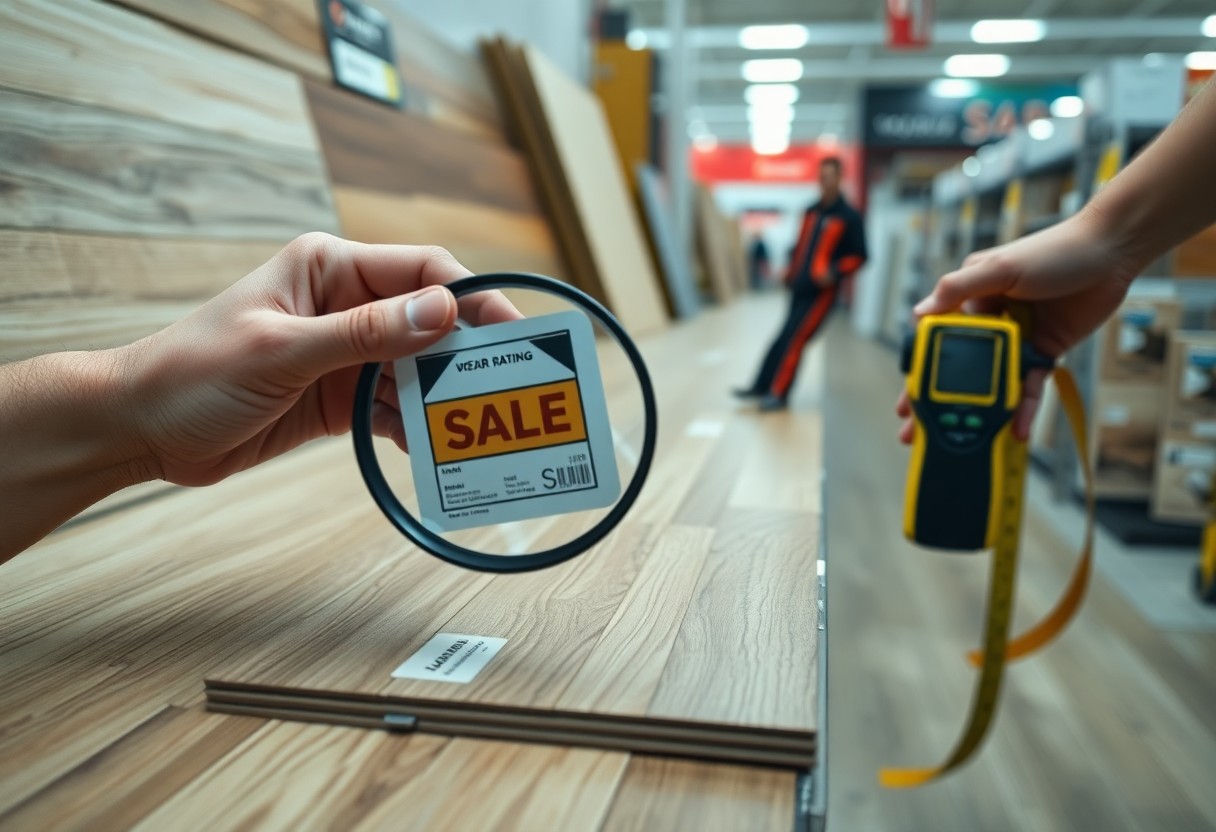
Laminate sales often hide fees; you should inspect plank thickness, AC rating, warranty terms, return policy, and whether price covers installation to identify genuine bargains and avoid inflated discounts.
How to Identify Real Value Factors in Sale Tags
Assess sale tags for clear discount bases: original price, model, warranty, and stock age. After comparing these, you’ll spot true savings.
- Original MSRP shown
- Clear model/collection ID
- Warranty length and exclusions
Distinguishing Genuine Clearances from Marketing Gimmicks
Check whether discounts apply only to last-season lines, visible blemishes, or limited colors, and verify return and warranty terms so you can decide if the markdown is authentic.
Evaluating MSRP Benchmarks Across Competitors
Compare advertised prices with MSRP across several retailers and note whether the sale price undercuts the market median or mirrors a common promotional rate.
Gather MSRP data from manufacturer sites and top retailers, record model numbers and sale dates, and build a simple comparison table you update as you shop; look for consistent retailer-wide discounts versus single-store anomalies, factor in shipping and installation, and favor offers that beat the median while matching warranty terms.
How to Inspect Material Integrity Before Purchase
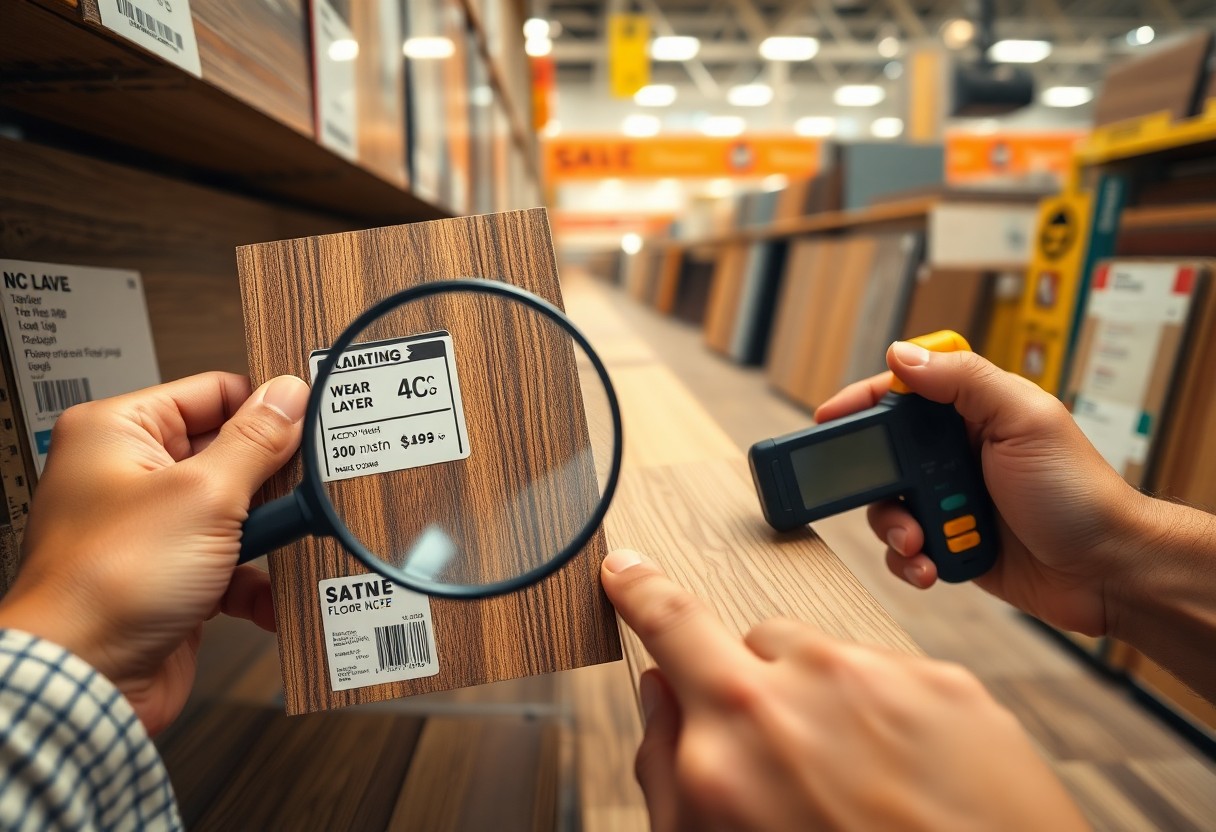
Check core thickness and wear layer measurements, press plank edges for splitting, and examine the backing for delamination or swelling so you can spot manufacturing flaws before committing to a discounted batch.
Verifying AC Durability Ratings
Compare AC numbers to your traffic expectations: AC3 fits most homes, AC4 suits high-traffic family zones; review manufacturer test reports and confirm wear layer composition so you can trust the rating matches real-world use.
Examining Locking System Precision
Test locking joints by snapping sample planks together and sliding seams; if you notice gapping, rough engagement, or excessive play, you’ll avoid installs that need constant tapping or rework later.
Try assembling several rows to assess alignment and repeatability; watch for burrs, inconsistent milling, or profiles that require force, and ask the seller to provide replacements or warranty terms if you find tolerances that produce gaps or uneven locking performance.
Critical Factors Influencing Long-Term Durability
You must check core density, moisture resistance, locking profile and wear layer to predict lifespan; prioritize tested coatings and proven installation methods to avoid premature failure.
- Core density and construction affect dimensional stability
- Wear layer thickness and finish determine scratch and abrasion resistance
- Water resistance and edge sealing reduce swelling risks
- Thou should confirm AC ratings, warranty details and real-world performance tests
Assessing Core Density and Moisture Resistance
Check the core’s density ratings and whether the manufacturer tests moisture exposure; higher-density cores and sealed edges resist swelling, so you can expect better performance in humid areas.
Understanding Wear Layer Thickness
Measure the wear layer thickness and coating type; a thicker wear layer with durable finishes helps you maintain appearance and resist abrasion in high-traffic zones.
Compare wear-layer specs across brands: 0.2-0.3 mm suits light residential use, 0.5-0.7 mm fits busy homes, and 1 mm+ is standard for commercial-grade resilience, so you can match thickness to foot traffic and longevity expectations.
How to Calculate Hidden Costs in Discounted Flooring
You must add underlayment, trim, delivery, installation labor, permits and potential returns to the sticker price to see the true cost of a laminate sale; tally these before buying so you can compare final per-square-foot prices accurately.
Factoring in Underlayment and Molding Requirements
Check if your laminate requires a specific underlayment or moisture barrier and count transition strips, thresholds and baseboards; these small items often add 10-20% to material costs, so factor them into your purchase decision.
Estimating Delivery and Waste Percentage Expenses
Estimate delivery fees based on distance and pickup options, then add a waste percentage-typically 5-10% for straight runs, 10-15% for patterns or irregular rooms-to determine total material needed and avoid surprise costs.
Calculate waste by mapping the room: square up odd angles, add 10-15% for offsets and 20% for stairs or diagonal installs, and order extra for color/lot variation; check delivery details like inside vs. curbside drop, lift-gate or long-distance surcharges, and confirm return and restocking policies before placing the final order.
Summing up
Drawing together the signs of a true laminate sale, you can verify wear-layer thickness, warranty length, return policy, and seller reputation; compare per-square-foot pricing, request samples, ask about installation and hidden fees, and favor listings that display clear specs and certifications so you confidently buy lasting value rather than a temporary discount.