

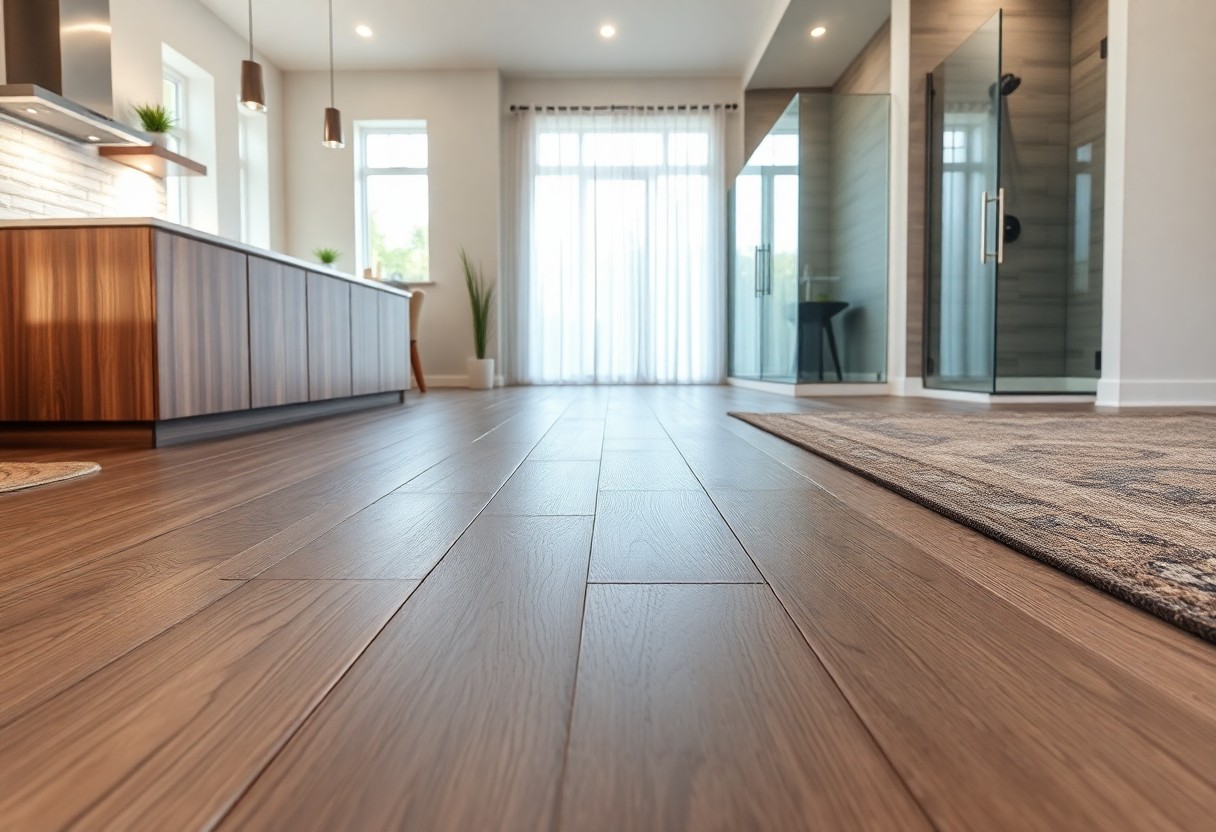
Flooring decisions affect every room, so this guide helps you choose, install, and maintain waterproof laminate that blends lasting wear with stylish designs you can trust.
Weighing the Pros and Cons of Performance Flooring
You should weigh performance flooring’s benefits against its limits to choose per-room solutions that balance water resistance, wear rating, cost, and aesthetic trade-offs.
Pros and Cons
| Pros | Cons |
|---|---|
| Waterproof performance | Less authentic texture than real wood |
| High wear ratings | Cannot be refinished by sanding |
| Lower maintenance | Damaged planks often require replacement |
| Cost-effective vs hardwood | Edge swelling risk with severe moisture |
| Wide style range | Color and sheen can look synthetic |
| Quick installation | Variable environmental impact |
Advantages of Moisture Resistance and Durability
When you need floors that resist spills and heavy foot traffic, waterproof laminate delivers low maintenance, strong wear ratings, and long-lasting visuals that suit kitchens, baths, and busy living areas.
Critical Limitations and Comparison to Natural Materials
Consider that you may trade off authentic grain, warmth, and refinishing options; you’ll often replace planks rather than sand, and some designs lack the depth and variation of real wood or stone.
Comparison to Natural Materials
| Laminate | Wood/Stone |
|---|---|
| Consistent printed visuals | Unique grain and natural variation |
| Lower surface texture realism | Rich tactile feel |
| No sanding/refinishing | Can be sanded and refinished |
| Often lower upfront cost | Higher initial investment |
| Faster install | Longer installation time |
| Mixed recyclability | Proven long-term durability |
In real use you’ll notice specific limits: limited texture realism, repair-by-replacement, potential edge swelling with severe damage, and differing longevity compared with high-quality hardwood or stone.
Limitations and Impact on You
| Limitation | What it means for you |
|---|---|
| Cannot be refinished | Replacement required for deep wear |
| Printed surface | Less natural look and feel |
| Repair by plank swap | Spot repairs may be visible |
| Edge/seam sensitivity | Severe moisture can cause swelling |
| Variable lifespan vs natural | May need replacement sooner in some settings |
Design Strategies for Every Room in the Home
Pair waterproof laminate with coordinating trims, area rugs, and plank widths to define zones; match color temperature to your lighting so you maintain consistent flow and appropriate scale between rooms.
High-Moisture Solutions for Kitchens and Bathrooms
Protect kitchens and bathrooms by selecting H2O-rated planks, tight-fitting transitions, and raised baseboards; you should seal edges and use mats near sinks to minimize water exposure and ease maintenance.
Aesthetic Trends for Living Areas and Bedrooms
Styling choices favor warm wood tones, wide planks, and textured finishes so you can layer rugs and furniture to create inviting, contemporary spaces that reflect your taste.
Consider choosing wider planks and matte, embossed textures to mimic real wood while hiding wear; you can pick lighter tones to make small rooms feel airy or richer hues to add intimacy in bedrooms. Mix metal accents with soft textiles, match trims to flooring tones, and anchor seating with rugs to achieve a curated look that still performs under daily use.
Summing up
Drawing together the guide, you can select waterproof laminate that resists moisture, replicates wood, and suits kitchens, baths, and basements; apply correct installation and maintenance to ensure lasting performance and confident style throughout your home.