

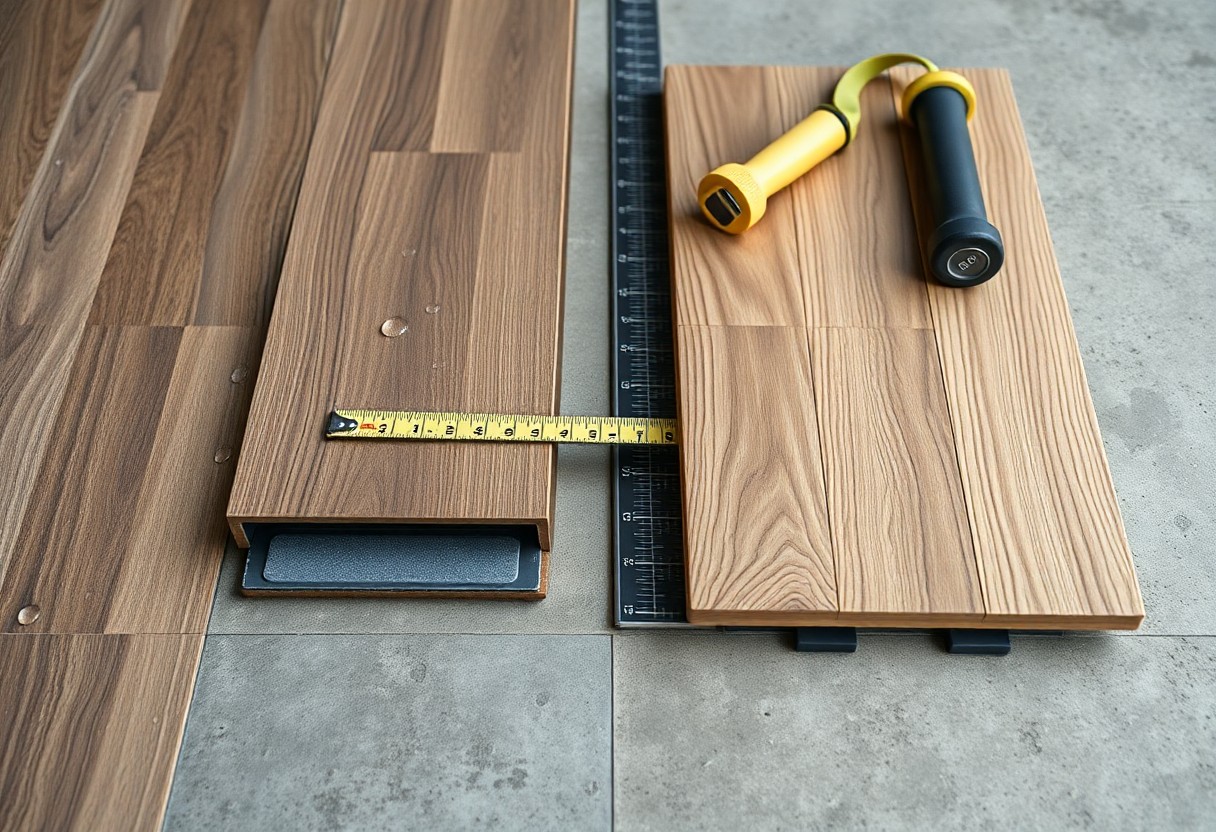
Waterproof laminate offers spill resistance and easy maintenance, while engineered flooring gives real wood appearance and repair options; assess your budget, moisture levels, foot traffic, and installation skill to determine the best option for your home.
Evaluating Material Composition and Core Factors
Focus on layer makeup and core density when you compare waterproof laminate and engineered flooring; check wear layer, core type, and moisture protection.
- Wear layer thickness
- Core material and density
- Waterproof rating and seals
Knowing these core factors helps you match performance to each room.
Understanding Waterproof Laminate Technology
Consider how HDF cores, faux-wood wear layers, and sealed joints let you install waterproof laminate in moisture-prone areas while keeping maintenance simple for your household.
Analyzing Engineered Wood Construction
Compare plywood or HDF cores, stacked veneers, and a hardwood top layer to judge stability, expansion resistance, and how many times you can refinish flooring in your space.
Layering in engineered flooring pairs cross-grain core plies with a hardwood veneer; this gives you improved dimensional stability in humidity, and veneer thickness plus adhesive type determine sanding potential and long-term appearance.

How to Assess Your Environment and Moisture Levels
Assess your home’s humidity patterns, seasonal shifts, and ventilation so you can choose flooring that handles moisture without warping or mold.
Identifying High-Risk Areas for Water Exposure
Check bathrooms, kitchens, mudrooms, basements, and entryways for leaks, steam, and frequent spills so you can prioritize waterproof options where needed.
Determining Subfloor Compatibility and Preparation
Inspect subfloor material, flatness, and moisture content; confirm plywood, OSB, or concrete meet manufacturer tolerances before installation.
Evaluate concrete with an RH or calcium chloride test and check wood with a pin or pad moisture meter; if readings exceed limits, install a vapor barrier, allow curing, or level and repair uneven or damaged areas. You should also verify the subfloor is structurally sound and dry for the required acclimation period, and always follow the flooring manufacturer’s specified moisture and flatness tolerances.
Aesthetic Considerations for Professional Results
Consider finish, color and sheen when matching waterproof laminate or engineered flooring to your project’s style; you should weigh grain realism, gloss level and transition details to achieve a professional, cohesive appearance.
Achieving Realistic Texture and Visual Depth
Texture choices determine how convincing wood visuals appear; you should compare embossed-in-register laminate against hand-scraped or wire-brushed engineered surfaces to decide which depth and touch meet your standards.
Selecting Plank Formats and Edge Profiles
Wider planks create a more contemporary, spacious look; you should choose plank width and length that complement room scale and furniture while edge profiles-microbevel, square or beveled-affect visible seams and perceived quality.
Measure room dimensions and plan plank layout to avoid narrow end pieces; you should stagger end joints at least 6-8 inches, alternate plank lengths for a natural pattern, and match edge profiles to thresholds and trims to maintain consistent sightlines and perceived continuity.
How to Calculate Installation and Maintenance Costs
Estimate your total by summing materials, underlayment, adhesives, trims, disposal, and a contingency for waste; add labor, tool rental, and subfloor repairs to avoid surprises.
Cost Breakdown
| Item | What to include |
|---|---|
| Materials | Per-sqm price, waste allowance, underlayment, trims |
| Labor | Removal, prep, installation rates, trim work |
| Prep & Repairs | Subfloor leveling, moisture barrier, mold remediation |
| Tools & Misc | Tool rental, adhesives, transitions, disposal fees |
| Maintenance | Cleaning supplies, pads, humidity control, future refinishing |
Comparing DIY vs. Professional Labor Requirements
Compare your time, skill, and allowance for errors to installer rates; DIY lowers outlay but professional fitting often cuts long-term repair costs.
Long-Term Upkeep and Cleaning Protocols
Plan routine sweeping, damp mopping, protective pads, and humidity monitoring; choose cleaners that match your floor type to extend service life.
Maintain weekly dry cleaning to remove grit, and you should spot-wipe spills immediately to prevent staining; use pH-neutral cleaners and avoid abrasive pads. For engineered floors, you must prevent standing water and control humidity; thicker veneers can be refinished. For waterproof laminate, focus on sealed edges and quick spill management to protect the core and fittings.
Strategic Factors for Property Value and ROI
Compare how you assess appearance, durability and buyer expectations; consider:
- Local market standards
- Maintenance and repair costs
- Installation and lifespan
This helps you choose flooring that maximizes resale value and ROI.
Weighing Initial Investment Against Resale Appeal
Assess upfront costs versus anticipated resale premiums, factoring material quality, installation complexity, and target buyer preferences to determine whether higher initial spending yields stronger returns for your property.
Lifecycle Assessment of Each Flooring Type
Evaluate expected lifespan, maintenance frequency, and end-of-life recyclability so you can predict total ownership cost and environmental impact when choosing between options.
Consider that engineered flooring often offers longer veneer longevity and can be refinished, while waterproof laminate trades refinishability for superior moisture resistance and lower purchase price; you should tally maintenance, likely replacement intervals, warranty terms, and disposal or recycling costs to estimate the true lifecycle expense and environmental impact for your project.
Summing up
The choice depends on your moisture exposure, budget, style preference, and resale goals: waterproof laminate suits wet rooms and tight budgets, while engineered flooring offers authentic wood, longer life, and refinishing potential-compare traffic, subfloor, and maintenance to pick what fits your home.