

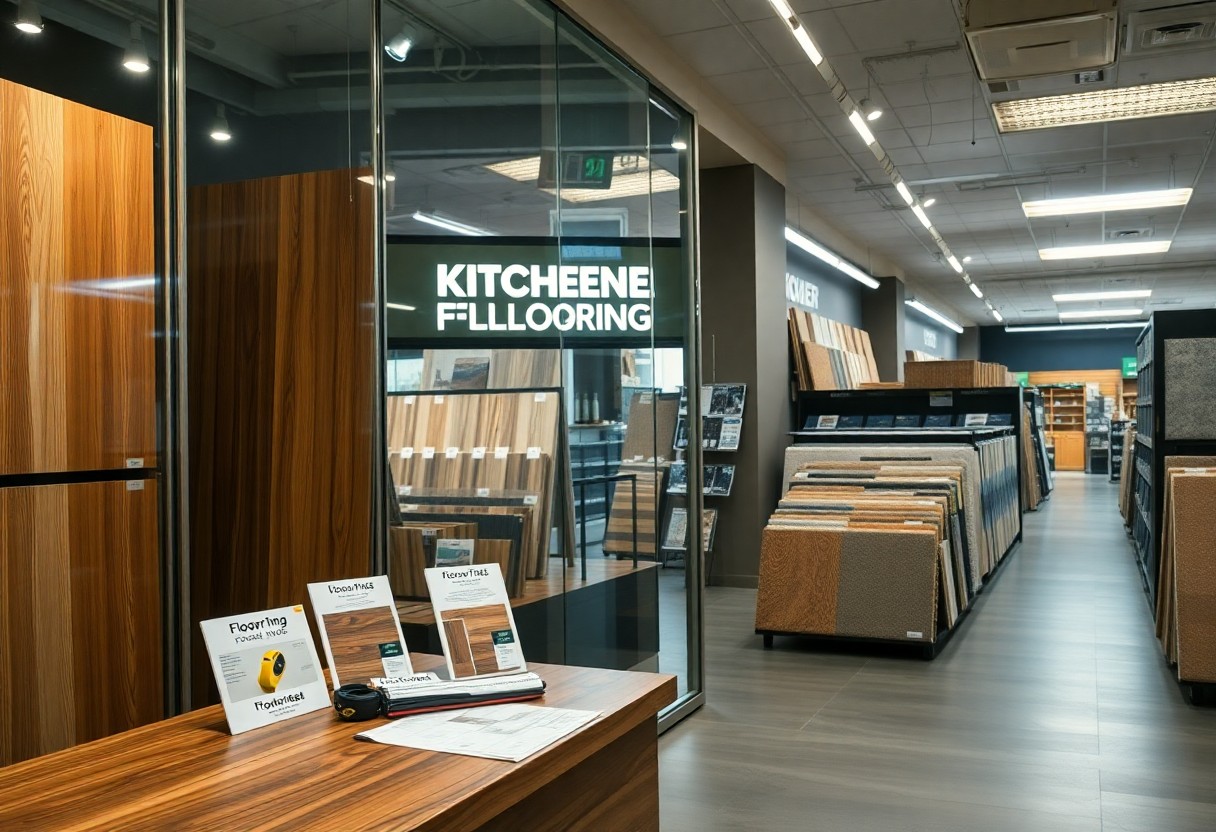
Kitchener homeowners and renters need a clear plan when selecting flooring; this guide helps you evaluate store reputation, product range, installation services, warranties, and pricing so you can make informed choices. You’ll learn how to compare samples, verify installer credentials, spot transparent pricing, and assess aftercare options to ensure the flooring you choose matches your lifestyle, budget, and long-term expectations.

Types of Flooring Options
When comparing materials, you should weigh durability, budget, installation complexity and room use; for example, hardwood often costs $6-$15/ft² and lasts decades, while vinyl can be fully waterproof for basements and bathrooms. You’ll also want to match finish and maintenance-some surfaces require annual resealing, others none. Prioritize samples at home under your lighting and test for scratch and water resistance before committing.
- Durability: pick AC3-AC5 rated laminate or 20+ mil wear-layer vinyl for high-traffic areas.
- Budget: expect $3-$15/ft² for common options; factor installation and underlayment.
- Installation: engineered hardwood and LVP click-lock systems often allow faster installs than tile.
- Maintenance: grout lines need sealing, while vinyl and laminate are low-maintenance.
- Perceiving how each material behaves in humidity, sunlight and load will guide your choice.
| Hardwood | Classic look; solid or engineered; 50+ years with refinishing; $6-$15/ft² |
| Laminate | Cost-effective; 6-12mm thickness; AC3-AC5 wear ratings; 10-25 years |
| Vinyl | LVP/LVT or sheet; waterproof; wear layer 12-30 mil; $2-$8/ft² |
| Tile | Ceramic or porcelain; PEI-rated; ideal for wet areas; $3-$15/ft² |
| Engineered | Stable over concrete; veneer thickness varies; good for basements and radiant heat |
Hardwood
You’ll find two main hardwood choices: solid and engineered-solid is sandable and lasts 50-100 years with refinishing, while engineered offers stability over concrete and lower profiles for renovations. You can expect natural variation in grain and colour; oak and maple remain top sellers in Kitchener for resale value. Installation methods and finish (oil vs polyurethane) change both feel and maintenance demands.
Laminate
You should consider laminate when seeking hardwood aesthetics on a budget: typical planks are 6-12mm thick with AC3-AC5 ratings, and costs often fall between $1-$4/ft² for materials. You’ll appreciate click-lock systems for DIY installs and rapid room usage after laying. Note that most laminates are not fully waterproof, so avoid prolonged exposure to moisture in basements unless the product is explicitly rated.
For deeper detail, check wear-layer classifications and manufacturer warranties: an AC5-rated laminate suits commercial or very high-traffic use, while AC3 is fine for homes. You should inspect edge profiles (beveled vs flush) for how dirt collects, and opt for a 1-2mm underlayment for sound reduction and slight subfloor imperfections; this often reduces floor noise by 20-40%.
Vinyl
You can choose between sheet vinyl, luxury vinyl tile (LVT) and plank (LVP); all are generally waterproof, making them ideal for basements, bathrooms and rentals. Expect $2-$8/ft² for typical LVP with a 12-20 mil wear layer-20+ mil improves lifespan and scratch resistance. You’ll also get a wide range of realistic wood and stone visuals with embossed textures for authenticity.
When evaluating vinyl, check wear-layer thickness (measured in mils): 12-20 mil suits most homes, 20-30+ mil for active families or pets. You should confirm compatibility with in-floor heating-many LVP products handle 27°C (80°F) surface temps-and verify float vs gluedown installation based on subfloor flatness; a 3-5mm panel tolerates minor unevenness.
Tile
You’ll often choose ceramic for budget rooms and porcelain for high-traffic or exterior use; porcelain’s water absorption is typically <0.5%, making it frost-resistant and suited to entryways. Tile costs vary by size and design-large-format 24×24" porcelain may cost more to set but reduces grout lines. You should factor in grout colour, sealing and substrate prep for long-term performance.
For installation, allow for a cement backer board or proper mud bed and use thinset rated for porcelain; expect labor to add significantly to cost-often equal to or exceeding material price. You should plan grout joint width for movement (1/8″-1/4″ common) and consider epoxy grout in wet areas to minimize staining and maintenance.
Important Factors to Consider
When comparing stores, evaluate traffic levels, room humidity (basements in Kitchener often run 50-70% RH), warranty lengths (2-30 years), and installation pricing differences – expect material+labour ranges like LVP $3-7/sq ft and hardwood $10-20/sq ft; test samples under your lighting and check local reviews. After you prioritize wear resistance, budget, and maintenance needs, use the checklist below to rate each store on those concrete metrics.
- Budget: total cost per sq ft, plus 10-15% for waste
- Durability: AC/PEI ratings, wear-layer thickness, water resistance
- Aesthetics: plank width, colour (LRV), grain and pattern
- Maintenance: cleaning routine, reseal/recoat intervals, grout care
- Installation & Warranty: local installer experience and labor guarantees
Budget
Set a per-square-foot target before you shop: in Kitchener expect laminate/LVP materials $2.50-7/sq ft, engineered hardwood $8-18, and solid hardwood $10-25, with installation adding $2-8/sq ft; add 10-15% for waste and transitions. If you plan to sell in 3-7 years, allocate more toward resilient, mid-range options that buyers prefer, while for long-term ownership you can justify higher upfront spend for hardwood’s resale value.
Durability
Prioritize measurable ratings: pick AC4+ laminate for heavy family traffic, porcelain tile with PEI 4-5 for kitchens, and engineered hardwood with a ≥3mm wear layer if you want the option to sand once. Verify manufacturer abrasion tests, water-resistance claims and expected lifespan in years to match your household’s activity.
For example, many Kitchener households with pets choose 12mm AC4 laminate or 4mm LVP with a 0.5mm wear layer and report 6-10 years of solid performance; engineered hardwood with a 3-4mm top layer can be refinished once or twice, extending life to 20+ years, while porcelain resists scratches and moisture indefinitely if grout is maintained.
Aesthetics
Decide how flooring will tie rooms together: wider planks (6-7″) create an open, modern feel while 3-4″ strips read traditional; darker tones lower perceived ceiling height, lighter tones boost LRV and brighten northerly rooms common in Kitchener. Request full-size samples and view them at morning and evening light to confirm the effect against your cabinetry and wall colours.
When blending floors across open-plan spaces, aim for consistent plank direction and limit tonal contrast to 5-15% between adjacent rooms to maintain flow; consider pattern choices like herringbone for visual interest in entryways and match trim height and transition profiles to avoid awkward thresholds.
Maintenance
Match product care to your lifestyle: vinyl and LVP require simple sweeping and a damp mop weekly, porcelain tile needs grout sealing every 12-24 months, and hardwood benefits from daily dusting and a recoat or reseal every 3-7 years depending on finish wear. Factor in upkeep time and product-specific cleaning products when choosing a material.
Practical tips: vacuum with a soft-brush head, use pH-neutral cleaners, avoid steam cleaners on urethane-finished hardwood, and install mats at entries to trap grit; for grout, apply a penetrating sealant annually in high-traffic kitchens to prevent staining and moisture ingress.
Tips for Choosing the Right Store
When narrowing down stores, prioritize clear pricing, visible warranties and transparent installation fees; ask for itemized quotes and onsite measurements. Compare lead times-many Kitchener retailers quote 1-4 week delivery for in-stock items and 3-8 weeks for special orders. Request samples to test in your light, and check return windows and disposal options. Perceiving how a showroom explains warranty limits, installation scope and follow-up processes tells you whether they’ll stand behind your project.
- Request itemized written quotes and compare at least three stores.
- Take 3-5 samples home to view in different rooms and lighting.
- Confirm lead times: in-stock (1-4 weeks) vs special order (3-8+ weeks).
- Verify warranty terms, return periods (usually 30-90 days) and disposal options.
Research and Reviews
You should scan Google, Facebook and BBB listings for ratings, aiming for stores with 4.5+ stars and 50+ reviews to gauge consistency; examine recent comments about installation quality and timeliness. Look for before/after photos and video testimonials, and note whether management responds to complaints within 48-72 hours. Use local forum posts or Nextdoor to find vendor experiences from neighbours with similar homes.
Customer Service
You want a store that offers free or low-cost consultations, written estimates and clear installation scopes; ask if installers are employees or vetted subcontractors and whether a project manager oversees your job. Expect to discuss timelines, deposit structure (commonly 10-30%) and post-install follow-up for punch-list items. Verify workmanship guarantees-many shops offer 1-3 year coverage for installation defects.
Dig deeper by requesting references for recent installs-ask to see jobs completed in homes of similar size and room type, and contact those homeowners about cleanup, communication and schedule adherence. Measure how the store handles changes: if upgrades or unforeseen subfloor repairs arise, you should receive immediate cost breakdowns and written change orders. Also confirm insurance, WSIB coverage for crews and whether the store provides a single point of contact from quote to completion.
Product Range
You should confirm the breadth of materials: hardwood, engineered, LVP (from $2-6/sq ft), porcelain/ceramic tile ($3-10/sq ft), and commercial-grade carpet; many Kitchener stores stock 100+ SKUs and carry brands such as Shaw, Mohawk, Armstrong or COREtec. Ask about inventory depth, matching trims and whether they offer water-resistant or pet-friendly lines with documented warranties. Demand samples and technical data sheets before purchase.
Investigate special-order options, minimum quantities and lead times-some exotic hardwoods or wide-plank engineered boards can take 4-12 weeks. Verify availability of coordinating accessories (reducers, thresholds, stair nosing) and whether the store holds buffer stock for repairs. If sustainability matters, ask for FSC certification, recycled-content options and the product’s VOC ratings so you can compare long-term indoor-air quality impacts.
Step-by-Step Guide to Selecting Flooring
You should prioritize room function, budget, and durability when narrowing options; measure areas in square feet, note moisture and traffic levels, and set a target lifespan (for example 10-30 years). Request samples, check warranties, and plan for installation timing so you can compare total installed costs across materials and suppliers before making a final decision.
Steps Overview
| Step | Action |
| Measure | Calculate sq ft + add 5-10% waste |
| Assess | Identify room use, moisture, pets |
| Research | Compare materials, lifespans, warranties |
| Visit | Inspect samples at multiple stores |
| Compare | Evaluate total installed cost and quality |
| Decide | Book installer and confirm lead times |
Assess Your Needs
You should quantify traffic patterns, moisture exposure, and aesthetic goals: measure each room, note heavy-use zones (hallways, entryways), check for below-grade moisture, and list must-haves such as pet resistance or radiant-heat compatibility; aim to match expected lifespan to product warranties (for instance 10-25 years) so your choice aligns with how you actually use each space.
Assessment Checklist
| Factor | What you should note |
| Room type | Kitchen, bathroom, basement, living |
| Traffic | Low, medium, high; kids/pets |
| Moisture | Below-grade or frequent spills |
| Heating | Radiant compatibility required? |
| Budget | Material + installation + extras |
Visit Multiple Stores
You should visit at least three stores to compare showroom displays, touch samples, and see installed mockups; bring room photos and a tape measure, evaluate colors under natural and showroom lighting, and ask about in-stock availability, lead times, and recommended installers to avoid surprises during scheduling and delivery.
Store Visit Checklist
| What to bring | Measurements, photos, sample of existing trim |
| What to ask | Stock levels, lead times, installer credentials |
| What to test | Color in different light, wear layer feel, plank rigidity |
When you visit each showroom, probe deeper than price: request recent installation photos and client references, verify whether samples reflect the production run, and inspect cut edges and underlayers for quality. Ask how they handle subfloor preparation, removal of old flooring, and whether installers are employees or subcontractors; that affects workmanship guarantees. Track notes for each store so you can rank reliability, service speed (typical delivery 3-14 days), and post-install support before committing.
Compare Prices and Quality
You should calculate total installed cost per square foot-include materials, underlayment, removal, and labor-and contrast that with product specs: wear-layer thickness, plank thickness, and warranty terms; expect material ranges roughly $2-10/ft² and installation $1.50-6/ft² depending on type and complexity, then weigh lifecycle value over initial cost.
Price vs Quality
| Item | What to compare |
| Material cost | Per sq ft price and included accessories |
| Installation | Hourly vs per-sq-ft, flooring prep fees |
| Warranty | Wear, structural, finish duration and coverage |
| Specifications | AC rating, wear layer mm, plank thickness |
| Long-term cost | Expected lifespan and maintenance needs |
Dig into specs: for laminate, prefer AC3 for homes and AC4-AC5 for high-traffic; for vinyl, look for a wear layer 0.3-0.7mm (0.5-0.7mm for heavy use) and total thickness 3-8mm for comfort and sound reduction. Verify third-party certifications (FloorScore, ISO) and confirm how warranty claims are handled-whether through the manufacturer or the retailer-so you can project replacement or maintenance expenses over 10-25 years.
Pros and Cons of Different Flooring Materials
Quick pros & cons by material
| Material | Pros & Cons (summary) |
|---|---|
| Hardwood | Pros: classic aesthetic, lasts 25-100 years, refinishable 3-5 times; Cons: $6-12+/sq ft installed, sensitive to moisture and scratches, not ideal for basements. |
| Engineered wood | Pros: more stable in humidity, looks like solid wood; Cons: $4-10/sq ft, limited refinishing depending on veneer thickness. |
| Laminate | Pros: very affordable ($1-4/sq ft), scratch-resistant, DIY-friendly; Cons: generally not waterproof, cannot be refinished, lower authenticity. |
| Luxury Vinyl (LVP/LVT) | Pros: waterproof options, durable, realistic visuals, $2-7/sq ft; Cons: can dent, harder to recycle, some products off‑gas initially. |
| Ceramic / Porcelain Tile | Pros: water-resistant, durable 50+ years, low maintenance; Cons: cold/hard underfoot, grout upkeep, installation $5-15+/sq ft. |
| Natural Stone | Pros: premium look, unique, extremely long-lasting; Cons: expensive ($7-30+/sq ft), porous needs sealing, variable hardness. |
| Carpet | Pros: soft, insulating, budget-friendly ($2-6/sq ft); Cons: stains, allergens, shorter lifespan (5-15 years), not water-friendly. |
| Cork | Pros: eco-friendly, cushioned and quiet underfoot; Cons: can scratch, fades in sun, needs resealing, poor for wet zones. |
| Bamboo | Pros: sustainable, can match oak hardness, $3-8/sq ft; Cons: quality varies, swelling in high humidity, dent-prone. |
| Concrete | Pros: ultra-durable, modern finish, low maintenance when sealed; Cons: very hard/cold, can crack, professional installation required. |
Advantages
You gain clear performance trade-offs: hardwood and stone provide longevity and resale value (hardwood 25-100 years; tile 50+), vinyl delivers waterproof practicality for kitchens and bathrooms, and laminate or carpet lower initial costs so you can renovate affordably; engineered wood offers humidity stability while cork and bamboo give eco-friendly options with good insulation and comfort underfoot.
Disadvantages
You need to weigh maintenance, moisture risk, and lifecycle costs: hardwood and bamboo can warp if wet, carpet traps allergens and lasts 5-15 years, and luxury vinyl or laminate may need replacement after 10-20 years-installation quality and subfloor prep also heavily influence performance and warranty validity.
Delving deeper, you should expect repair and long‑term costs: for example, refinishing solid hardwood can cost $3-5 per sq ft and extend life by decades, whereas replacing water‑damaged laminate or vinyl often means full plank replacement at $2-7 per sq ft. Additionally, improper installation causes gaps, grout failure, or adhesive breakdown-budgeting 5-15% extra for waste and unexpected repairs helps you avoid surprises.
Common Mistakes to Avoid
You will save time and money by spotting common pitfalls: buying for appearance alone, underestimating moisture effects in Kitchener winters, and skipping acclimation or subfloor checks; order the recommended 5-10% extra for straight-laid planks (10-15% for patterns), verify wear ratings, and always compare material plus labor before committing.
Impulsive Decisions
You can be tempted by clearance pricing, but impulsive buys often misalign with room use or warranty needs; check AC ratings for laminate, water-resistance specs for bathrooms, and warranty lengths (often 10-30+ years) before signing-bring samples home and live with them under your lighting for a week.
Ignoring Measurements
You shouldn’t guess square footage; inaccurate measurements cause reorders or shortfalls at installation-measure each room (length × width), add closets and alcoves, and include 5-10% waste for straight runs and more for complex layouts when ordering.
When measuring, take detailed sketches with exact dimensions, note doorway openings, stair runs, and transition points, and calculate waste by installation type: 5-10% for straight plank runs, 10-15% for diagonal layouts, and 15-20% for patterned installs like herringbone; provide these figures to your retailer so they can confirm quantities and lot consistency.
Overlooking Installation Costs
You must factor installation into your budget since labor and prep often rival material price; in Kitchener, expect typical ranges like $3-$8 per sq ft for laminate and $6-$12 per sq ft for hardwood installs-get written, itemized quotes before choosing flooring.
Ask installers to break out removal and disposal, underlayment, subfloor repairs, trim, and stair nosing so you see true cost; add potential expenses for moisture barriers, leveling (which can add $1-$4 per sq ft), and furniture moving; verify installer insurance, warranty coverage, and at least three local references to avoid surprise charges.
Conclusion
Following this guide, you can confidently evaluate flooring stores in Kitchener by comparing product quality, warranties, installation services, pricing transparency, and local reviews. Prioritize stores that let you see samples, provide clear written estimates, and handle professional installation so your choice suits your lifestyle and budget. Verify certifications and post-sale support to protect your investment.