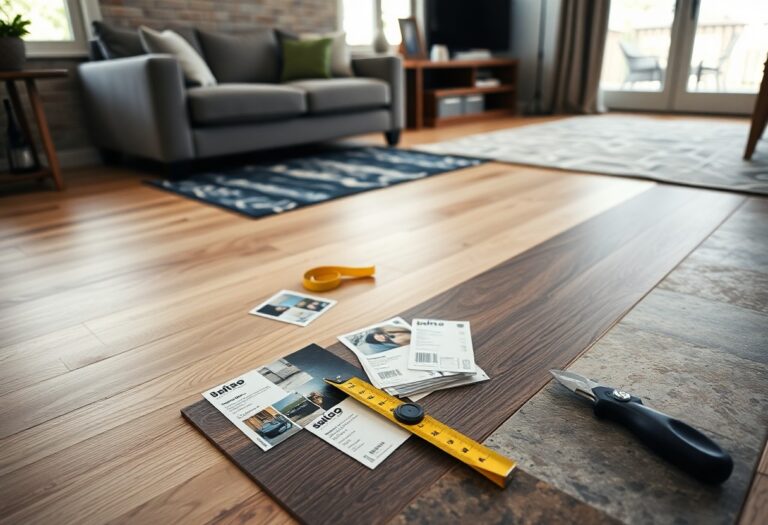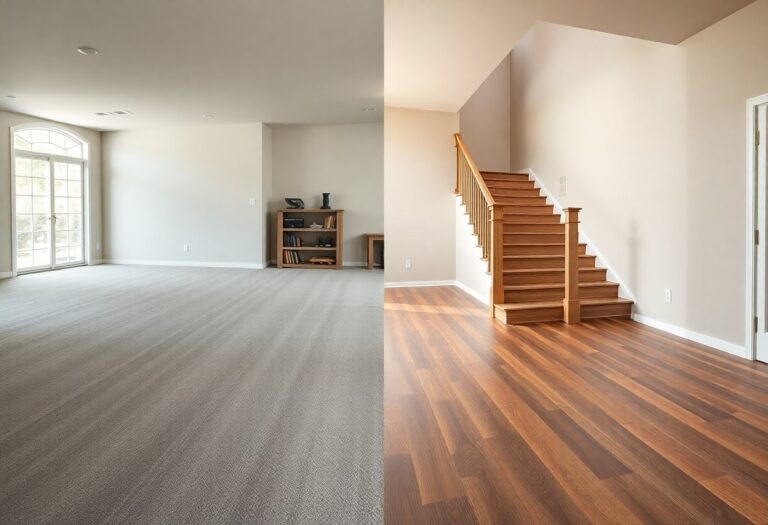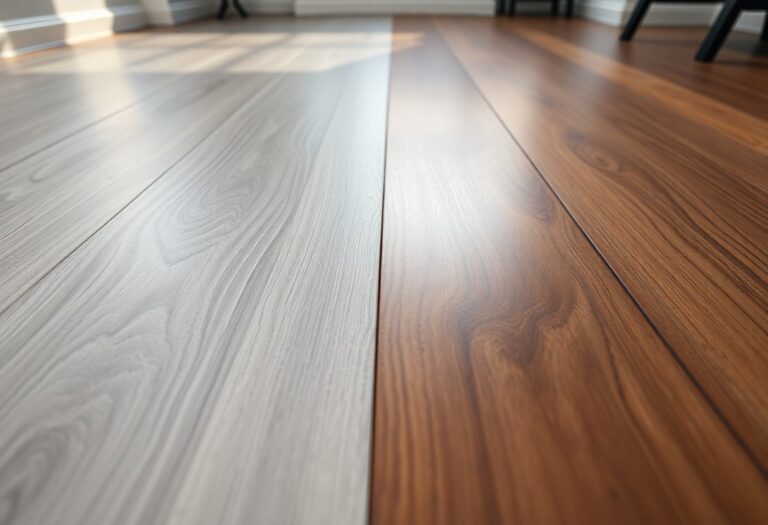


There’s a clear choice to make when selecting flooring for your Kitchener home: vinyl offers superior water resistance, low maintenance and lower upfront cost ideal for busy kitchens and basements, while hardwood brings lasting value, timeless aesthetics and refinishing options that boost resale appeal; you should weigh moisture levels, foot traffic, budget and desired lifespan to decide whether vinyl’s practicality or hardwood’s long-term investment fits your lifestyle and the local climate.
Overview of Flooring Options
You’ll weigh vinyl and hardwood based on cost, maintenance, and longevity: vinyl runs roughly $2-$7 per sq ft and resists water and scratches, while hardwood is typically $5-$12 per sq ft with 30-100+ year lifespan and strong resale appeal. Vinyl fits high‑traffic, wet areas and installs faster; hardwood offers refinishing, natural warmth, and higher long‑term value but needs humidity control. Consider room use, budget, and how long you plan to stay in the house.
What is Vinyl Flooring?
Vinyl includes sheet, luxury vinyl tile (LVT) and luxury vinyl plank (LVP), plus rigid cores like SPC. You’ll find wear layers from about 6-20 mil; thicker wear layers (12-20 mil) suit busy kitchens. Many vinyl products are fully waterproof, last 10-25 years, and install as click‑lock or glue‑down systems. Expect low upkeep-sweeping and damp mopping-and DIY installation for small rooms.
What is Hardwood Flooring?
Hardwood comes as solid or engineered planks made from species like oak, maple, and hickory; Janka hardness ranges (e.g., red oak ~1290, hard maple ~1450) affect dent resistance. You’ll get timeless aesthetics, the ability to refinish multiple times, and typical lifespans of 30-100+ years. Plan for moisture control, 48-72 hour acclimation before install, and professional nail‑down or glue methods in kitchens for best results.
Drilling deeper, engineered hardwood often measures 3/8″-3/4″ (9-19 mm) total with a 2-6 mm wear layer, while solid is usually 3/4″ (19 mm). You should expect refinishing every 7-10 years in active kitchens, at roughly $3-$5 per sq ft per sand-and-seal cycle. Installation can take 1-4 days for a typical 300-600 sq ft kitchen depending on prep; factor in subfloor repair and acclimation to avoid cupping or gaps.
Durability and Maintenance
Everyday wear highlights clear differences: vinyl resists scratches and standing water, while hardwood offers deeper resilience to dents but is vulnerable to moisture and humidity changes common in Kitchener winters; vinyl wear layers of 12-20 mil handle high traffic, whereas a properly finished oak floor can be sanded and refinished to last decades, so your choice depends on whether you prioritize water resistance or long-term renewability.
Longevity of Vinyl vs. Hardwood
Expect quality luxury vinyl plank (LVP) to last 10-25 years depending on wear layer and installation, and rigid-core SPC closer to 20-30 years in many households; solid hardwood often endures 75-100+ years with periodic sanding, while engineered hardwood typically lasts 20-40 years based on veneer thickness and refinishing opportunities.
Maintenance Requirements
Vinyl maintenance is low: sweep and damp-mop weekly with pH-neutral cleaners and avoid abrasive scrubbers; hardwood needs more care-daily dry cleaning, occasional damp mopping, felt pads on furniture, and humidity control (35-55%) to prevent cupping or gaps.
For deeper care, you should use microfiber mops, vacuum with a hard-floor setting, and avoid steam mops on hardwood; expect refinishing costs around $3-5 per sq ft for solid wood, sanding opportunities up to 6-8 times for thick planks, whereas engineered floors with 2-4 mm veneers allow only 1-2 sandings before replacement becomes necessary.
Aesthetic Appeal
You’ll see vinyl imitate many looks-oak, hickory, even stone-at a fraction of the cost, while hardwood offers authentic grain, depth and aging that vinyl can’t replicate. Vinyl’s printed photographic layer plus embossing creates convincing texture; typical plank widths range 4″-9″ and lengths up to 72″. Solid hardwood planks (¾” thick) show real growth rings and can be sanded 4-6 times, giving long-term visual evolution that buyers often value in Kitchener homes.
Visual Characteristics of Vinyl
You get consistent color and repeatable patterns with luxury vinyl plank (LVP), where wear layers of 12-20 mil protect printed designs and embossed textures. SPC and WPC cores allow rigid, flat planks that mimic wide-board looks without cupping; realistic bevels and registered embossing align grain with texture. In high-traffic kitchens you’ll notice uniformity and fewer natural defects, and manufacturers commonly offer dozens of decors so you can match cabinetry and backsplash precisely.
Visual Characteristics of Hardwood
You’ll notice unique grain, knots and tonal variation in each hardwood board, with species like red oak (Janka ~1290), hard maple (~1450) and hickory (~1820) producing very different looks. Plank widths typically span 2¼” to 7″ or wider for engineered products, and finishes range from ultra-matte to high gloss, altering how light and character read in a room. Solid boards develop a patina over decades, giving projects an authentic, lived-in aesthetic.
Further, sawing method and finish change appearance dramatically: plain-sawn yields cathedral grain, quarter-sawn gives straighter lines and greater stability, and hand-scraped or wire-brushed surfaces add depth and hide wear. You can sand and refinish solid ¾” floors multiple times to change color or repair damage; engineered floors depend on wear-layer thickness (2-6 mm) for the same flexibility, so pick species, cut and finish to match the exact style and longevity you want.
Cost Considerations
When weighing floors for a Kitchener home you’ll compare upfront price, installation complexity, and replacement risk: vinyl typically runs $2-$7 per sq ft while engineered or solid hardwood ranges roughly $6-$15 per sq ft installed. You should factor in subfloor prep, moisture mitigation in kitchens or basements, and local labour-these can add $1-$4 per sq ft. Warranties often differ too: many LVT products carry 10-25 year warranties, whereas hardwood flooring warranties vary by manufacturer and species.
Initial Investment
If you’re budgeting a 1,000 sq ft main level, vinyl could cost $2,000-$7,000 for materials plus $1,000-$2,500 for installation, whereas hardwood might be $6,000-$15,000 materials and $2,000-$5,000 labour and finishing. You’ll also pay for demo ($500-$1,500) and underlayment or moisture barriers ($0.50-$3 per sq ft), so select products with total installed costs that match your renovation budget.
Long-term Value
You’ll get different longevity: LVT and vinyl plank typically last 10-25 years depending on wear layer and traffic, while solid or quality engineered hardwood can endure 30-100+ years with periodic refinishing. Refinishing hardwood costs about $2-$5 per sq ft and restores appearance, whereas vinyl usually requires full replacement. For resale, hardwood generally commands a higher premium and broader buyer appeal in Kitchener markets.
Going deeper, if you refinish 1,000 sq ft of oak at $3 per sq ft it’s a $3,000 investment that can add 20-30 years to the floor’s life and preserve resale value; repeat refinishing every 7-20 years is common depending on wear. Conversely, replacing 1,000 sq ft of mid-range LVT at $4 per sq ft installed is roughly $4,000 and will likely be repeated once or twice over the same multi-decade span. Factor warranty lengths, expected traffic (pets, kids), and whether you plan to flip or live long-term in the home when calculating true lifecycle cost.
Environmental Impact
When weighing environmental impact, factor lifecycle differences: vinyl is made from PVC, a fossil‑derived polymer with higher embodied emissions and disposal challenges, while solid hardwood stores carbon and is renewable when certified. Typical installation waste runs 5-10%; vinyl usually lasts 10-25 years versus hardwood’s 50-100 years, so replacement frequency strongly affects your home’s long‑term footprint. Also consider manufacturer take‑back programs and sourcing locally to reduce transport emissions.
Sustainability of Vinyl
PVC production consumes significant energy and historically used phthalate plasticizers, though many modern LVT products are now phthalate‑free and lower VOC. Recycling remains limited outside manufacturer take‑back programs-Tarkett’s ReStart and Forbo’s collection schemes are notable examples-so most offcuts end up landfilled or incinerated. Given a 10-25 year service life and typical 5-10% installation waste, you should weigh short replacement cycles and disposal impacts against upfront cost savings.
Sustainability of Hardwood
Choose FSC- or PEFC‑certified hardwood and you ensure legally sourced timber with independent audits and replanting obligations; solid oak or Canadian maple floors common in Kitchener can be refinished multiple times, extending service life to 50-100 years. Wood also stores carbon-roughly 1.2 tonnes CO2 per cubic metre-so retaining existing boards or using reclaimed planks lowers your home’s carbon footprint compared with frequent replacement.
Digging deeper, chain‑of‑custody certification traces material through processing and helps you verify sustainable sourcing and lower embodied emissions. Reclaimed hardwood cuts embodied carbon substantially by avoiding new harvests, and Southern Ontario salvage yards often supply affordable reclaimed oak and maple. Specify low‑VOC finishes and locally milled boards to further reduce transport emissions and chemical impact on your home.
Installation Process
Preparation matters: assess subfloor levelness and moisture before you install-vinyl tolerates minor unevenness (up to 3/16″ over 10 ft) while hardwood needs a flatter surface and moisture within about 2% of the boards. You should factor acclimation (3-7 days for hardwood), tools, underlayment and vapor barriers. Typical timeline is 1-3 days for vinyl in a 200-500 sq ft kitchen and 3-10 days for hardwood if sanding and finishing are required.
Vinyl Flooring Installation
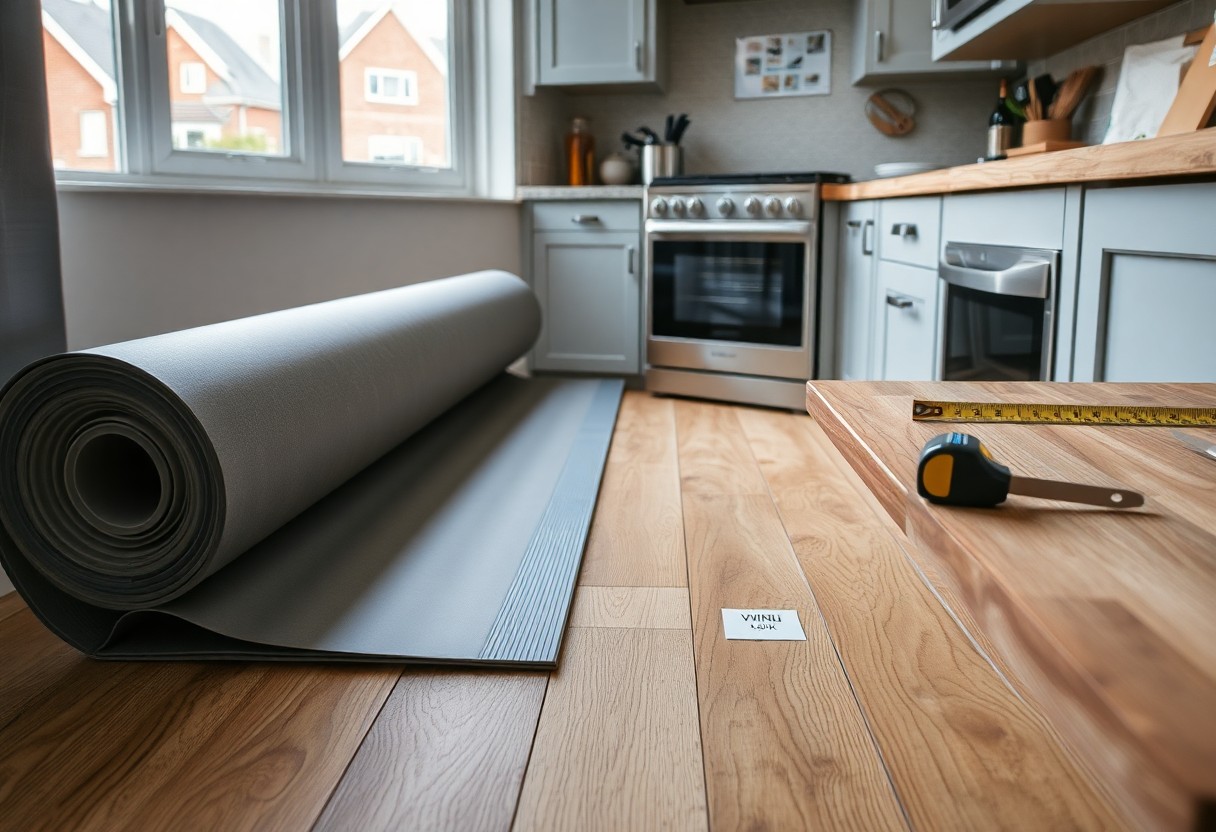
If you choose vinyl, you’ll pick between sheet, luxury vinyl tile (LVT) or WPC/HPC planks; installation methods include click‑lock floating, glue‑down, or loose‑lay. You must level the subfloor to within 3/16″ per 10 ft, remove baseboards, and allow 24-48 hours after delivery for acclimation in extreme seasons. A professional install for a 200 sq ft kitchen often takes a day and runs about $2-5 per sq ft labor, depending on the method and prep required.
Hardwood Flooring Installation
Hardwood typically requires 3-7 days of acclimation, a plywood subfloor, and nail‑down or staple installation for solid wood; engineered hardwood can be glued or floated. Expect 3-7 days for installation plus extra time for site‑finishing-sanding and 2-3 coats of finish add 2-4 days. Labor costs often range $4-10 per sq ft for installation, with site‑finished jobs higher due to sanding, finishing and dust control measures.
Engineered hardwood installs over concrete and basement levels using glue or floating methods, while solid hardwood must be nailed to joists or plywood and isn’t suitable for slabs. You should leave 10-15 mm expansion gaps and maintain indoor humidity between 35-55% to avoid cupping or gaps. Site‑finished floors require 2-3 coats of polyurethane with ~24 hours dry time between coats, which increases project duration and adds protective performance compared with prefinished boards.
Final Words
Considering all points, you should choose vinyl if you need moisture resistance, durability, lower upfront cost and easy maintenance for a busy Kitchener kitchen, while hardwood serves you best if you prioritize long-term value, warmth, and authentic character and are prepared for refinishing and higher expense; weigh your budget, lifestyle, and resale goals to decide which aligns with your needs.