
Mistakes during SPC vinyl flooring installation often lead to costly repairs and poor performance; this guide shows you the top ten errors to avoid so you can ensure your installation succeeds, covering substrate preparation, acclimation, moisture testing, layout planning, expansion gaps, seam alignment, adhesive use, tool selection, transitions, and post-installation care.
Incorrect subfloor preparation
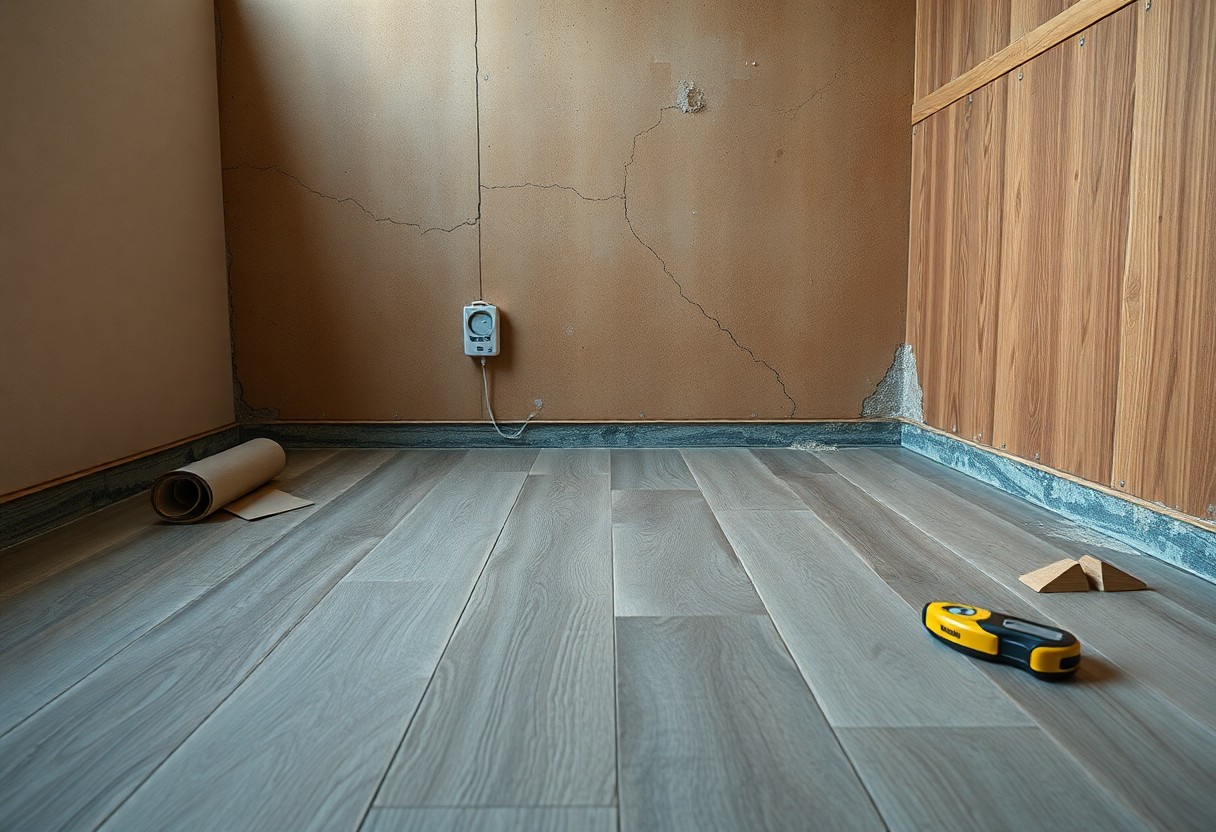
If you skip proper subfloor preparation, your SPC planks won’t perform as intended: unevenness, squeaks, and premature wear appear faster, and installation becomes harder. You must clean, remove debris, and address cracks or soft spots before laying material so your floor locks and wears evenly over time.
Not leveling surface
If your surface isn’t level, seams won’t close and the locking system can fail, causing visible gaps and accelerated edge wear. Use a straightedge to identify high and low spots, grind down peaks, and apply a self-leveling compound where needed so your SPC lays flat and maintains stability.
Ignoring moisture issues
Even though SPC is water-resistant, excess moisture in the subfloor or slab can damage adhesives, underlayments, and promote mold under the floor. You should test and mitigate moisture before installation and avoid covering a wet slab, since trapped moisture undermines long-term performance.
Run proper moisture tests (in-situ RH probes, calcium chloride, or reliable meters) and follow manufacturer limits; if results exceed allowable levels, delay installation and use vapor barriers, primers, or moisture mitigation systems. Allow concrete to cure fully, fix leaks, and ensure substrate dryness to protect your warranty and the lifespan of your flooring.
Poor acclimation time
If you don’t allow your SPC planks time to acclimate, they can expand or contract after installation, causing gaps, buckling, or uneven seams; plan acclimation to stabilize moisture and temperature before you fix the floor in place.
Poor Acclimation Overview
| Issue | Effect |
| Rushed acclimation | Gaps, buckling, visible seams |
| Uneven site conditions | Flatness problems, joint stress |
Skipping acclimation
If you skip acclimation entirely, your SPC can shift as it seeks equilibrium, leading to popping seams and misaligned boards; always allow boards to rest in the installation environment so your finished floor remains flat and stable.
Skipping Acclimation
| Action | Consequence |
| Install immediately | Dimensional movement, warranty issues |
| No environmental prep | Increased callbacks and repairs |
Incorrect temperature settings
If your workspace or planks are outside the manufacturer’s temperature range during acclimation or installation, your SPC can expand or contract unpredictably, so you must control HVAC and avoid temperature swings while you work.
Temperature Guidelines
| Parameter | Recommendation |
| Typical room temp | 18-29°C (65-85°F) |
| Acclimation time | At least 48 hours (longer in extremes) |
You should maintain stable temperatures and avoid direct sun or drafts that heat or cool the planks unevenly; if your site falls outside the suggested range, extend acclimation to 72 hours, use HVAC to stabilize conditions, and verify subfloor temperature with a thermometer before you begin.
Mitigation Steps
| Step | Why |
| Control HVAC | Prevents sudden expansion/contraction |
| Measure temps | Ensures conditions meet manufacturer specs |
| Extend acclimation | Allows equilibrium in extreme conditions |
Wrong adhesive usage
When you choose the wrong adhesive, your SPC planks may lift, shift, or develop gaps; using an adhesive not rated for rigid vinyl or for your subfloor can void warranties and lead to costly repairs, so always match adhesive type to SPC specifications and site conditions before you begin.
Using non-compatible adhesive
If you apply a non-compatible adhesive, chemical incompatibility or incorrect moisture tolerance will cause bond failure, staining, or adhesive bleed-through; select adhesives labeled for SPC, check solvent and VOC content, and avoid generic products that aren’t formulated for rigid vinyl floors.
Not following manufacturer guidelines
If you ignore the manufacturer’s adhesive instructions – trowel size, open time, substrate prep, and allowable temperature range – you risk poor adhesion and warranty denial; follow those specs and document your compliance to protect your installation and guarantee.
Pay attention to trowel notch, spread rate and adhesive open/flash time; if you over- or under-apply adhesive or place planks before flash time ends, the bond will weaken. You should test a small area, track cure times, clean excess immediately, and confirm substrate moisture and temperature meet the manufacturer’s stated limits.
Inaccurate cutting techniques
When cuts are inaccurate, you create visible gaps and weakened seams that shorten the life of your floor and spoil the finish. You should mark each plank clearly, steady your cutting motion, and use guides or clamps so seams align cleanly and waste is minimized.
Using dull tools
Dull blades tear SPC edges, cause chipping, and force you to make extra passes that ruin clean profiles. You should use sharp utility blades or a fine-tooth saw blade, replace blades frequently, and test cuts on scrap pieces to ensure smooth, precise results.
Not measuring properly
Mis-measuring leads to wasted planks and uneven transitions that look amateurish. You should measure openings, account for trims and door clearances, and transfer exact dimensions to the plank before cutting to avoid rework and fit issues.
Use a reliable tape and square, measure twice and cut once, and mark cuts on the plank backing to keep orientation correct. For irregular walls scribe the plank or create paper templates for odd profiles, and factor in the recommended expansion gap so joints lay flat and stable.
Inconsistent spacing
Uneven spacing between SPC planks creates visible gaps or lippage that undermines the floor’s performance and appearance; you should maintain uniform joint spacing throughout the installation. Use consistent spacers, frequently check alignment across the room, and correct deviations immediately to prevent seams from widening or boards from rocking after the floor settles.
Ignoring expansion gaps
You must leave proper expansion gaps around walls, fixed objects, and at transitions so your SPC floor can expand and contract with temperature and humidity changes. Follow the manufacturer’s specified gap (commonly 1/4-1/2 inch), use spacers during installation, and cover gaps with baseboard or transition strips to protect the edge while allowing movement.
Forgetting underlayment requirements
You should install the underlayment specified for your SPC product because it controls moisture mitigation, sound reduction, and subfloor leveling. Skipping or substituting the wrong underlayment can cause hollow spots, increased noise, or voided warranties. Verify compatibility with your subfloor and the manufacturer’s guidelines before proceeding.
For added clarity, concrete subfloors often need a vapor barrier or a combined waterproof underlayment, while plywood may require a thin foam or cork layer for sound control and minor leveling. If your subfloor is uneven, address high or low spots before laying SPC-use self-leveling compound where needed-and always document the underlayment used in case of future warranty claims.
Overlooking pattern alignment
When you ignore pattern alignment, plank direction and seam placement can make the installation look haphazard and shorten perceived quality. Dry-lay key rows to establish grain flow, align patterns with room focal points, and maintain consistent offsets so your SPC floor reads as a cohesive surface rather than a patchwork.
Installing without planning
If you begin without a plan, you may end up with awkward cuts, uneven end joints, and wasted material. You should measure runs, choose a starting wall, dry-fit rows to set a stagger pattern, and mark expansion gaps and transitions so each step follows a logical sequence and reduces rework.
Misplacing planks
Misplacing or flipping planks breaks the visual rhythm and can compromise locking joints, causing gaps or peaks. You must keep planks in sequence, verify orientation before clicking them together, and avoid forcing mismatched ends to preserve seam integrity and the intended pattern.
To prevent misplacement, label boxes and group planks by row as you unpack, work in small sections, and use chalk lines or numbered markers to track placement. Check manufacturer markings for grain direction, test-fit pieces before final tapping, and swap any wrong or damaged planks immediately to stop errors from spreading.
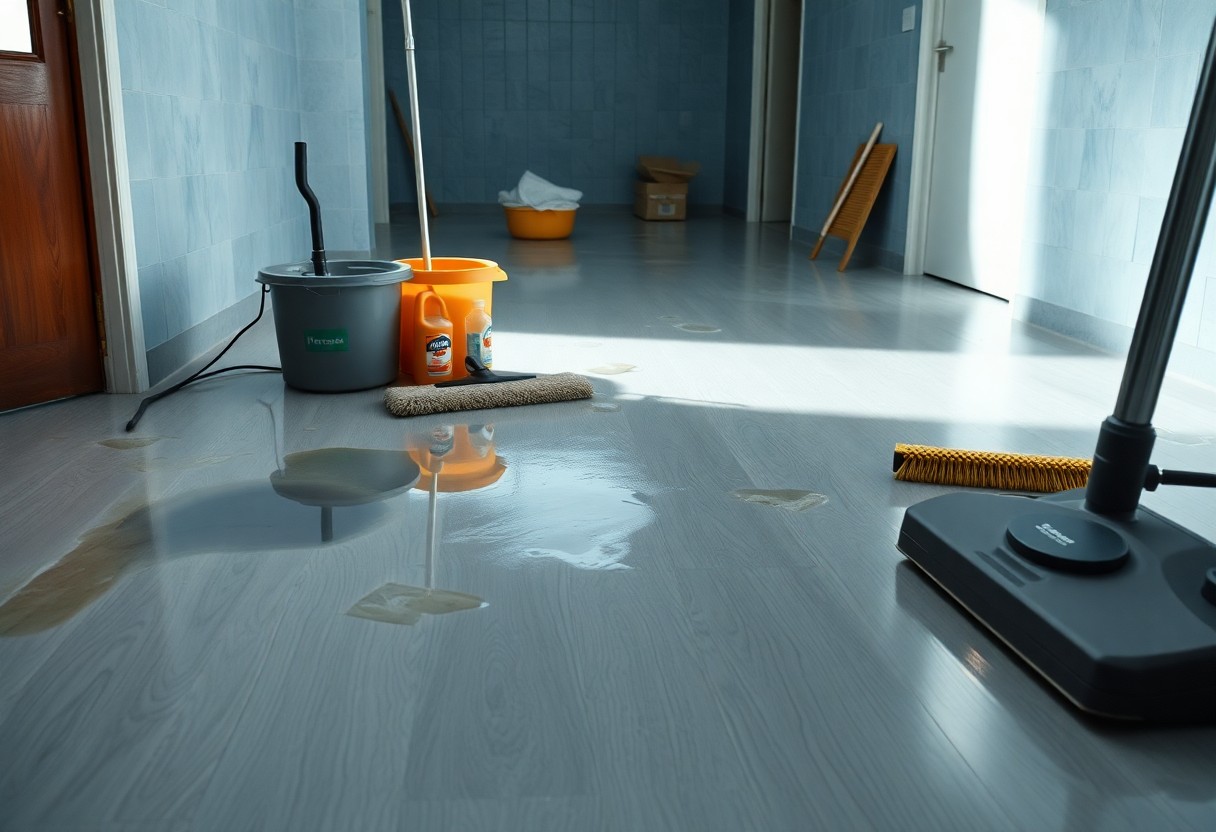
Improper cleaning methods
If you clean SPC vinyl with incorrect techniques, dirt and moisture can damage seams and wear the finish prematurely. Use pH-neutral cleaners, a damp mop, and soft cloths; avoid excessive water pooling and abrasive tools. Consistent gentle care preserves appearance and performance throughout your floor’s service life.
Using harsh chemicals
Using strong solvents, bleach, or ammonia-based cleaners can strip protective coatings and discolor your SPC vinyl. You should choose products labeled safe for vinyl, dilute concentrates per instructions, and test a hidden area first. When in doubt, use warm water with a mild, pH-neutral detergent.
Not sweeping regularly
Not sweeping regularly lets abrasive grit and debris scratch the wear layer, accelerating visible wear and creating permanent marks. You need to sweep or dry-mop high-traffic zones daily and use mats at entries to trap particles before they reach your floor.
Use a soft-bristled broom, microfiber dust mop, or vacuum with a hard-floor setting to remove fine particles without causing abrasion. Pay attention to corners and under furniture; schedule deeper cleaning weekly and spot-clean spills immediately to prevent dirt buildup that grinding feet and furniture casters will intensify.
Neglecting installation instructions
You must follow the manufacturer’s installation instructions for SPC vinyl; if you deviate, you risk gaps, buckling, or voided warranties. The guide explains how you should prep the subfloor, acclimate material, allow expansion, and choose adhesives-adhere to each step to ensure long-term performance and avoid costly repairs.
Skipping important steps
If you skip important steps like leveling the subfloor, cleaning, or installing underlayment, you’ll create uneven wear, telegraphing, and noise. Make sure you perform every listed step so your installation avoids expensive failures and your floor maintains appearance and lifespan.
Not following guidelines
When you disregard spacing, acclimation time, or recommended tool use, you introduce installation stress and structural problems. Follow the manufacturer’s sequence-locking methods, staggered seams, and cut patterns-to keep your seams tight and your boards lying flat.
Not following guidelines can also void your warranty and complicate repairs; manufacturers often require proof you followed instructions for claims. Keep records of product codes and lot numbers, use specified adhesives and trims, and contact technical support when you have doubts to protect your investment.
Rushing the installation
When you rush the job you risk skipping vital prep: checking subfloor flatness, allowing planks to acclimate, and planning the layout. Slow, methodical work prevents gaps, buckling, and wasted material while ensuring a stable, attractive finish that lasts longer and avoids costly repairs.
Hurrying the process
Hurrying the process tempts you to cut corners-improper cuts, weak adhesive coverage, and inadequate tapping-resulting in misaligned rows and loose edges. Take your time with each plank and connection so your installation locks together cleanly and performs as intended.
Ignoring details
Ignoring details like expansion gaps, seam staggering, and edge trims creates visible flaws and functional issues; neglecting small checks invites squeaks, lifting, and uneven surfaces that undermine your flooring’s durability and appearance.
Give attention to layout, plank orientation, transition thresholds, and spacer use; verify measurements before cutting and clean the subfloor thoroughly. Check moisture readings, follow manufacturer gap recommendations, and inspect each seam as you go-those small steps save you from major fixes later.
Summing up
From above, you can prevent many SPC vinyl installation failures by preparing the subfloor, acclimating planks, using correct adhesives and locking techniques, maintaining expansion gaps, and checking layout and transitions before committing. You should follow manufacturer instructions, use proper tools, level and clean surfaces, and address defects immediately rather than continuing. Taking these steps protects your warranty and delivers a long-lasting, professional result.