
Flooring with SPC vinyl provides a durable, low-maintenance surface, but proper care helps you preserve its look and lifespan. In this how-to guide you’ll find straightforward routines-daily sweeping, damp mopping with pH-neutral cleaners, quick spill cleanup, use of entry mats and furniture pads, and tips to avoid abrasive tools or harsh chemicals-to keep your floors pristine after installation.
Understanding SPC Vinyl Floors
What is SPC Vinyl Flooring?
SPC stands for stone plastic composite and uses a limestone-filled PVC core that gives you a rigid, dent-resistant plank; cores typically range 3.2-7mm thick and wear layers commonly run 12-28 mil (0.3-0.7mm). Its engineered structure minimizes expansion, so you can float planks over concrete or existing floors with click-lock systems and achieve stable seams in variable humidity.
Advantages of SPC Vinyl Floors
Its dense core provides waterproof performance and high dimensional stability, making SPC ideal for kitchens, basements, and bathrooms; wear layers of 12-20 mil suit most residential and light commercial use, while the rigid core resists indenting from heavy furniture and casters. Installation is fast, and many products are compatible with underfloor heating up to about 27°C (80°F).
Compared with WPC or laminate, SPC offers higher load-bearing capacity and lower thermal expansion, so heavy cabinets or rolling loads cause less deflection and fewer gap issues. You can select wider planks (commonly up to 9″) and longer lengths (around 48-72″) and match core thickness and wear-layer mils to traffic demands to get the durability and maintenance profile you need.
Essential Tools for Maintenance
Cleaning Supplies
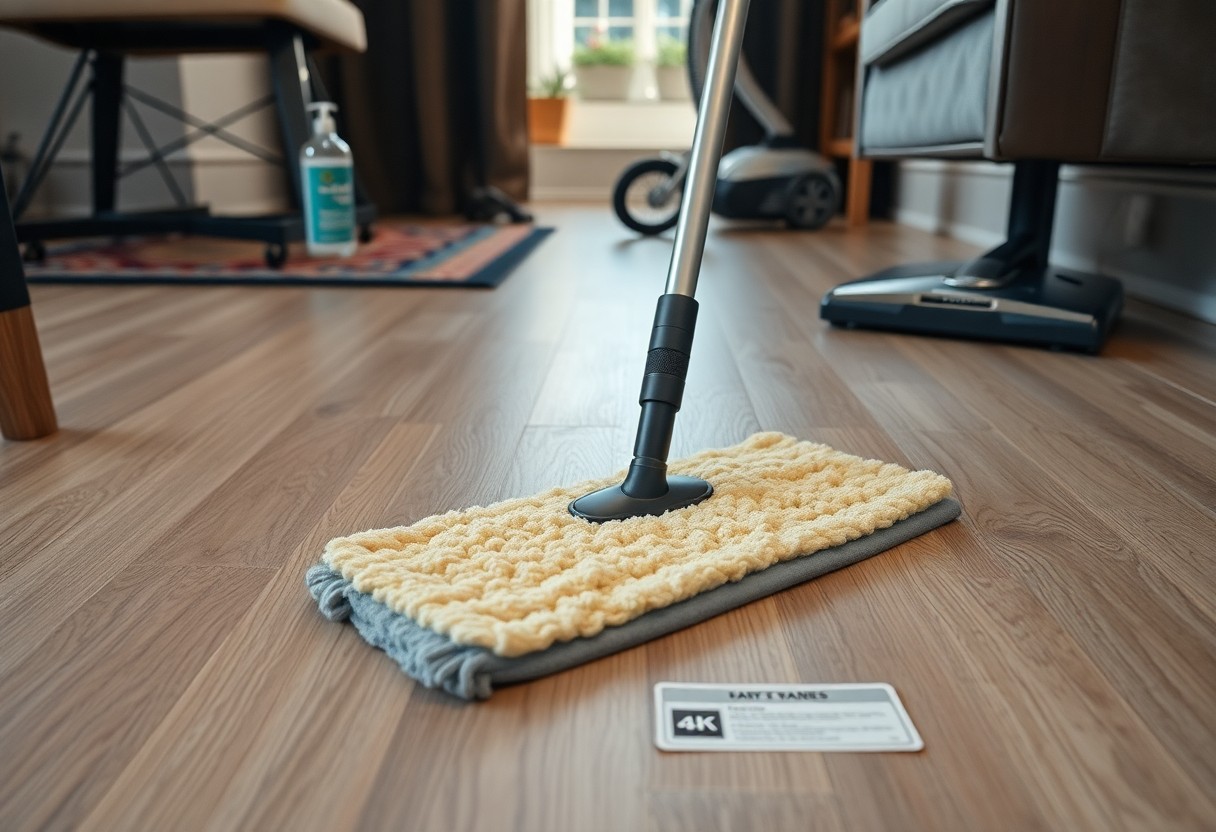
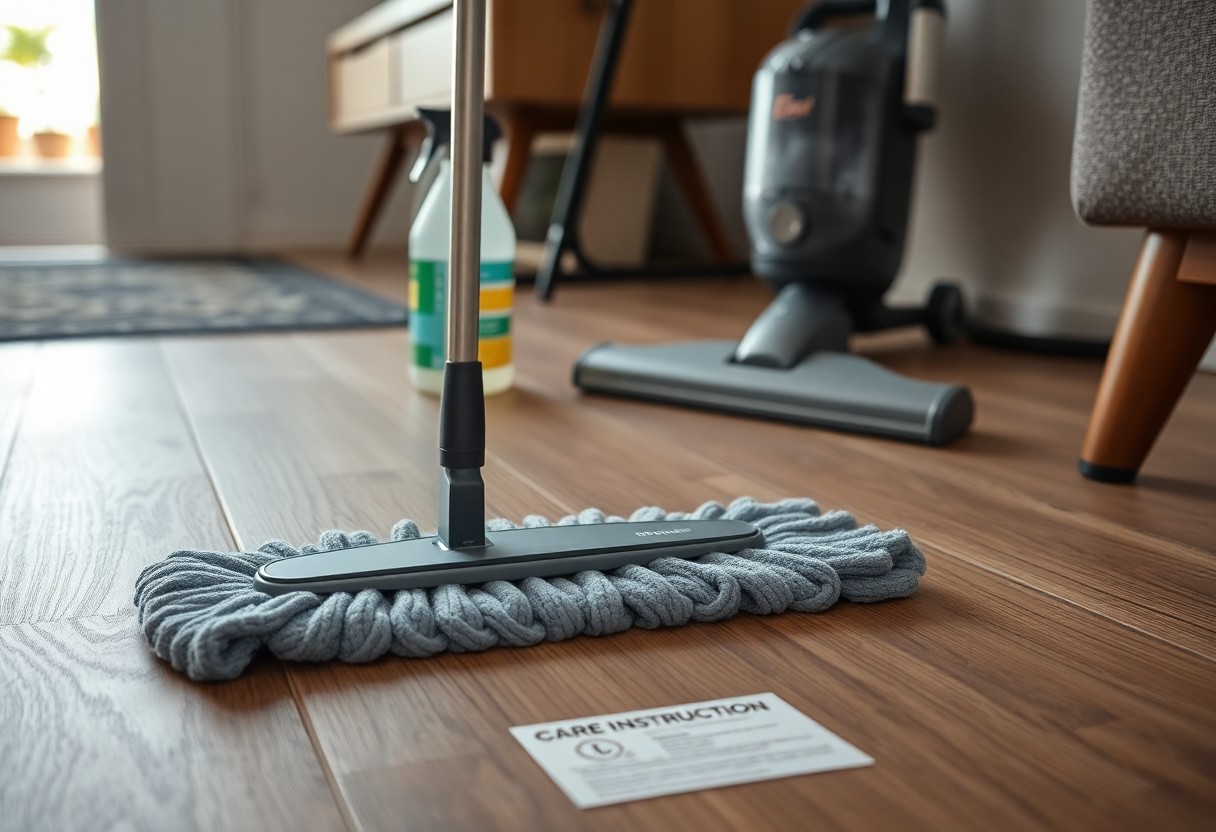
Stock a basic kit: a microfiber mop, soft-bristle broom, dust mop and a vacuum with a hard‑floor setting to avoid scratches. Choose a pH‑neutral floor cleaner (pH 7-8.5) and dilute per label-lukewarm water is best for mopping. Keep a spray bottle for spot treatments, non‑abrasive pads for scuffs, and a squeegee for spills; these tools let you tackle daily dirt and occasional stains without damaging the SPC wear layer.
Protective Accessories
Use felt pads on chair and table legs, heavy‑duty entrance mats, and breathable rug pads under area rugs to reduce grit and wear. Swap standard casters for soft polyurethane wheels on office chairs and add furniture glides or coasters under heavy appliances to spread load. Replace pads or wheels every 6-12 months depending on traffic to keep protection effective.
For heavier furniture, choose wide glides or load‑distributing cups (at least 2-3 inches across) to prevent indentation; narrow feet concentrate pressure and can dent SPC over time. Select low‑tack, breathable rug pads-avoid latex or rubber backings that can trap moisture and cause discoloration. Test adhesive pads on an unseen spot before long‑term use, and inspect under mats quarterly to catch trapped debris early.
Daily Care Tips
You should build a simple daily routine: sweep or vacuum high-traffic zones once a day, mop with a damp microfiber cloth weekly, and wipe spills immediately to prevent residue. Use door mats and felt pads under furniture to reduce grit and scratches. Rotate rugs and vacuum under couches every 7-14 days in pet homes to catch hidden debris. This routine reduces abrasive wear and keeps the floor’s wear layer intact.
- Sweep or vacuum entryways daily
- Use pH-neutral cleaner for light mopping
- Place mats at all exterior doors
- Use felt pads under furniture legs
Regular Sweeping and Vacuuming
You should sweep daily in entryways and under furniture using a soft-bristle broom or a vacuum set for hard floors with the brush roll off. In pet homes vacuum 2-3 times weekly with a brushless attachment to pick up hair without scratching. Avoid vacuums with rotating beater bars or metal wheels, and clean vacuum wheels regularly to prevent grit transfer.
Spot Cleaning Techniques
You should act fast on spills: blot liquids with a microfiber cloth instead of rubbing to avoid spreading, then use warm water or a manufacturer-approved pH-neutral cleaner diluted per label for sticky residues. For greasy spots mix a few drops of mild dish soap in a gallon of warm water, dab gently, rinse with clear water and dry to prevent film build-up. Test any cleaner in an inconspicuous seam first.
When you find a stubborn stain follow these steps: blot excess with paper towel, dampen a microfiber cloth with the diluted cleaner and work from the edges inward, use 70% isopropyl alcohol on a cloth for ink or permanent marker and dab for 10-20 seconds, remove dried residue with a plastic scraper held at a low angle, then wipe dry. Avoid abrasive pads, acetone, or oil-based solvents that can dull the wear layer.
Deep Cleaning Procedures
When traffic or visible buildup demands more than weekly care, schedule a deep clean every 6-12 months for typical homes and every 3-6 months for commercial spaces; you should base frequency on foot traffic, pets, and soil level. Use lukewarm water and a pH‑neutral cleaner, avoid steam or abrasive pads, and allow 15-30 minutes of drying time per 100 sq ft after rinsing to prevent moisture seeping into seams.
Recommended Deep Cleaning Solutions
You should choose pH‑neutral floor cleaners (pH 6-8) or manufacturer‑approved SPC products; for heavy soil dilute 1:20 (5%) and for routine deep cleaning dilute 1:100 (1%). Avoid bleach, ammonia, solvent‑based degreasers, and undiluted detergents. For small spots, a few drops of mild dish soap in a bucket of water works-test a 2×2 ft area first.
Recommended Cleaners & Dilution
| Cleaner | Dilution / Use |
|---|---|
| pH‑neutral commercial SPC cleaner | 1:100 for maintenance; 1:20 for heavy soil |
| Mild dish soap (small jobs) | 2-3 drops per 1 L water; spot cleaning |
| Microfiber mop solution | Use manufacturer mix; wring mop to <10% moisture |
| Avoid | Bleach, ammonia, undiluted solvents, steam cleaners |
Step-by-Step Deep Cleaning Guide
Start by dry‑vacuuming or sweeping to remove grit, then mop with a microfiber flat mop and diluted pH‑neutral cleaner working in 3-5 ft sections; agitate stubborn stains with a soft‑bristle brush, rinse with clean water, and immediately dry with microfiber towels or a wet vacuum. For a 500 sq ft room expect 30-60 minutes depending on soil level and two people can cut time by ~40%.
Deep Cleaning Steps & Timing
| Step | Details / Timing |
|---|---|
| 1. Remove debris | Vacuum/sweep; 5-10 min per 500 sq ft |
| 2. Apply cleaner | Microfiber mop with diluted solution; work 3-5 ft sections |
| 3. Agitate stains | Soft brush, circular motion; 1-3 min per spot |
| 4. Rinse | Mop with clean water to remove residue |
| 5. Dry | Microfiber towels or wet vacuum; 15-30 min per 100 sq ft |
You can use low‑moisture methods for large areas-an autoscrubber with a soft pad at <300 rpm and water flow <200 mL/m² works well for commercial spaces; always test a 2x2 ft area and ensure seams dry within 24 hours. If using a wet vacuum, keep extraction passes short to avoid pooling, and maintain room temperature below 80°F to speed drying without stressing the SPC material.
Advanced Tips & Machine Settings
| Situation | Recommended Setting / Action |
|---|---|
| Large commercial area | Autoscrubber, soft pad, <300 rpm, low flow |
| High‑traffic home | Deep clean every 3-6 months; two people reduces time |
| Stubborn adhesive or spot | Soft‑bristle brush + spot cleaner; avoid solvents |
| Drying | Use fans, keep temp 60-80°F; seams dry within 24 hrs |
Preventive Measures
You can drastically reduce wear by installing 18-24 inch scraper mats outside and soft absorbent mats inside, using felt pads under furniture, trimming pet nails weekly and keeping indoor humidity between 30-50% and temperature around 60-80°F to prevent gapping. Rotate rugs every 3-6 months in high-traffic zones, lift-not drag-heavy pieces, and schedule a professional inspection yearly if you have commercial-level traffic or pets that scratch frequently.
Factors to Avoid Ensuring Longevity
You should stop practices that accelerate damage: dragging appliances, using abrasive pads, applying oil‑based polishes, or relying on steam mops; also avoid letting grit accumulate in entryways and exposing floors to prolonged direct sunlight without protection.
- Dragging heavy furniture or appliances across the floor
- Using abrasive scrubbers, steel wool, or scouring powders
- Employing steam mops, ammonia, bleach, or oil-based cleaners
- Allowing standing water for more than 24-48 hours
- Using rugs or pads with PVC/rubber backing that can stain
After you eliminate these habits, inspect seams and transitions monthly and address discoloration or lifting immediately to prevent costly repairs.
Area Rugs and Mats Usage
You should place breathable, non-staining rug pads under low‑pile rugs and choose latex‑free or felt pads rated for hard floors; position scraper mats at every exterior door to trap grit, wash or shake interior mats every 1-3 months depending on traffic, and replace mats that no longer capture debris effectively to protect the SPC wear layer.
You can prevent staining and trapped moisture by selecting felt, woven polyester, or non‑staining natural rubber pads and avoiding PVC/rubber-backed rugs that transfer plasticizers; for high‑sunlight areas pick UV‑resistant mats, launder washable mats every 30-90 days, and test new rugs on a small corner to ensure colorfastness before full placement.
Troubleshooting Common Issues
Address problems quickly to limit damage: minor scuffs, stains, and gaps are common in SPC vinyl. You should prioritize cleaning and simple repairs before they worsen; many household issues resolve with a 10-30 minute spot treatment, while structural problems often require plank replacement or professional attention.
Scratches and Dents
For hairline scratches, use a melamine sponge or a manufacturer‑approved polish on a test patch; small dents from furniture often rebound within 24-48 hours after removing weight and applying a warm cloth. Deeper gouges usually need a colored vinyl repair kit or replacing a single plank, which typically takes 30-60 minutes.
Stains and Discoloration
Blot spills immediately since oil, ink, and rubber migration can stain if left 24+ hours. Start with a pH‑neutral cleaner, then try 70% isopropyl alcohol for ink or an enzyme cleaner for organic stains; prolonged UV exposure or rubber‑backed mats can cause permanent fading or yellowing that may require plank replacement.
Start by blotting, then clean a 2×2 ft test area with a neutral cleaner diluted per label (often 1:100). For grease use warm water with a few drops of dish soap; for ink apply 70% isopropyl alcohol on a microfiber cloth, rubbing gently up to 60 seconds before rinsing. Avoid acetone and abrasive scrubbing; if the stain persists after two safe attempts, contact the manufacturer or plan a plank swap-keeping a spare plank on hand saves time.
Conclusion
On the whole, you can keep SPC vinyl looking its best by sweeping and vacuuming regularly, wiping spills promptly, and mopping with a damp microfiber and pH-neutral cleaner. Use felt pads under furniture, avoid abrasive tools and wax-based products, place mats in traffic areas, and monitor indoor humidity. With consistent care and proper products, your floors will remain durable and attractive for years.